
Prosthetics
Cosmetic covers and sleeves
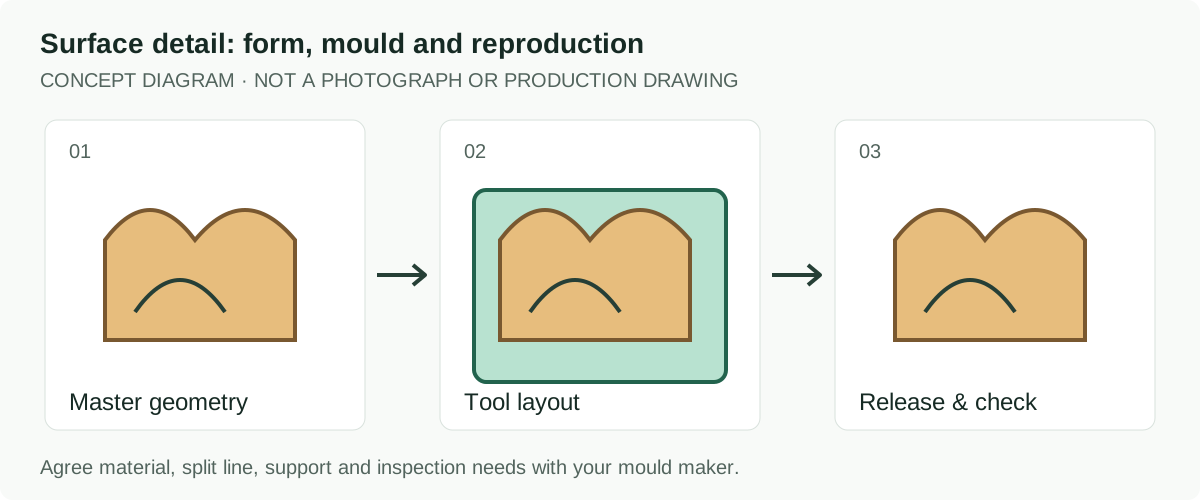
Moulds from scans or sculpts for lifelike covers, gloves and sleeves.
Industries · Prosthetics, orthotics and clinical simulation
Moulds for cosmetic prosthetic covers, liners and sleeves, orthotic pads and inserts, and lifelike task trainers and simulation models for surgical and clinical training. For prosthetics and orthotics manufacturers, NHS and private clinics’ suppliers, simulation companies and medical schools.
What clinical teams need

A cosmetic cover has to match the person. A training model has to feel like tissue under the scalpel and survive a hundred students.
We build moulds from scans and sculpts for covers, liners and sleeves, and multi-layer moulds for simulation models with skin, fat and muscle layers in different silicone hardnesses. Grades are chosen against the application, with the supplier’s biocompatibility data where required.
Moulds and masters are archived, so a replacement model or a second-size cover can be made to match.
Typical prosthetics work
Six families of tooling cover most enquiries in this industry.
Moulds from scans or sculpts for lifelike covers, gloves and sleeves.
Tooling for silicone liners, pads and interface parts in skin-contact grades.
Moulds for pads, heel cups and inserts in graded hardnesses.
Multi-layer moulds for suturing pads, injection arms, airway and surgical trainers.
Moulds from CT and MRI-derived prints for patient-specific and teaching models.
Precision moulds supporting clinical teams making facial and body prostheses.
Parts and tooling
A general guide. Geometry, material and volume decide the final tool.
Typical guide values, confirmed on your quotation. We confirm grade, tool life and lead time against your part and process.
| Part | Typical tooling | Typical material | Why it matters |
|---|---|---|---|
| Cosmetic cover | Silicone or rigid mould from scan | Skin-safe platinum silicone | Matches the person |
| Liner or pad | Cast or compression tooling | Skin-contact silicone | Consistent thickness and comfort |
| Suturing pad | Multi-layer cast tooling | Graded silicones | Realistic layers that hold sutures |
| Anatomical model | Mould from scan-derived print | Silicone, polyurethane | Patient or teaching accuracy |
| Orthotic insert | Multi-cavity cast tooling | Silicone, polyurethane | Graded support, repeatable |
Send the drawing, the material and the quantities with your enquiry so we can confirm the route before quoting.
Examples
Eight typical jobs for silicone, polyurethane and rubber tooling in this industry. Each one can be a single development tool or a full production set.
Lifelike silicone covers for prosthetic limbs.
Platinum siliconeMoulded liners for comfort and suspension.
Platinum siliconeEar, nose and orbital prostheses made with clinicians.
Platinum siliconeCustom pads and inserts for braces and orthoses.
Silicone, PULayered skin pads for surgical training.
SiliconeArms and vessels for clinical skills training.
SiliconeAnatomy for rehearsing specific procedures.
Silicone, PURealistic injuries for emergency and military training.
SiliconeTooling ideas, clearly explained
Larger customers ask the same questions: how is it checked, what is it made from, and can you make another one exactly the same? This is how we answer them.


Photos: Brandable Box, Jessica Streser, Wilhelm Gunkel, laura adai on Unsplash.
How we work
Please contact us before sending sensitive drawings or samples so that any confidentiality arrangements can be agreed.
You have a named contact for your programme, from feasibility to repeat supply, and is the person your engineering, quality and procurement teams speak to.
Material documentation, inspection requirements, manufacturing responsibilities and any necessary approvals should be specified and confirmed for your project before work is authorised.
Any tooling-specific terms, expected service conditions and remedies must be confirmed in your written quotation and order agreement.

Programme stages
We review the part, the material, the quantities and the deadline, and propose the tooling.
Please contact us before sending sensitive drawings or samples so that any confidentiality arrangements can be agreed.
Master made from your CAD, scan or original, and the first tool trialled.
Fit, finish and release tuned from the trial before tools are duplicated.
Matched sets, planned replacements and archived masters.
Common questions
We make tooling and, where agreed, parts to your specification. Regulatory responsibility for a finished device sits with the device manufacturer, and we supply material data and records to support your file.
Yes, from segmented models supplied by your team. We print or machine a master and build the mould from it.
Yes. Multi-layer moulds let us build skin, fat and muscle layers in different silicone grades.
Pricing depends on your design, materials, quantities and tooling scope. Ask us for a quotation against your project brief.
Related industries

Production moulds for lipstick, balm, solid perfume, shampoo bars and solid skincare, plus applicators and packaging inserts for prestige and contract cosmetics manufacturers.
Read more
Line-sized moulds, depositing trays and branded shapes for chocolate, confectionery, bakery, frozen dessert and ready-meal manufacturers, made through our sister division TCI Culinary.
Read more
Large formliners, supported rubber moulds and rubber inserts for big precast and in-situ concrete: facade panels, bridge parapets, retaining walls, stairs and tunnel portals.
Read moreStart a programme
We will propose the tooling, the grades and a fixed programme price.
Your project, our expertise
Contact TCI Mouldings with your drawings, samples and production requirements so the technical brief and next steps can be discussed.


 Thomas LaneManaging Director
 George PrestonDesign & Project Manager
 Kelly BallingerHead of Partnerships
 Jim AndertonProduction Manager
 TheodoreEmployee Welfare