Bidford-on-Avon, Warwickshire. Mon to Fri.01789 224228

Food contact · grades and paperwork

Food-contact moulds.

Moulds for bakeries, chocolatiers, confectioners and food manufacturers. The shape is usually the easy part. For a food-contact job, what matters is the grade, the declaration that comes with it, and whether your mould can withstand the way you clean it.

Grade ledSpecified, not assumed
DeclaredPaperwork with the order
CleandownDesigned round yours
2019Established

Status, plainly

Read this part carefully.

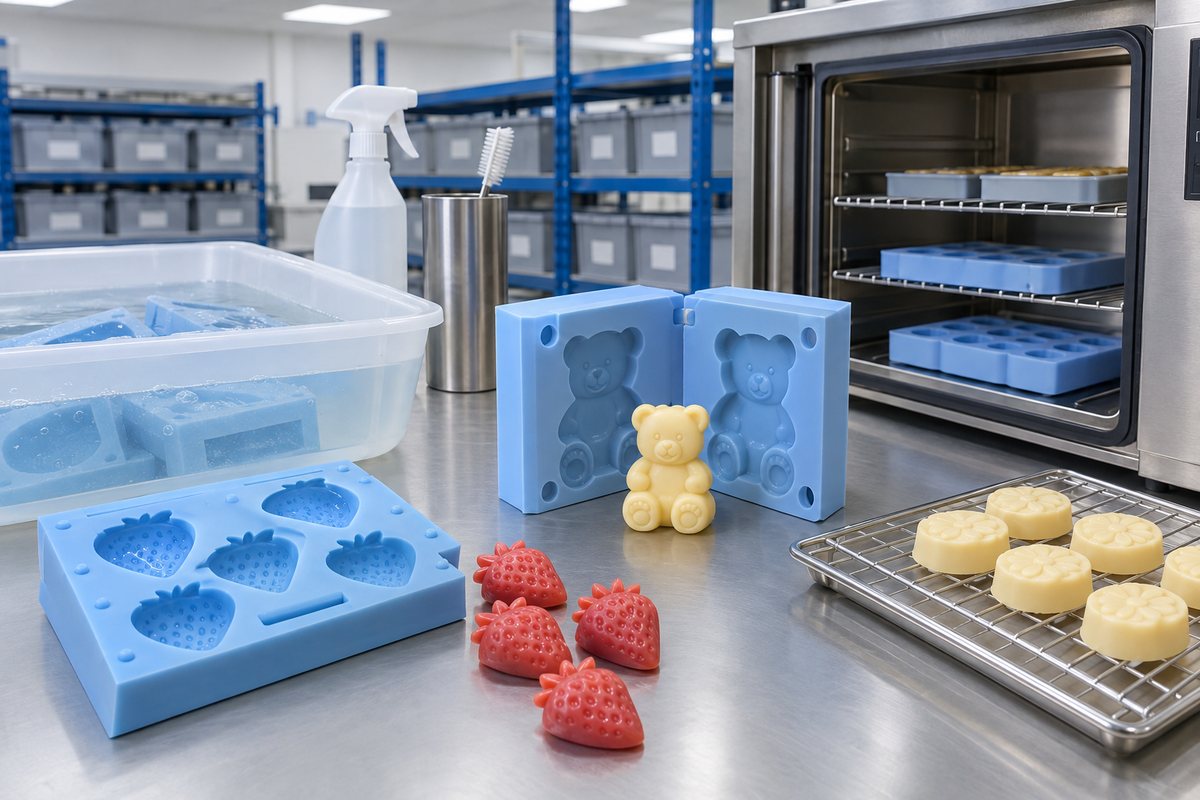
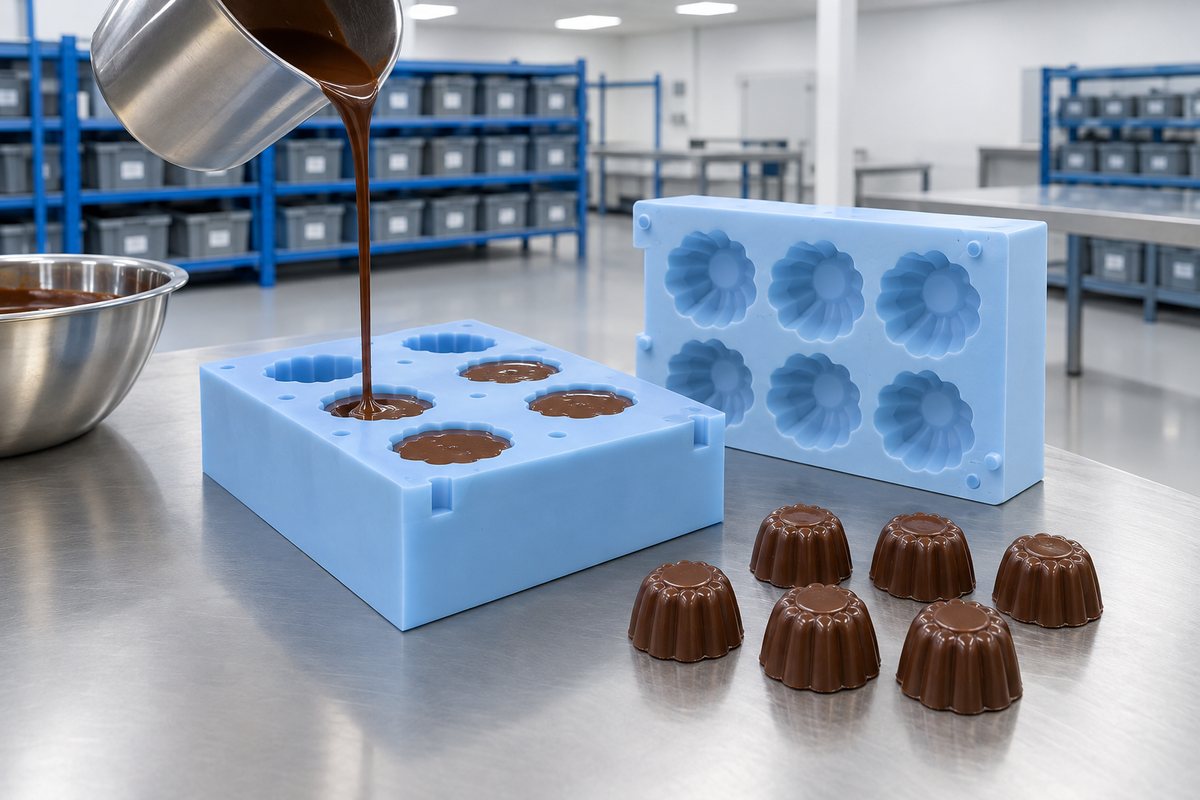
Illustrative example: Food-contact silicone moulds with controlled material handling on stainless steel
Food-contact moulds prepared with controlled material records

For food-contact work, paperwork matters as much as geometry. We will be clear about what we have and what we do not. Food-grade silicone is a material specification supported by a supplier declaration. We buy to that specification, record the grade against your order, and provide the declaration for the material used with the job.

BRCGS certification is in progress, but it has not yet been awarded. We are working towards it. Until certification is awarded, we will not describe ourselves as certified, and you should not rely on it for your own supplier approval. If your specification requires a certificated supplier today, please tell us at enquiry stage and we will honestly confirm whether we can meet it.

We will not suggest that a grade declaration and a certification scheme are the same thing, because they are not. A grade declaration tells you what the silicone is. A certification scheme tells you how the site that handled it is audited.

Our culinary division looks after food-contact moulds, so the grade, the declaration and the ordering history stay together in one place. You will not need to reconstruct the details each time you reorder.
Cleandown

The mould has to survive your cleandown, not our bench.

A mould that works beautifully in a demonstration can be destroyed within a fortnight by a real food clean-down. Caustic wash, hot water, steam, sanitiser, a dishwasher on a heavy cycle or a scouring pad used by somebody in a hurry can all take their toll. Each one attacks silicone differently.

Before we talk about shape, we ask about your cleaning regime. Chemical exposure and repeated heating determine the grade and wall thickness. A mould specified for a gentle hand wash will go soft, tacky or brittle on a caustic line. That's a specification failure, not bad luck.

Trays and moulds used in an oven need a little more consideration, as both the cycle temperature and the number of cycles matter. This is covered under high-temperature moulds.

Geometry can be just as important as material when it comes to food moulds. Sharp internal corners, deep narrow slots and thin webs collect product, are difficult to clean and are often the first places to tear. If your part includes them, we will suggest changing the design before recommending a grade. The hardness is also selected with the cleandown requirements in mind.

Find the right moulding route for your part

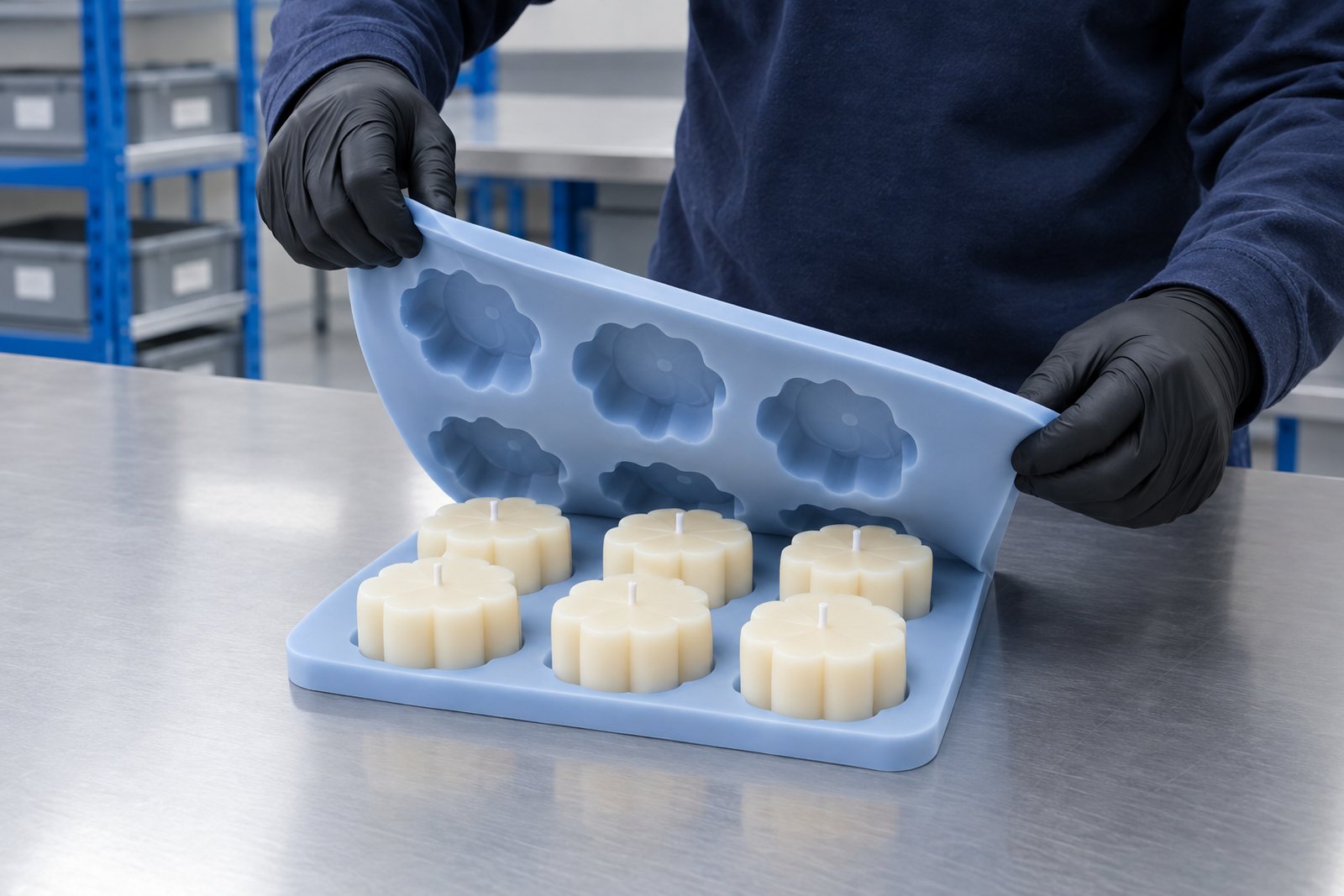
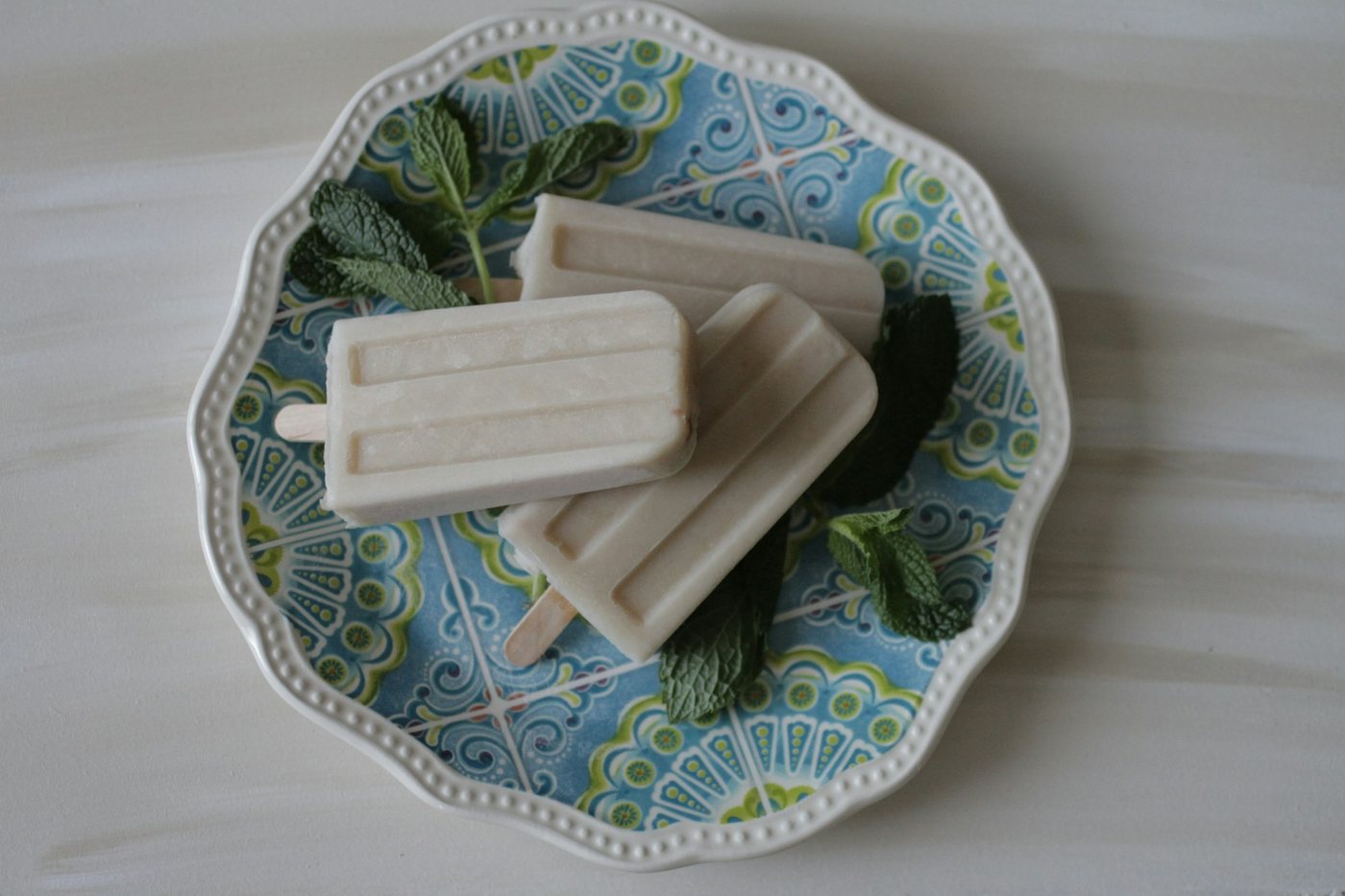
Illustrative example: A moulded silicone tray being flexed back off a set formed product to show release without tearing

Questions

Four that come up time and again.

Is your silicone food grade?

The grades we buy for food-contact work are supplied as food-grade, with a supplier declaration, and the grade used is recorded against your order. This is a material declaration, not a site certification. BRCGS is in progress and has not yet been awarded, so we will not describe ourselves as certified until it is.

Can I put it in the oven, or through the dishwasher?

Usually, yes, but only when we assess it against a stated cycle. Tell us the temperature, how long the cycle lasts and how often it runs. We will then specify a grade for that duty, rather than offer a general assurance. A mould that survives one bake is not the same as a mould designed for a daily bake.

Will it taint the product?

Properly cured silicone of the right grade should not cause taint, and post-curing reduces residual volatiles further. Taint complaints usually trace back to release agents, cleaning chemicals left in the mould or an unsuitable grade, rather than the silicone itself.

Can you do a coloured or branded mould?

Colour and moulded lettering are both standard options. For food-contact work, pigments are selected through the same specified route as the base silicone. This means a colour request can narrow the grades available. If colour matters, tell us early rather than waiting until sign-off.

Typical work

Food work we have done.

Sectors, not customer names. The pattern is the same: a shape someone wants repeated, and a cleandown it needs to withstand.

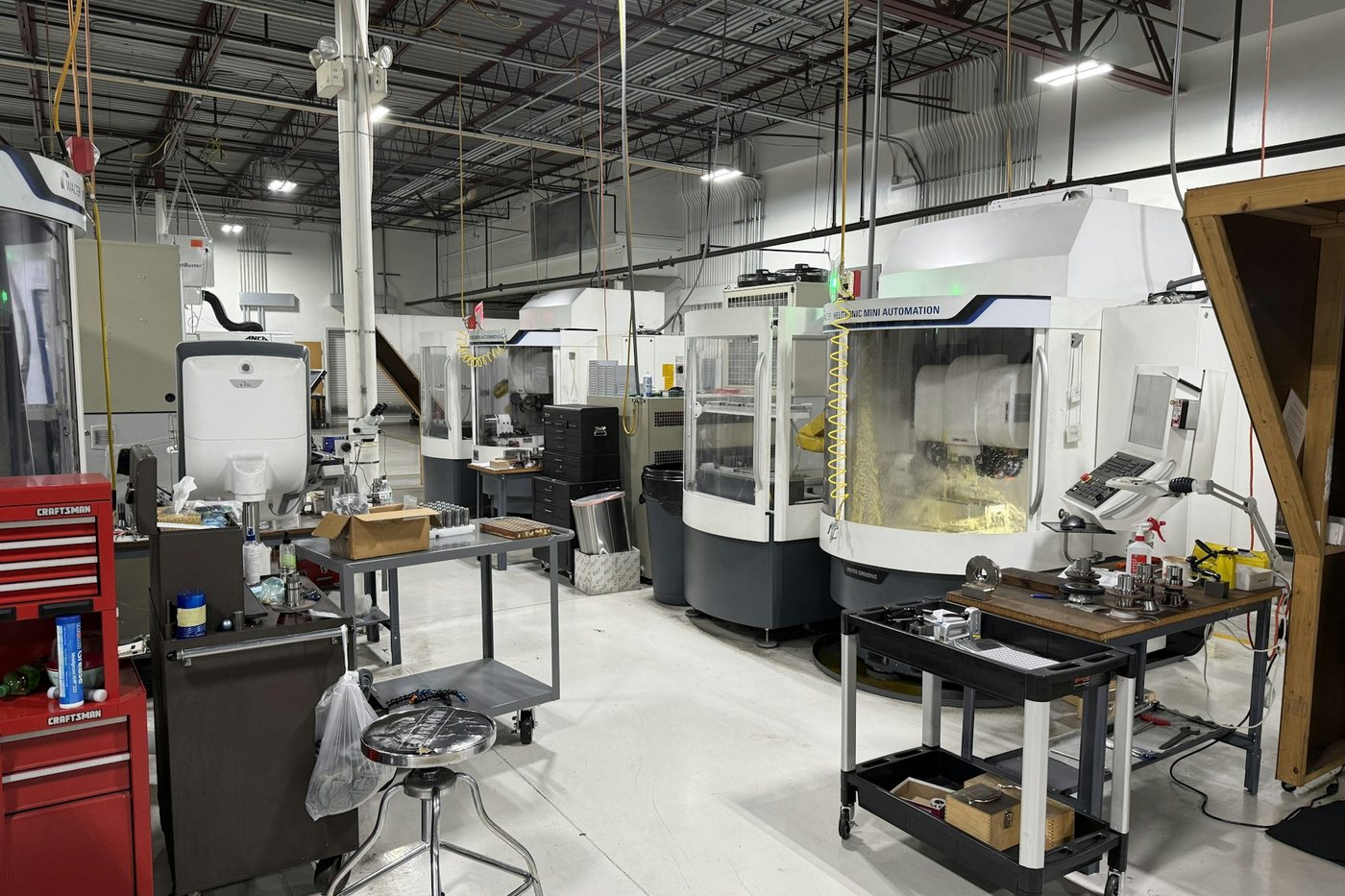
Clean machine shop with CNC machines and tooling
Confectionery

Chocolate and sugar work

Fine relief and crisp edges matter, especially when your product is brittle. Demoulding also needs to be gentle. A vacuum cast mould usually helps the detail come out cleanly, without touching up.

Vacuum casting
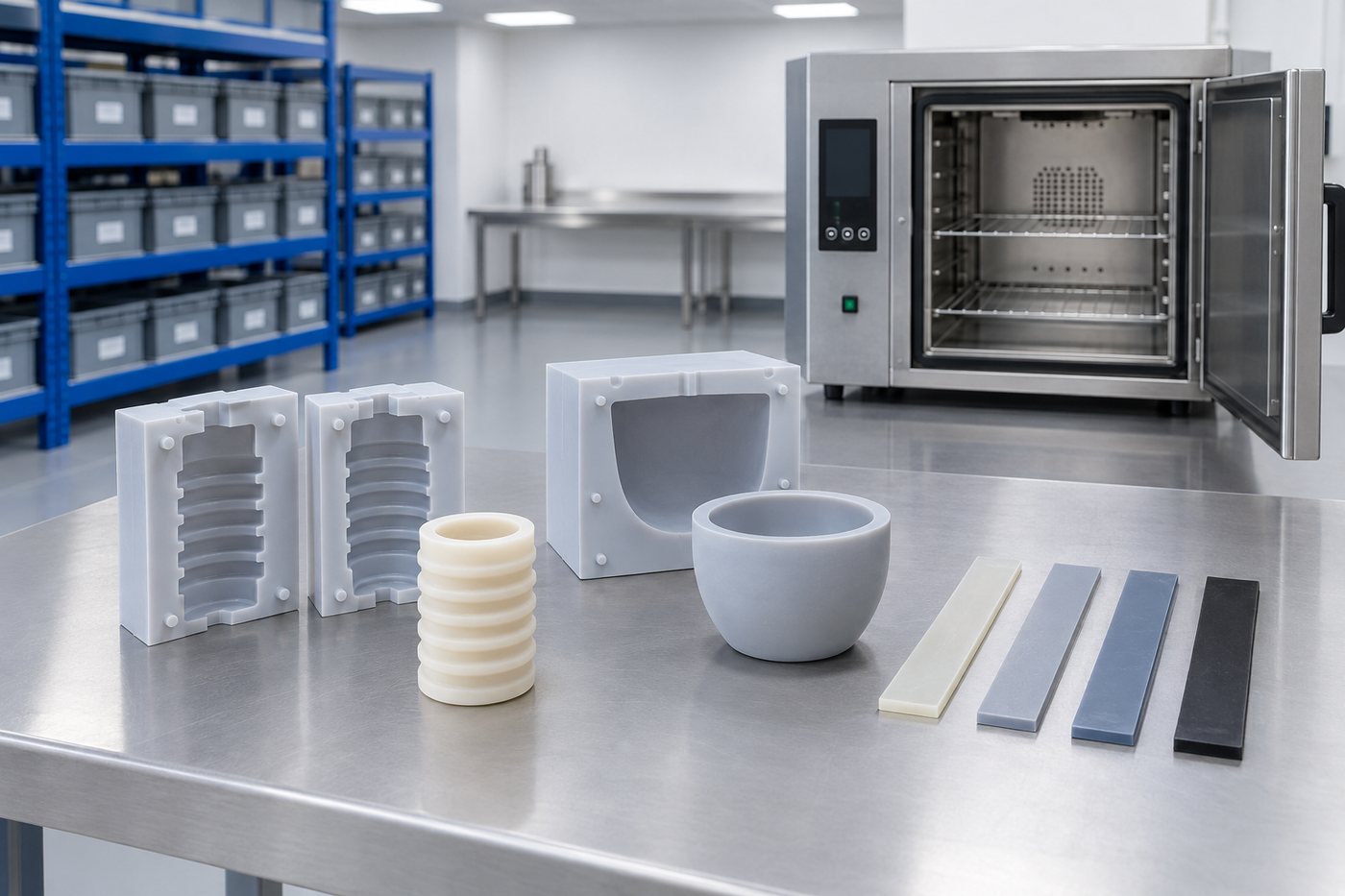
Illustrative example: Heat-tested silicone samples compared beside a small workshop oven
Bakery

Baking trays and forms

Your mould needs to handle repeated oven cycles and repeated washing, while helping an operator get the product out fast. Hardness and wall thickness are set around the shift, not around the sample.

High-temperature moulds
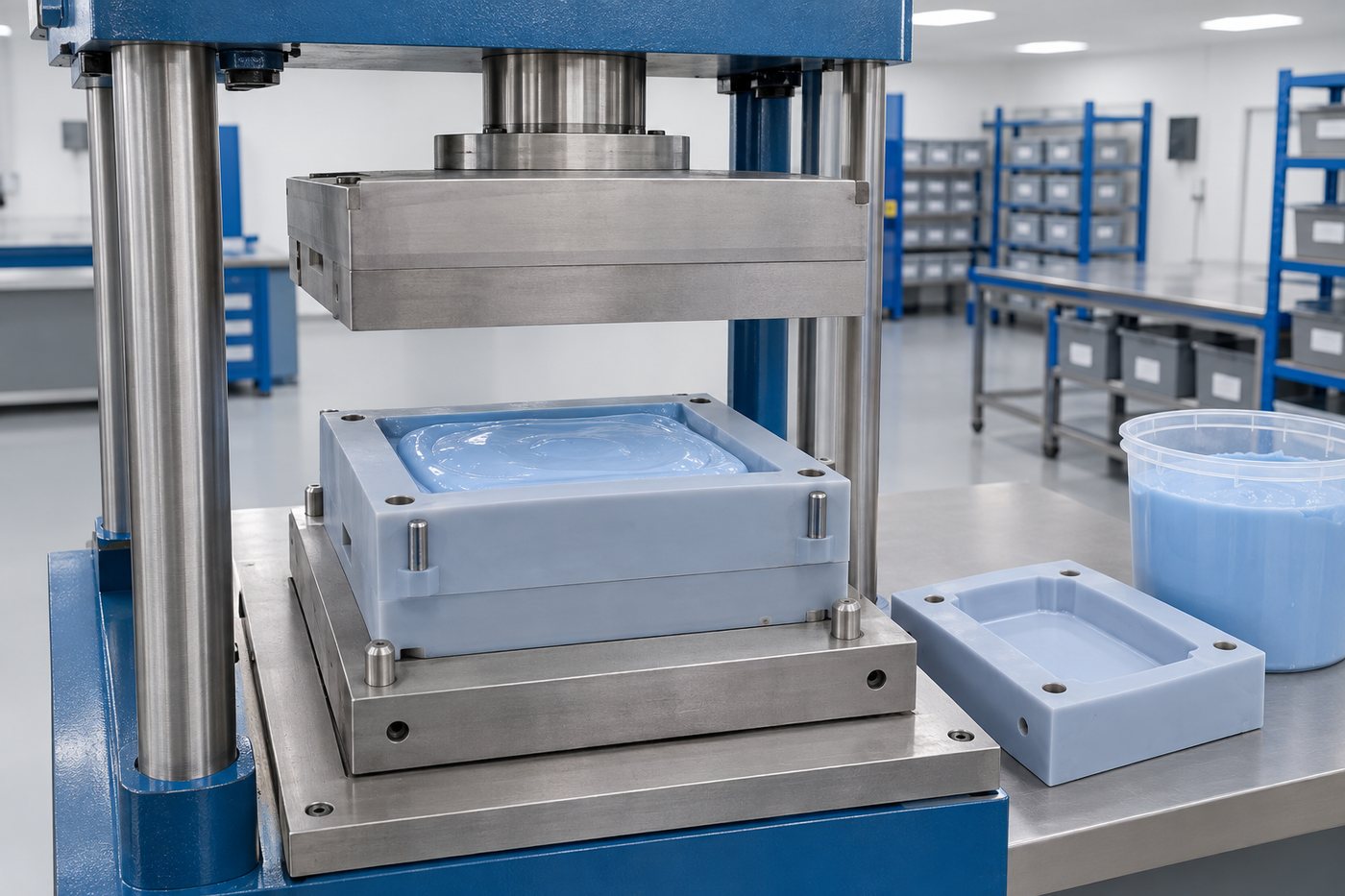
Illustrative example: Compression press loaded with silicone charge before moulding
Food manufacturing

Seals and moulded components

For food-handling equipment, we supply gaskets, seals and moulded parts. These are pressed parts in a specified grade, rather than moulds, so they are quoted as components.

Compression moulding

To quote it

Find out about the cleandown.

01

What touches the food

Which faces will be in contact, and what will they touch? Wet dough, hot sugar, fat, acid and brine each behave differently when they come into contact with silicone.

02

How it gets cleaned

You can clean it by hand, in a dishwasher, through a tunnel, or with caustic. If you know them, please include the chemicals and temperature. The cleaning method has the greatest impact on the specification.

03

The heat cycle

Oven, chiller, blast freezer or nothing at all. Tell us the temperature and how often it will be used, and we'll specify the mould for the duty rather than the peak.

04

What paperwork you need

Tell us what your own approval process needs from us. We prefer to find any gap now, before you build a specification around us.

Send the specification

Illustrative example: Food-contact moulds shown with cleaning and heat-cycle handling equipment
Cleaning method and heat cycle shape the specification

At a glance

The ideas in pictures.

Silicone hardness in everyday terms

00-30Gel insoleA10Jelly sweetA20Elastic bandA30Pencil rubberA40Shoe heelA60Tyre treadSofter: peels from undercutsFirmer: holds its shape

Swipe to see the whole diagram

A rough guide. We choose the grade for your shape, material and number of pours.

From idea to finished mould

  1. 01Photo or sampleShow us what you want to cast
  2. 02Drawing agreedWe agree the shape and split
  3. 03Master madeMachined, printed or sculpted
  4. 04Proof pourA first mould to test
  5. 05Full mouldMade once you are happy
  6. 06Kept on fileFor easy reorders

Swipe to see the whole diagram

Every mould follows the same simple route, so you always know what happens next.

Ready to start?

Tell us what you need to make, and we'll explain how to mould it.

Send us a drawing, a photograph or a sample. We'll come back with a mould strategy, a material recommendation and a price.

Real people, a real workshop

You deal with the people who make it.

No call centre and no middlemen. When you contact TCI Mouldings, you speak to the team who design, build and check your mould.

  • A real Warwickshire workshopUnit 15, Waterloo Park, Bidford-on-Avon, Alcester B50 4JG.
  • Real people on the phoneCall the team on 01789 224228, Monday to Friday.
  • The same team on every jobDesign, production and aftercare come from the people you see here.
  • Part of TCI GroupFive specialist brands, one engineering team. Visit TCI Group.
The TCI workshop, with moulds on the bench mid-build.
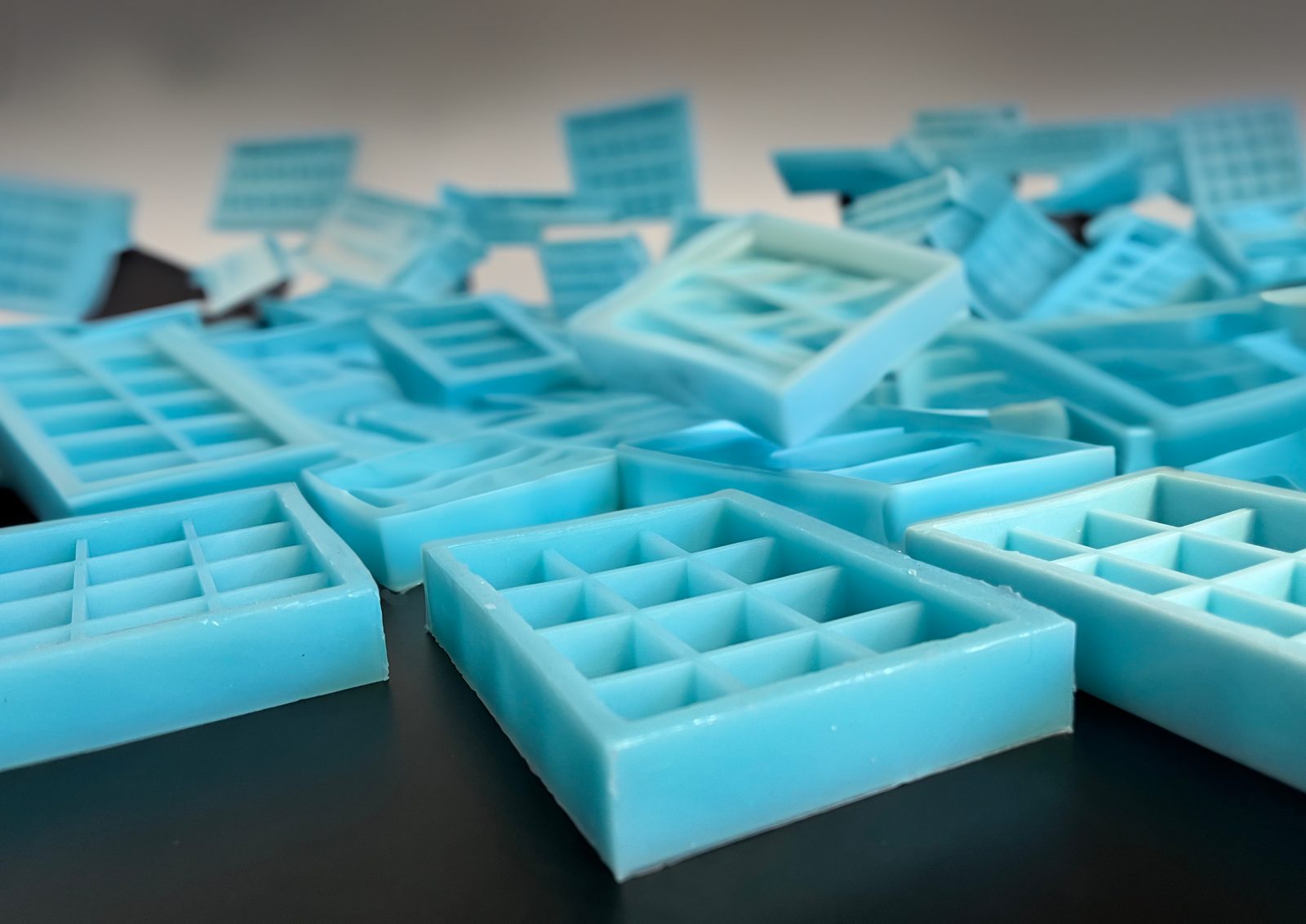
Silicone wax melt moulds made by TCI Mouldings.
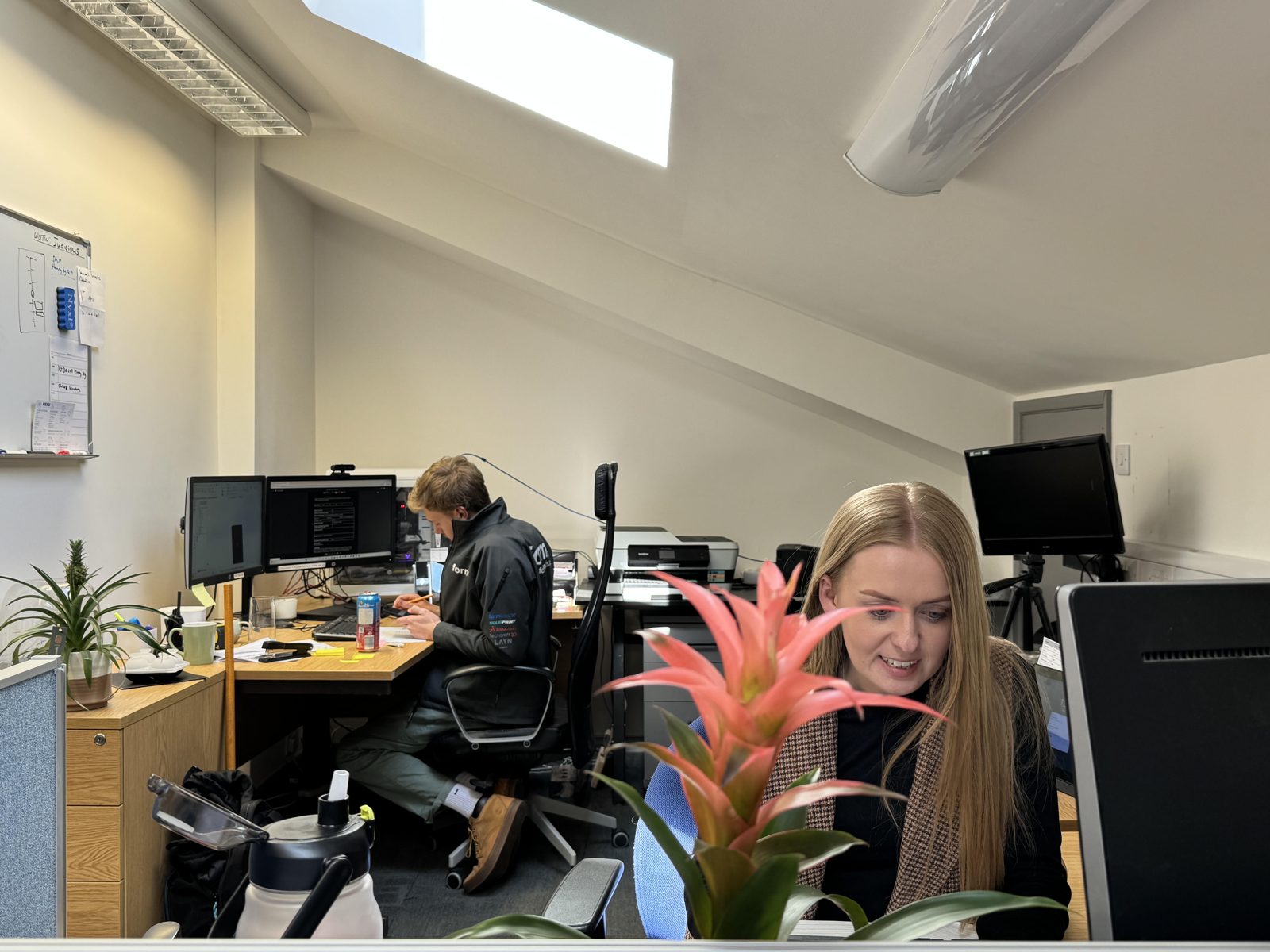
The TCI design and project office.
  • Thomas LaneManaging Director
  • George PrestonDesign & Project Manager
  • Kelly BallingerHead of Partnerships
  • Jim AndertonProduction Manager
  • TheodoreEmployee Welfare
Meet the team