What the part is for
When we're designing a decorative moulding, seal, handle or fitting, function tells us which faces are functional and which are simply there. Without that guidance, every bump is sacred.
Groundwork · digitising an existing part
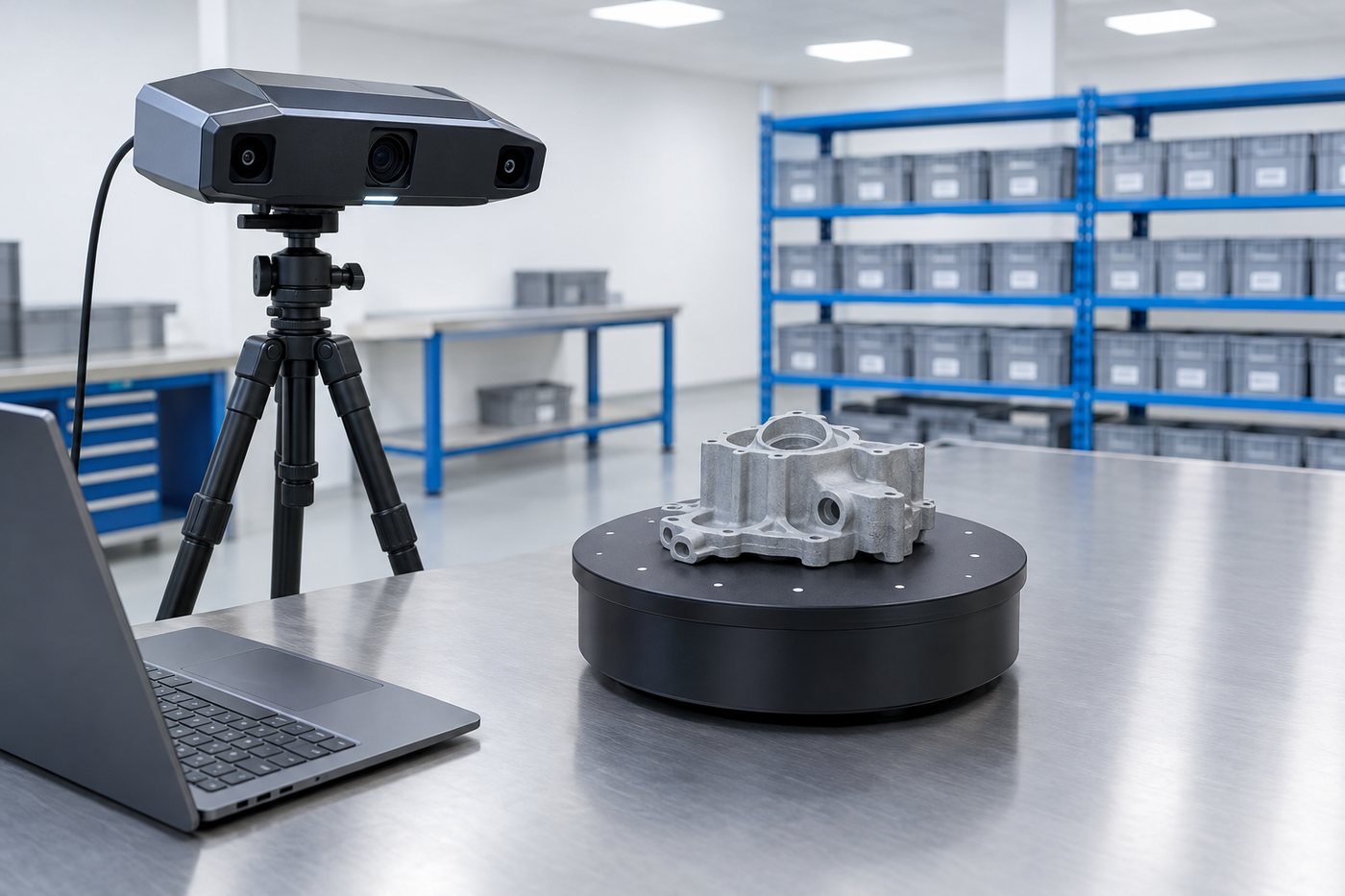
Scanning turns your physical part into digital data we can use to make a mould. It captures organic shapes very well, but it cannot reliably tell us which face was intended to be flat. Bring us your part and tell us what it needs to do. We will scan it for the job, rather than simply scanning it to create a file.
Why you are asking
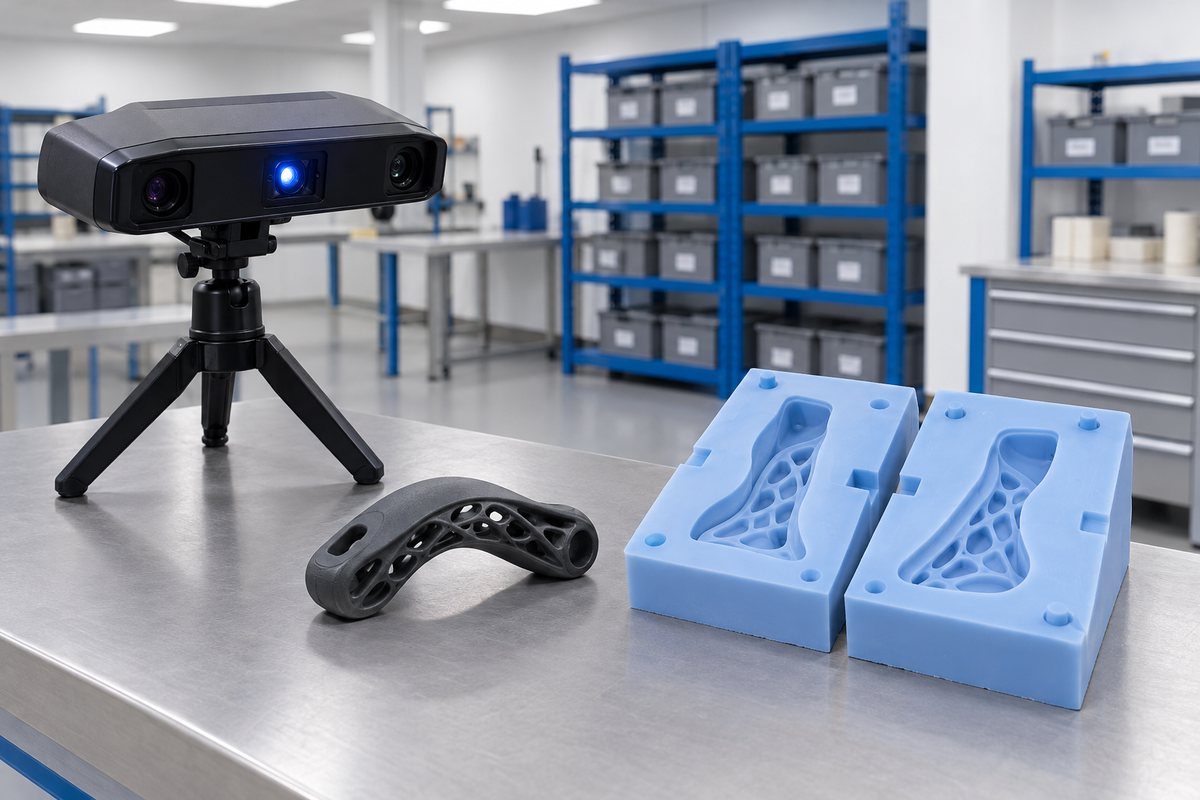
People usually ask for scanning for one of two reasons, and each needs a different approach. The first is copying: you have one item, the original tooling is no longer available, and you need more. The second is comparing: you have a part made from a mould and want to see how much it has changed from the original drawing.
Scanning is at its best when you need to copy a carved rosette, a worn architectural detail, a hand-modelled figure, a shell or a pine cone. These are shapes nobody would enjoy drawing, where the eye is the judge and there is no original drawing to be unfaithful to. Scan the shape, clean the data, and you have a master that can be printed or machined from.
Comparing can be harder, and it is often not the cheapest answer. If you simply need to know whether a moulded part is flat, round or square, a surface plate and a gauge will give you a faster, more honest answer than a point cloud. We will say so rather than sell you a scan.
If the part is no longer available in one piece, or you only have the item it fits into, a scan alone will not be enough. This is a reverse engineering job, with the scan serving as one input among several.
What you get
A raw scan is a skin made of triangles. It cannot tell which of its faces is a cylinder, which edge is meant to be sharp, or which lump is a scratch from thirty years in service. It will reproduce the scratch faithfully.
Turning that captured skin into something a mould can be built around involves a few important decisions: which surfaces should be rebuilt as real geometry, which should stay as captured shape, where the split line should go, and how much of the original wear should be tidied away. These are engineering decisions, so we need your input. You know what the part does, and we do not.
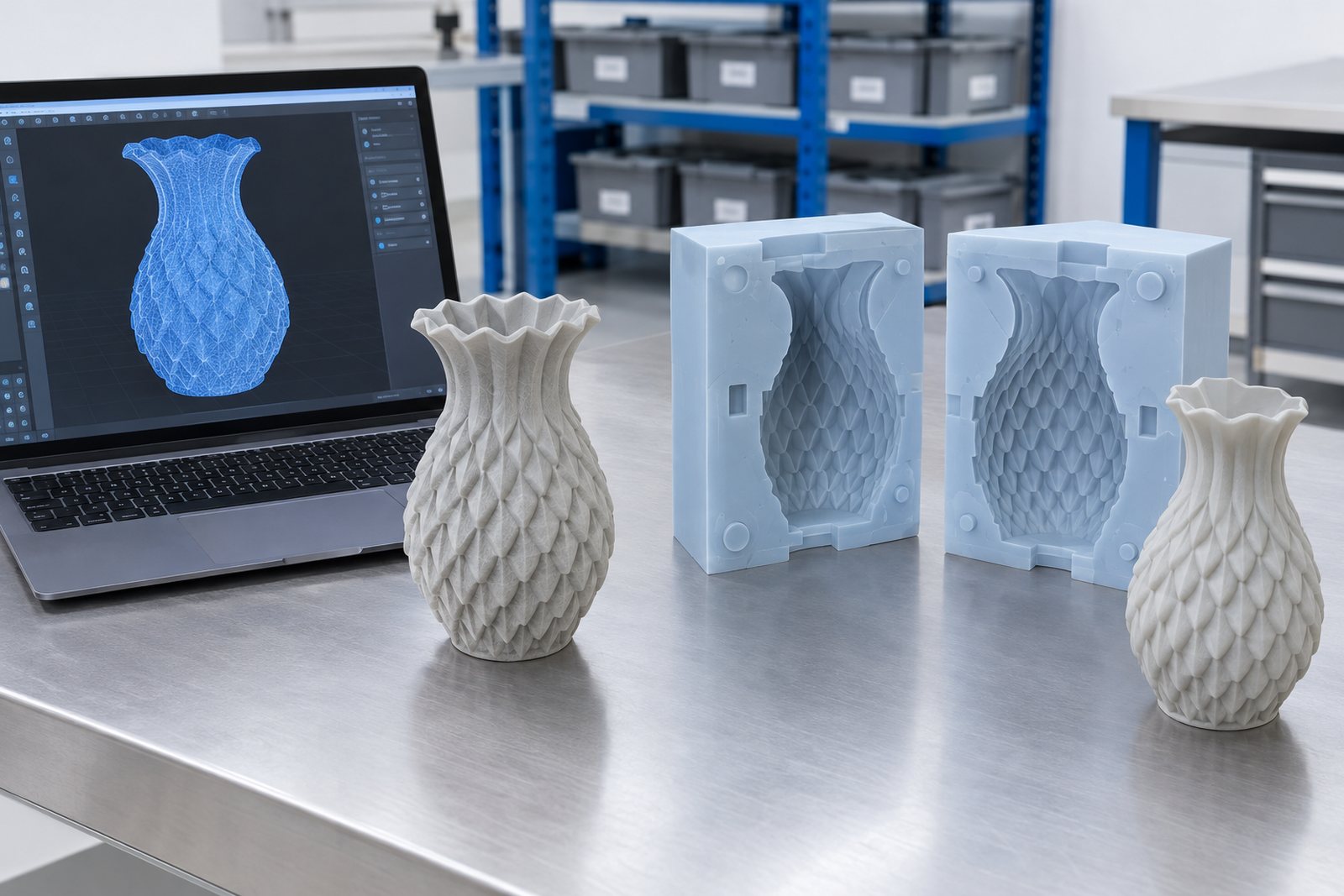
There are two deliverables, and they involve different levels of work. The first is a cleaned mesh, suitable for printing a master and casting a mould around it. The second is a rebuilt model with proper features. This is the option you need if the part must be modified, scaled, mated to something else or made repeatedly for years.
Dark, glossy, transparent or very fine-featured surfaces can all challenge a scanner. Deep internal cavities can be difficult too. Before we start, we'll let you know if your part is one of the awkward ones and explain what we'd do instead.
To quote it
Scanning captures everything with equal weight. Tell us what matters most, so we can distinguish a casting flaw from a genuine design feature.
When we're designing a decorative moulding, seal, handle or fitting, function tells us which faces are functional and which are simply there. Without that guidance, every bump is sacred.
Simply mark the surfaces that touch something else. We'll rebuild those as proper geometry, while everything else can stay as captured shape without anyone noticing.
A faithful copy preserves the wear, shrinkage and old repair, just as they are. If you need the part as it was intended rather than as it ended up, tell us. That is a different job.
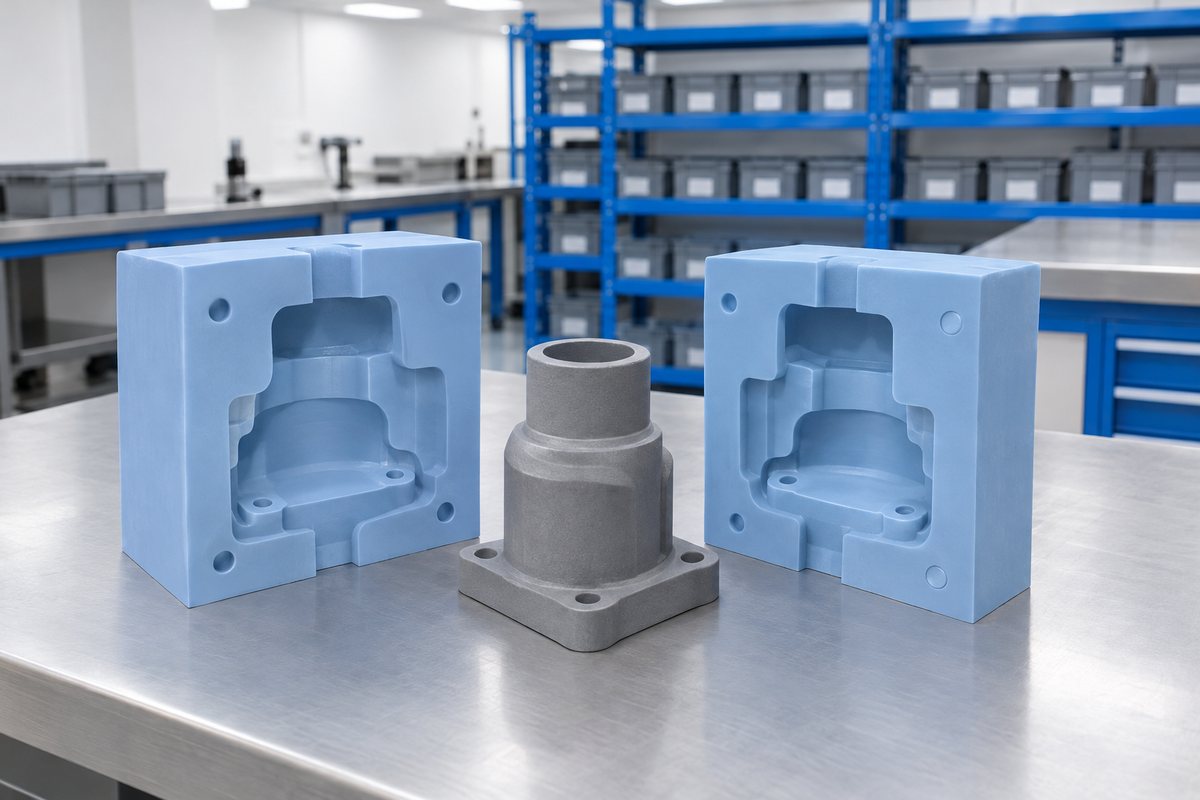
Whether you need a one-off cast mould, a printed master, or a hard tool, the right route depends on how much model rebuilding is worth paying for. Preparing a model for a steel tool needs far more work than preparing one for the master pattern used for a cast silicone mould.
At a glance
From idea to finished mould
Swipe to see the whole diagram
Ready to start?
Send us a drawing, photograph or sample. We'll come back to you with a mould strategy, a material recommendation and a price.
Real people, a real workshop
No call centre and no middlemen. When you contact TCI Mouldings, you speak to the team who design, build and check your mould.


 Thomas LaneManaging Director
 George PrestonDesign & Project Manager
 Kelly BallingerHead of Partnerships
 Jim AndertonProduction Manager
 TheodoreEmployee Welfare