For chandlers · Custom silicone candle moulds, made in Warwickshire
Silicone moulds for chandlers, from your first pillar to a full production schedule.
Pillar tooling, vessel moulds, wax melt trays and clamshells, designed around your wax, your fragrance load and the oven you actually own. If you only need one mould, that is perfectly reasonable.
Four things determine whether your candle mould is any good.
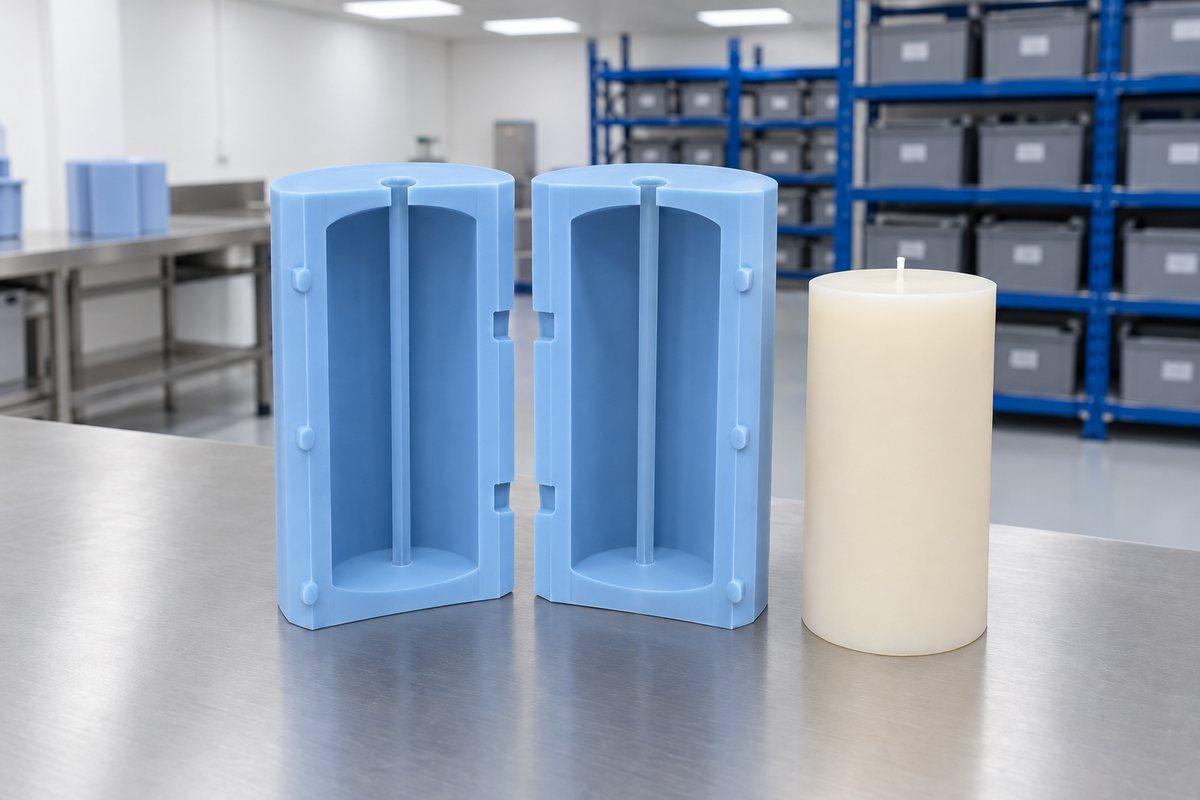
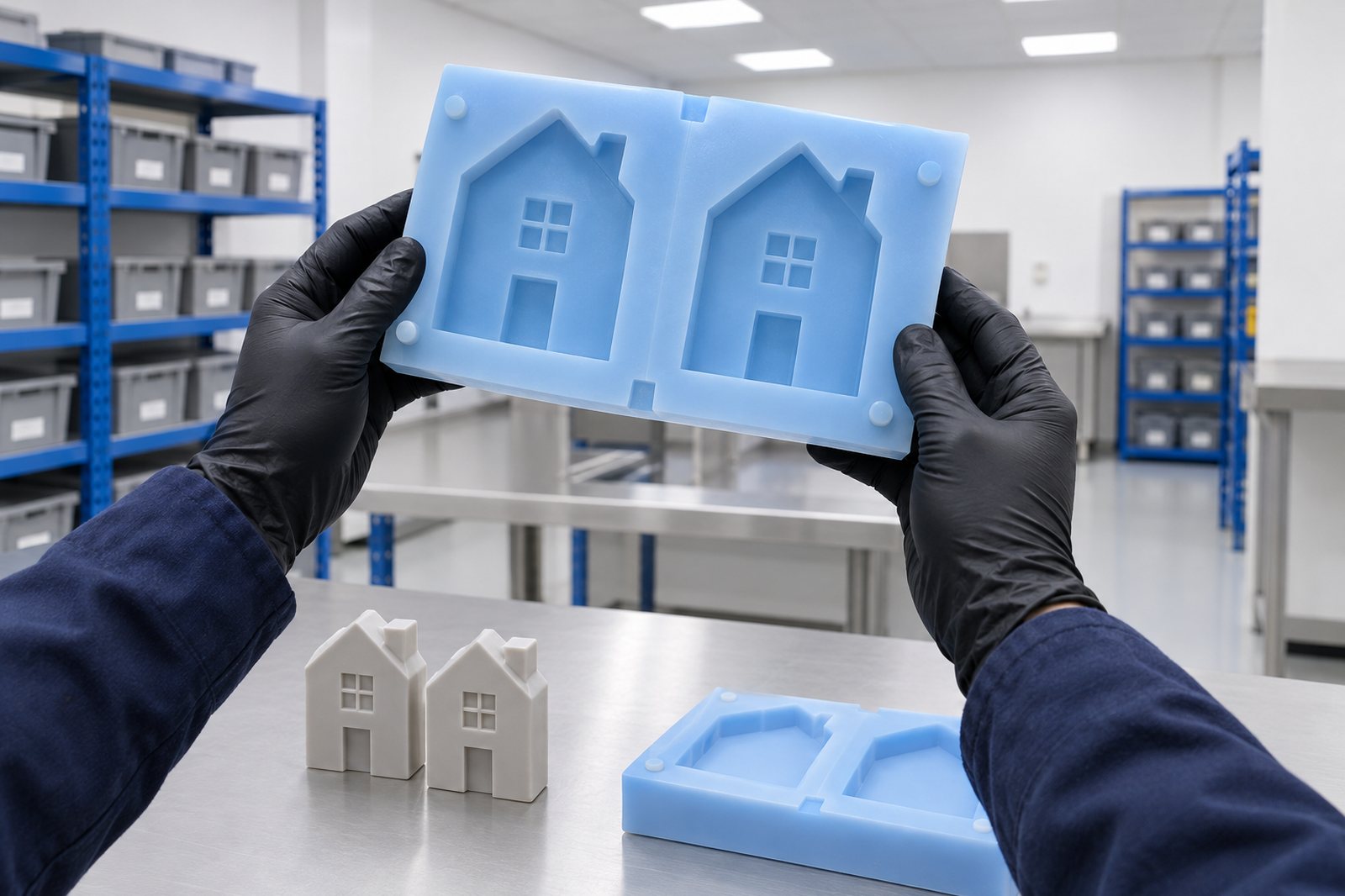
Illustrative exampleCandle mould detail around release and wick position
When release, hardness, edge definition and how the tool behaves around a wick are right, pouring becomes uneventful. That's the aim.
Release comes first. As wax cools, it shrinks and generally wants to leave a silicone tool by itself. If you are reaching for release spray on every pull, the problem is more likely to be the geometry or the grade than your technique.
Hardness is the next lever. A softer grade lets you flex past relief and undercuts, while a firmer one keeps a straight-sided pillar honest over hundreds of pours.
Edge definition is where cheap tooling shows its limitations. A soft arris can make the finished product look blurred on the shelf.
Then there is the wick. A wick hole that is drilled rather than designed can tear out over time, leaving a scar down the base of every candle after it. We prefer to build the wick location into the tool, along with a base that sits flat and a split line that places the parting mark where nobody will run a thumb. None of this is exotic. It is simply decided before the silicone is poured, rather than afterwards.
Whether it's your first mould or your fiftieth, we quote them in the same way. What changes is the advice that comes with it.
Illustrative example
Stage one
Just starting
If you're testing candle shapes, resist the urge to tool up a whole range. Choose the one shape you believe in, have a single mould made properly, and pour a hundred candles in it before spending more. That first run will teach you more about your wax, fragrance load and cooling times than any amount of planning. Buy stock moulds for shapes you're still testing, and save the bespoke tool for the shape that's truly your product.
At this stage, consistency matters more than novelty. A returning customer may notice a wobble in your bases before you do. This is the time to standardise: choose one or two sizes, settle on a wick position you trust, and keep a second identical tool ready. That way, a torn mould will not bring your market weekend to a halt.
It is also a sensible point to have the split line reviewed. In a small candle business, much of the trimming labour comes from a tooling decision that nobody has revisited.
If you are buying wholesale, you are usually working to a specification, so your tooling needs to hold it consistently. We can make multi-cavity trays sized to your oven and your bench, rather than to a supplier's catalogue. We can also hold spares for the tools you cannot run without, and work out your cost per part properly, so your trade price is based on more than a hopeful guess.
If a stockist needs a private-label shape, we can develop it under NDA and keep the master here for reordering.
Whatever the size of your order, here's what comes with every mould.
Warranty-backed tooling
Your tooling is covered against manufacturing defects for two years or two thousand uses, whichever comes first. We record the grade and specification against your order.
NDA as standard
Your shape stays yours. A master made for you is never used for another customer, and we will not publish anything without your say-so.
A named engineer
You have one technical contact who knows your wax, your tool and your split line. They support you from first enquiry through to reordering.
Small orders welcome
If you need just one mould, that's perfectly reasonable. A good number of our long-standing customers started with exactly that.
A clear cost per part
Tooling costs are spread across the run you actually expect, with labour per pour shown clearly, so you can price your candles with confidence.
Rows of white container candles
Learn from other people's bad afternoons
Six mistakes we see chandlers make.
None of these decisions are daft. They are all reasonable choices that only turn out badly two hundred candles later.
01
Tooling a whole range at once
When six shapes are commissioned together but only two sell, prove one shape through a proper production week first. Then extend the range based on what the market actually bought.
02
Choosing hardness from a chart
A Shore number copied from a forum post is not a specification. Your part decides: deep relief needs a softer grade, while a tall, straight-sided pillar needs a firmer one.
03
Ignoring fragrance load
Heavy fragrance oils can affect how wax behaves in your tool and how the surface finishes. Share the oil load with your mould maker, rather than only the wax type.
04
Drilling the wick hole afterwards
Cutting a hole into cured silicone can cause it to tear, and the tear can continue to grow. That's why wick location should be built into the tool design, where the area can be reinforced.
05
Running one tool with no spare
Moulds are consumable items. If you rely on a single tool, one tear can stop production, usually in the week before Christmas orders ship.
06
Levering candles out
Screwdrivers, knives and cold hands can shorten a tool's life. If a candle needs force to release, the answer is better geometry or the right grade, not more effort.
Typical work
What we usually make for chandlers.
Four families of tooling cover most of what candle makers come to us for.
One
Pillar moulds
Two-part tools for straight, tapered, fluted and sculpted pillars. Designed registration ensures the two halves land in the same place every pour, keeping the parting mark where you put it.
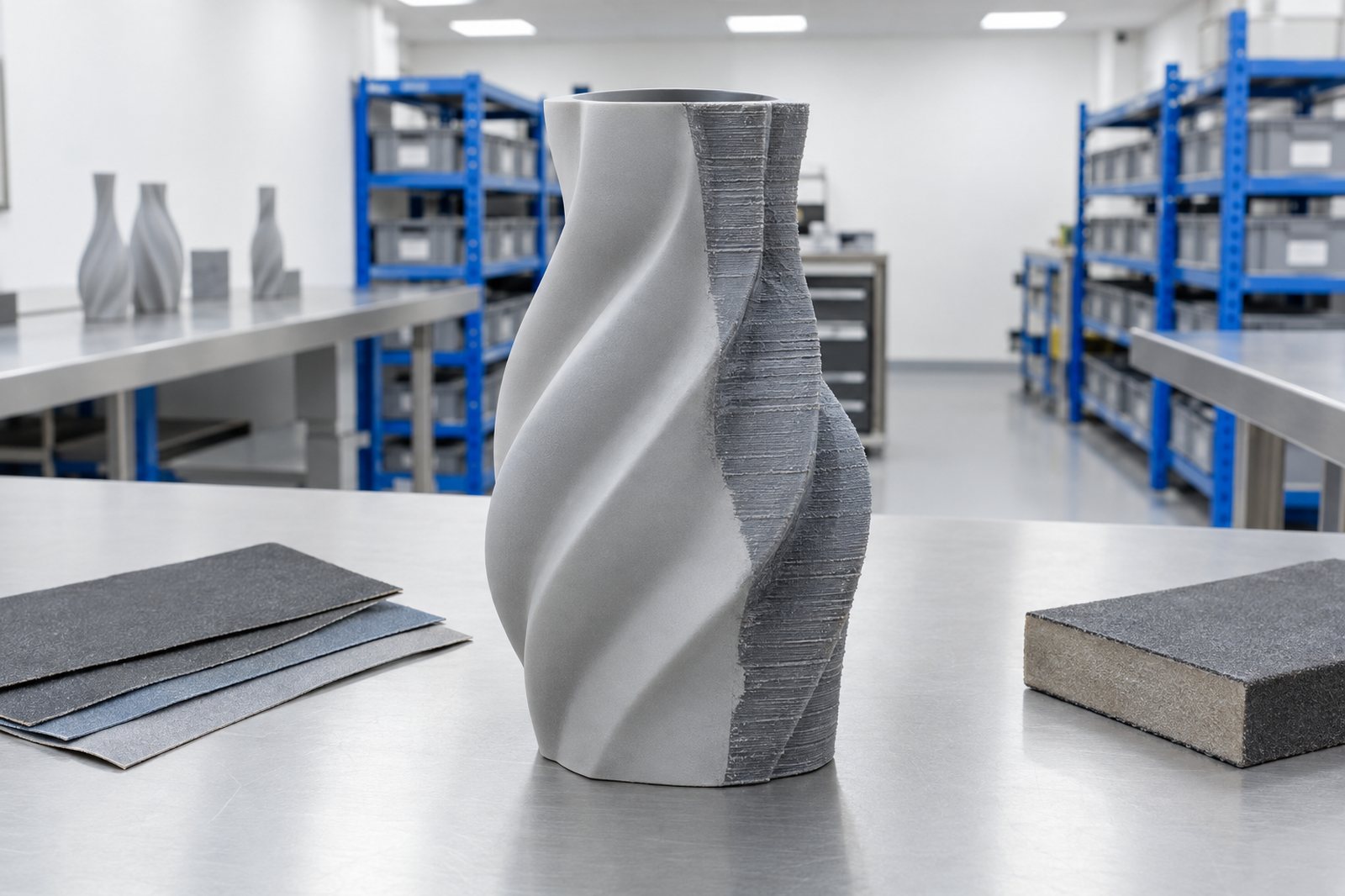
Illustrative example
Two
Vessel and container tooling
Moulds for concrete, plaster and resin vessels that you can fill with wax. Include branding relief on the base and a wall thickness designed to withstand knocks in a workshop.
Illustrative example
Three
Wax melt clamshells and trays
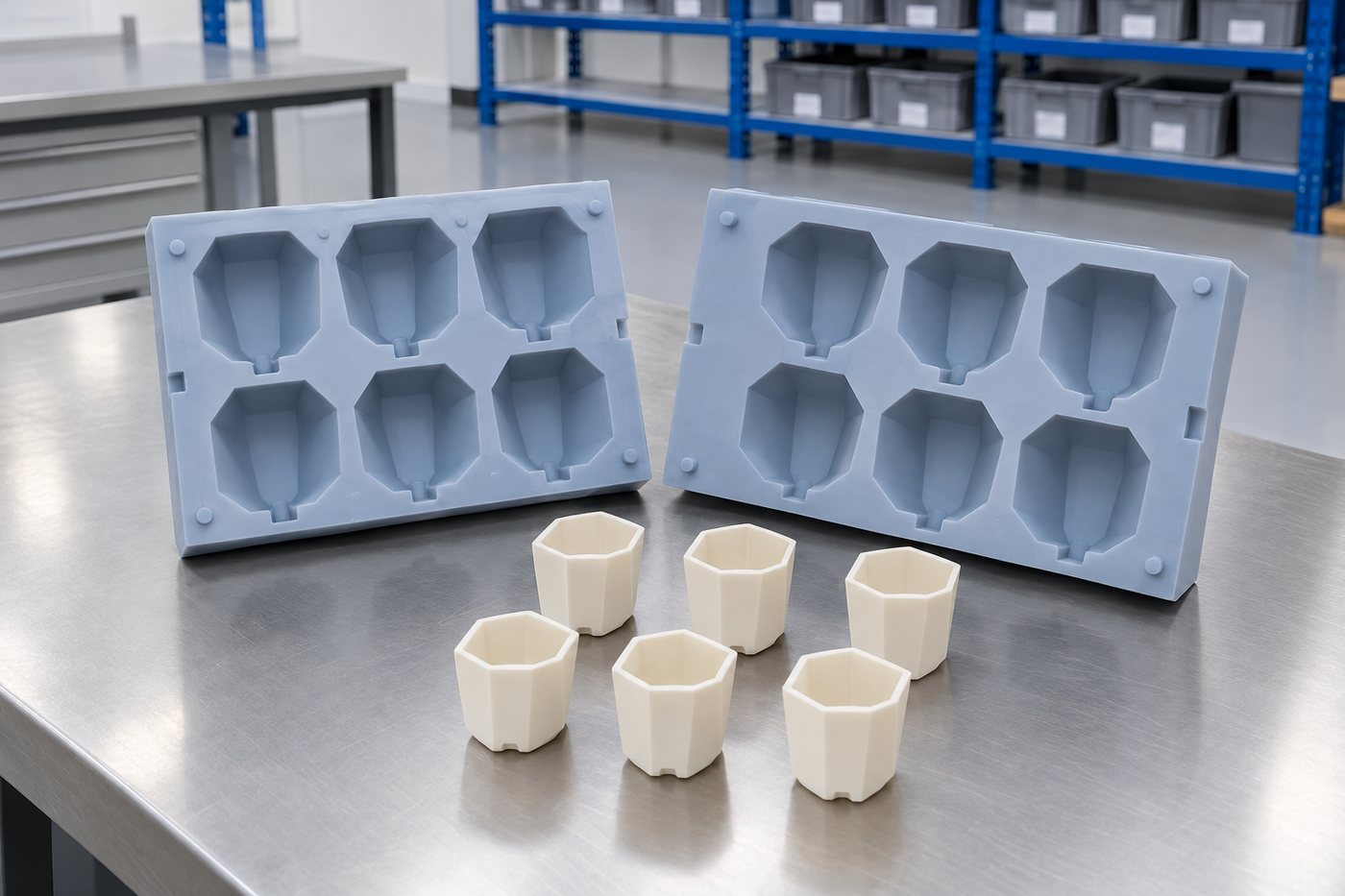
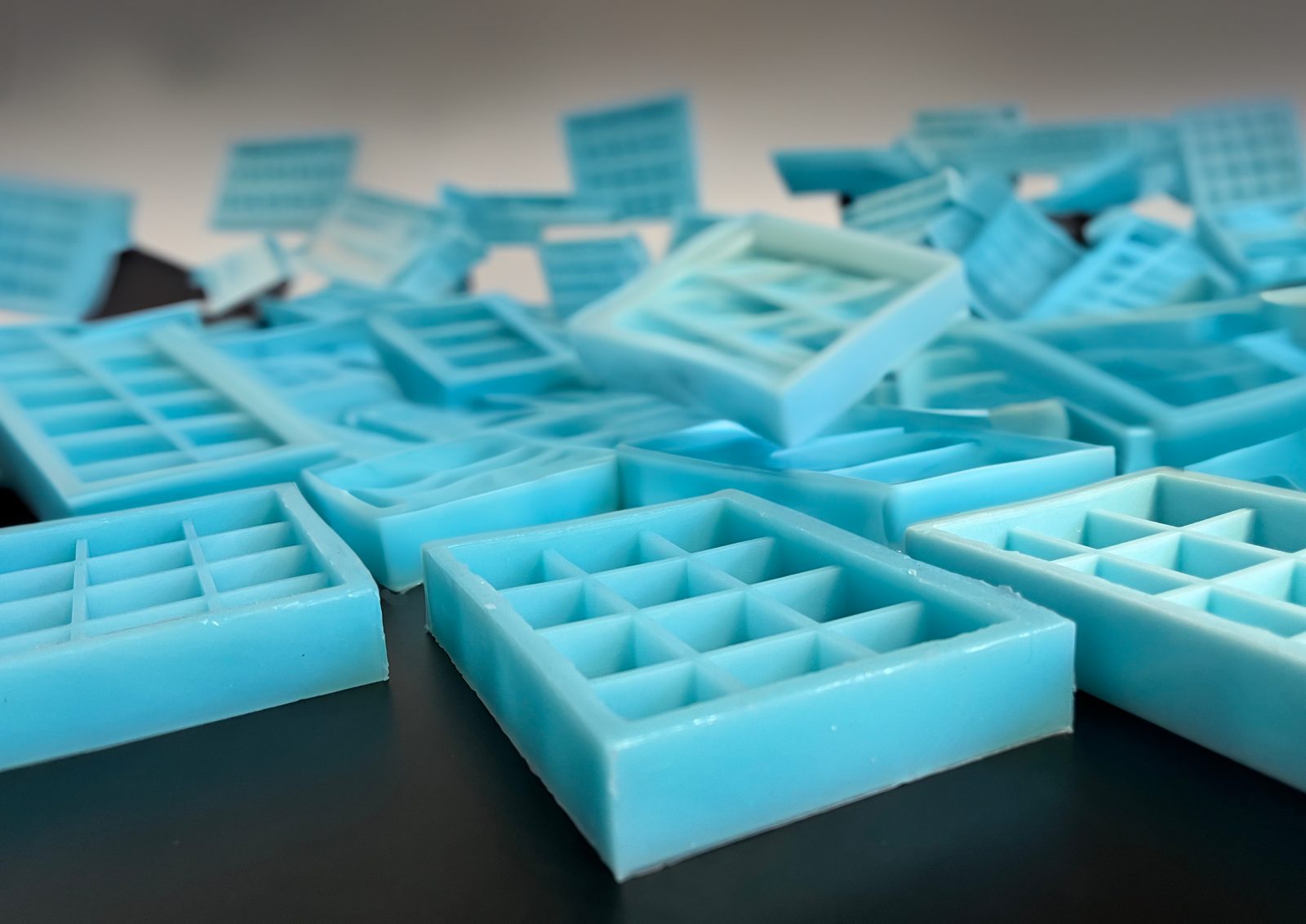
Multi-cavity trays and clamshell tooling sized to suit your oven, your bench and what one person can lift. The cavity spacing lets you fill a whole tray in one pass.
Illustrative example
Four
Decorative and seasonal shapes
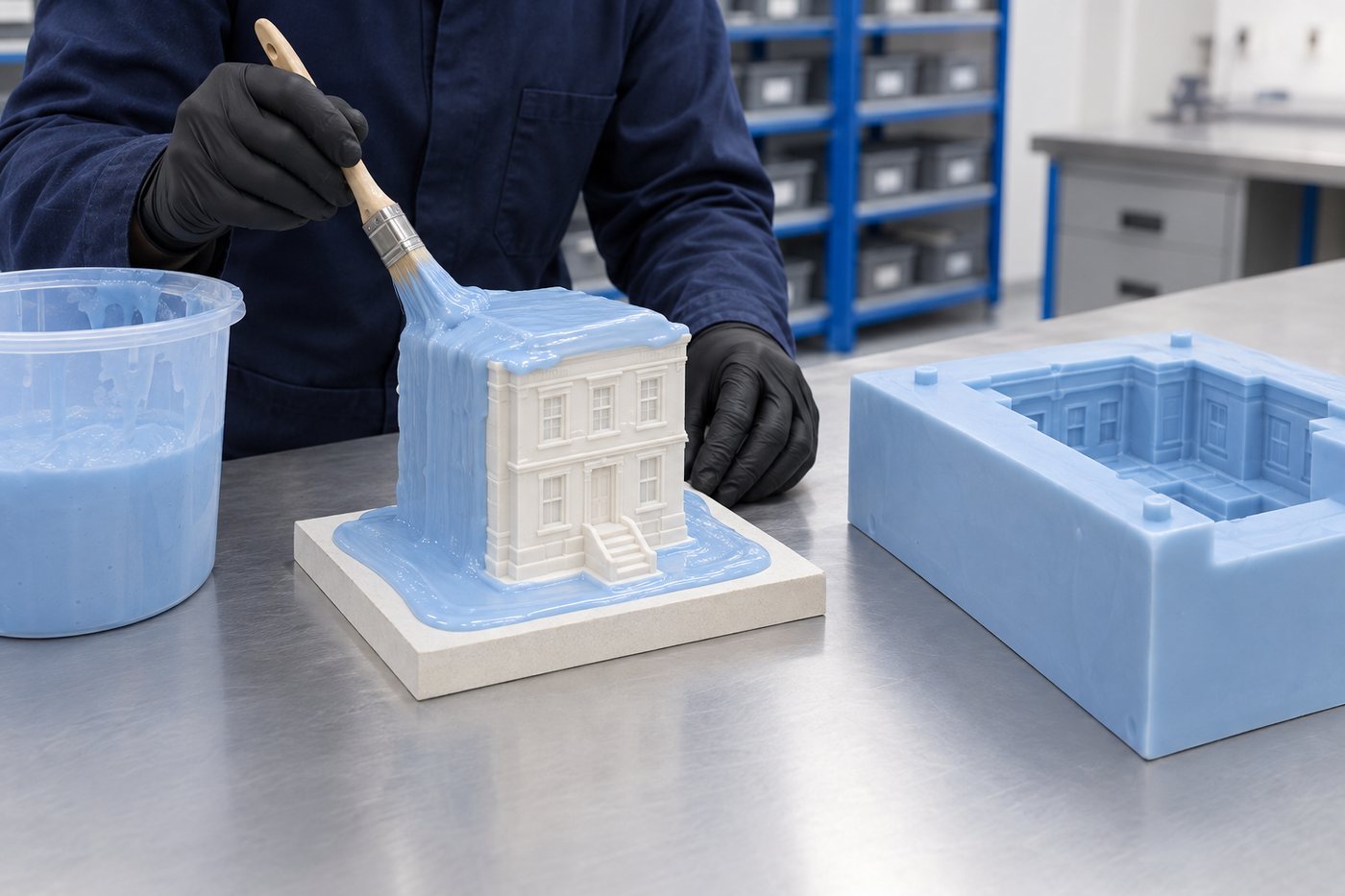
Create sculptural and seasonal forms from a master you supply, or from one we design and print here. We handle undercuts with flex or by splitting the tool, so you do not have to simplify your idea.
Usually, yes, provided the silicone tool is well designed. Wax contracts as it cools and pulls away from the mould wall, which is why silicone is so well suited to chandlery.
If your wax keeps sticking, the cause is usually a straight wall with no taper, an undercut that was not accounted for, a silicone grade that is too hard for the relief, or wax poured too hot and slumping into every pore of the surface. Tell us your wax, pour temperature and fragrance load, and we can usually design out the need for release spray entirely. That also helps your candles look better.
Can you put my logo in the base?
Yes, the base is usually the most sensible place for it. Raised or recessed lettering is straightforward, although very fine or thin strokes can fill and blur in wax. We will tell you honestly if your typeface needs opening up before it will read clearly.
Cutting your branding into the tool means every candle carries it without a label or a second operation. If you are working towards wholesale, it is one of the cheapest ways to make a hand-poured range look considered.
How many candles will one mould give me?
We measure mould life in pulls rather than months, and wax is one of the kinder materials, so a good tool used sensibly can last a long time. What shortens its life is heat cycling, solvent-heavy release agents, aggressive demoulding and cleaning with anything abrasive.
Our tooling is covered for two years or two thousand uses against manufacturing defect. Wear from normal use is not a defect. If a mould is central to your production week, order a spare with it and store it unused.
Can you copy a mould I already own?
If you own the candle, or have the right to reproduce its shape, we can copy it for you. This is often a better route than copying the mould itself, because a used tool may have drifted from the original.
We measure the part, rebuild it, correct anything that needs correcting and keep the record. That means we can make a like-for-like spare in a year. We will not reproduce somebody else's protected design, so please tell us where the shape came from.
Do you do food-safe moulds for wax melts sold as food-adjacent items?
Wax melts are not food, so the usual chandlery grades apply. If your product will genuinely come into contact with food, chocolate or an ingredient, that work runs through TCI Culinary, our sister division. It is built on declared food-contact grades, with the traceability a food buyer will ask for.
The word silicone is not a food-safety claim. It helps to be clear at the enquiry stage, because retro-fitting compliance to an existing tool is rarely possible.