Bidford-on-Avon, Warwickshire. Mon to Fri.01789 224228

Route two of five · the workhorse

Cast silicone moulds.

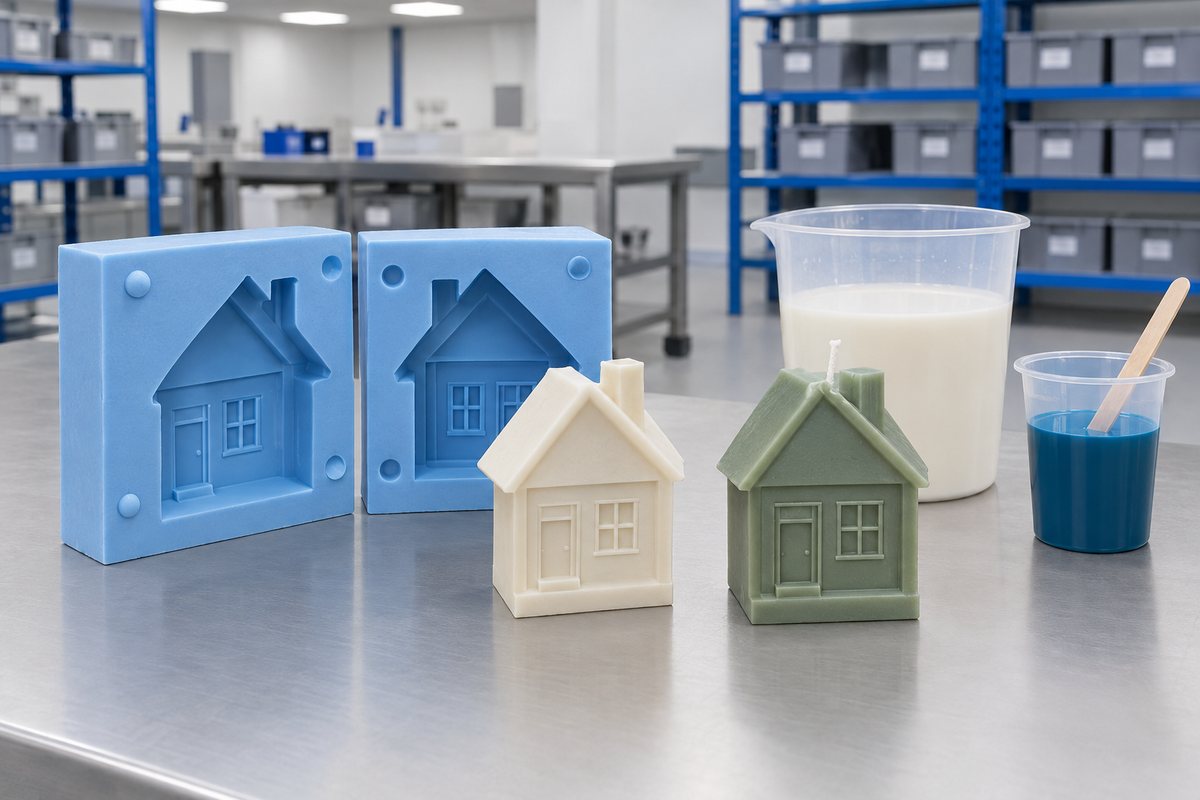
A boxed silicone mould is cast around a finished master, with the split line deliberately chosen rather than simply accepted. This is the route used for most candle, homeware, plaster and resin work, and it copes best with an undercut worth keeping.

BoxedBlock, two-part, glove
ChosenSplit line by design
RepeatableFrom a retained master
2019Established

Three arrangements

Block, two-part and glove.

It is the same material, wrapped around the part in three different ways. Your part's shape decides which option suits it, not the price list.

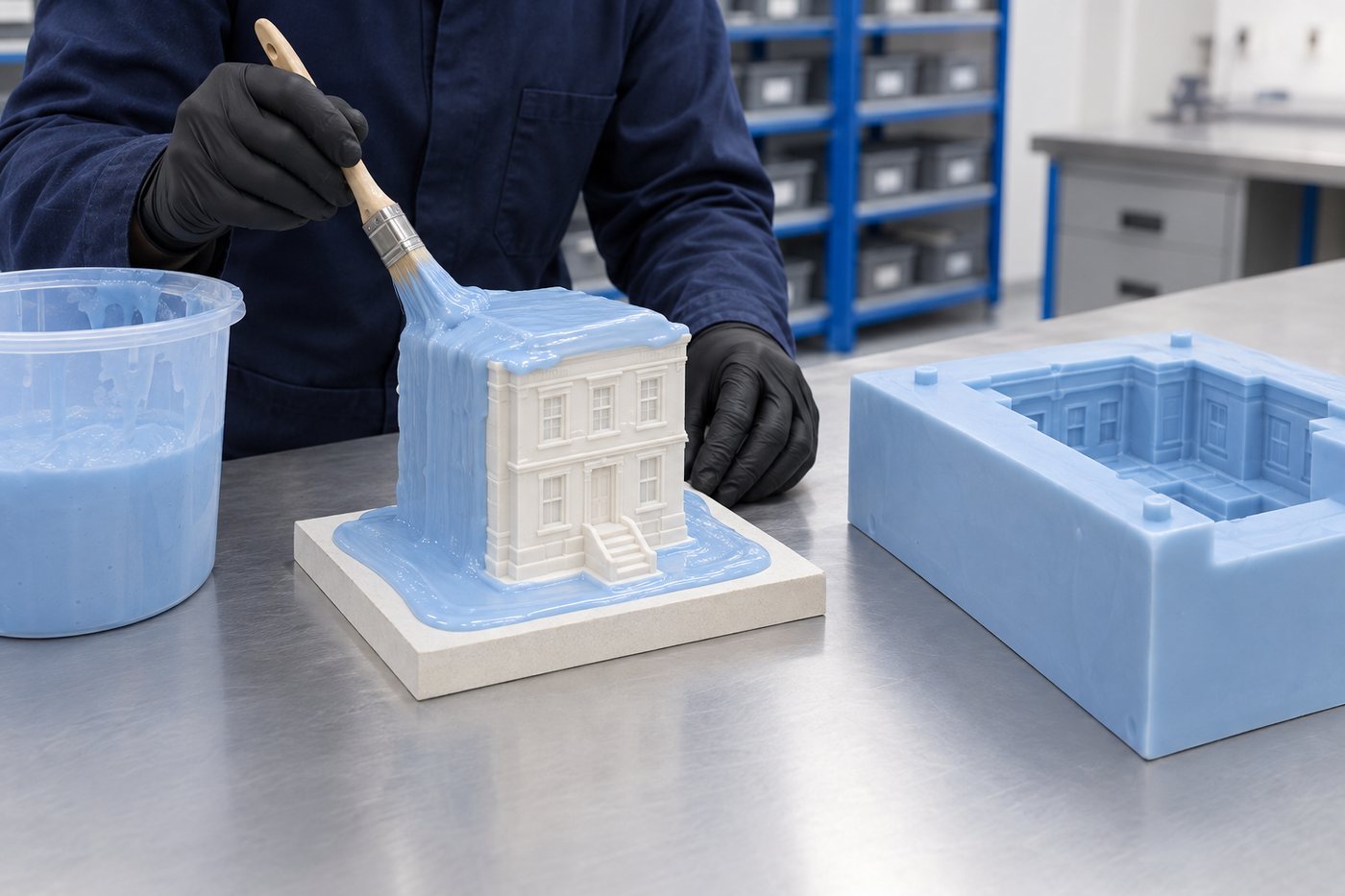
Illustrative example: Hand-brushed silicone building up around a master pattern
Simplest

Block mould

The master sits in a box, and silicone is poured over it in one go. This creates one piece with a single opening and no visible parting line. It works only when the part can be pulled from a single cavity, so it is best suited to shapes that taper towards the open face. Deep vertical walls can grip the mould, making removal a struggle every time.

Hand-made moulds
Resin being poured and mixed in a busy maker workshop
Most common

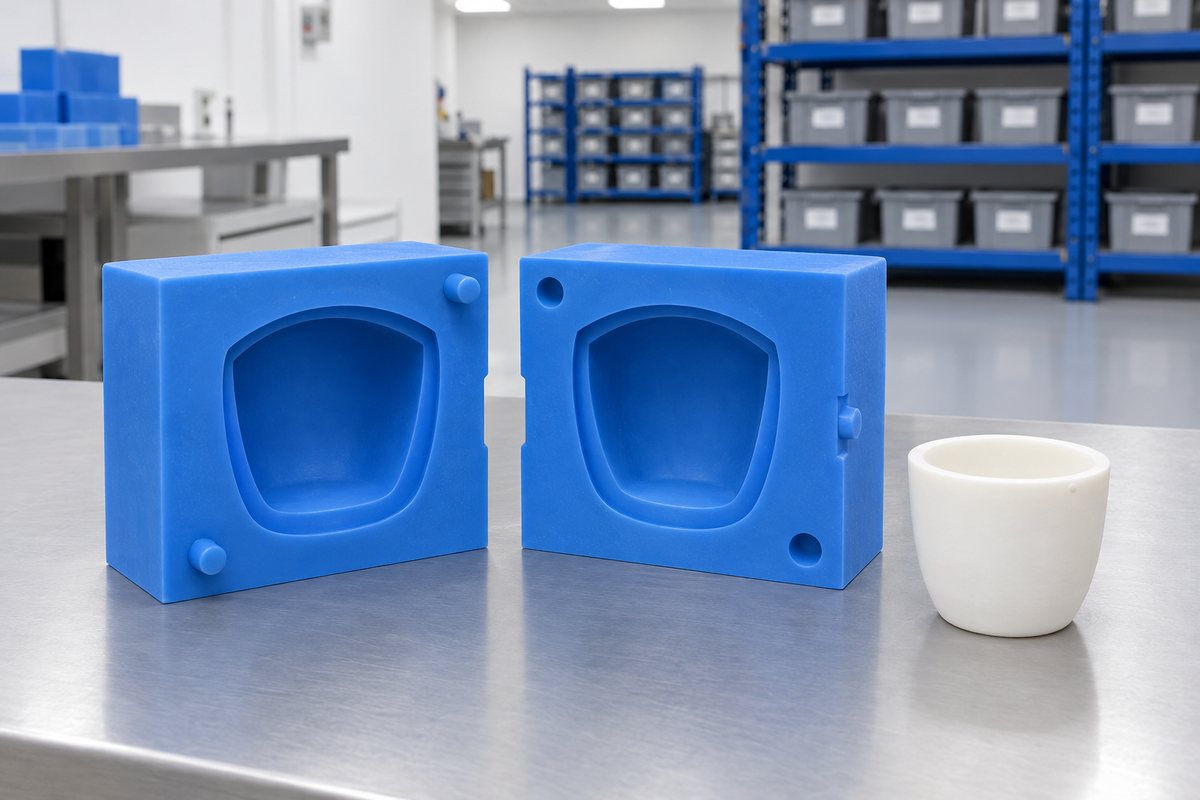
Two-part mould

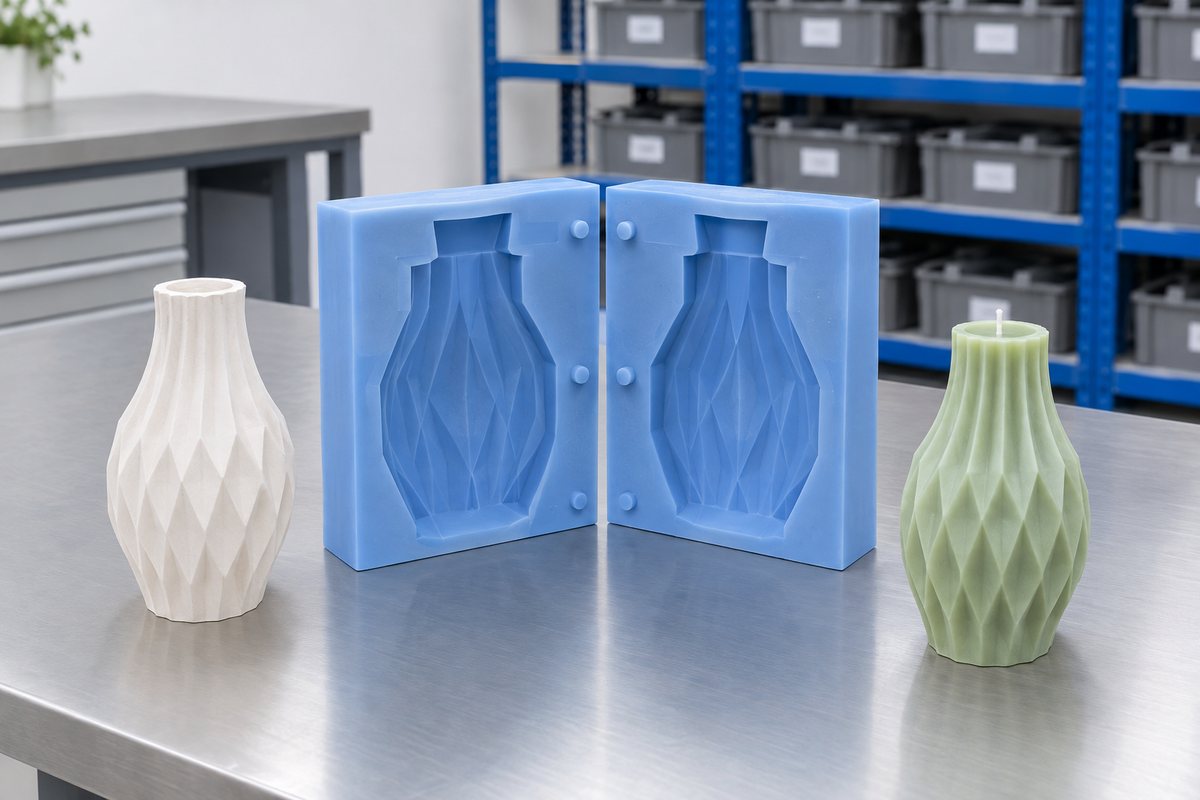
Cast in two halves with keys, so they register the same way every time. This is ideal for anything with detail on both faces, or for a form that will not release from a single cavity. You accept a witness line where the halves meet, and we position it where the part will not be judged.

Compare the routes
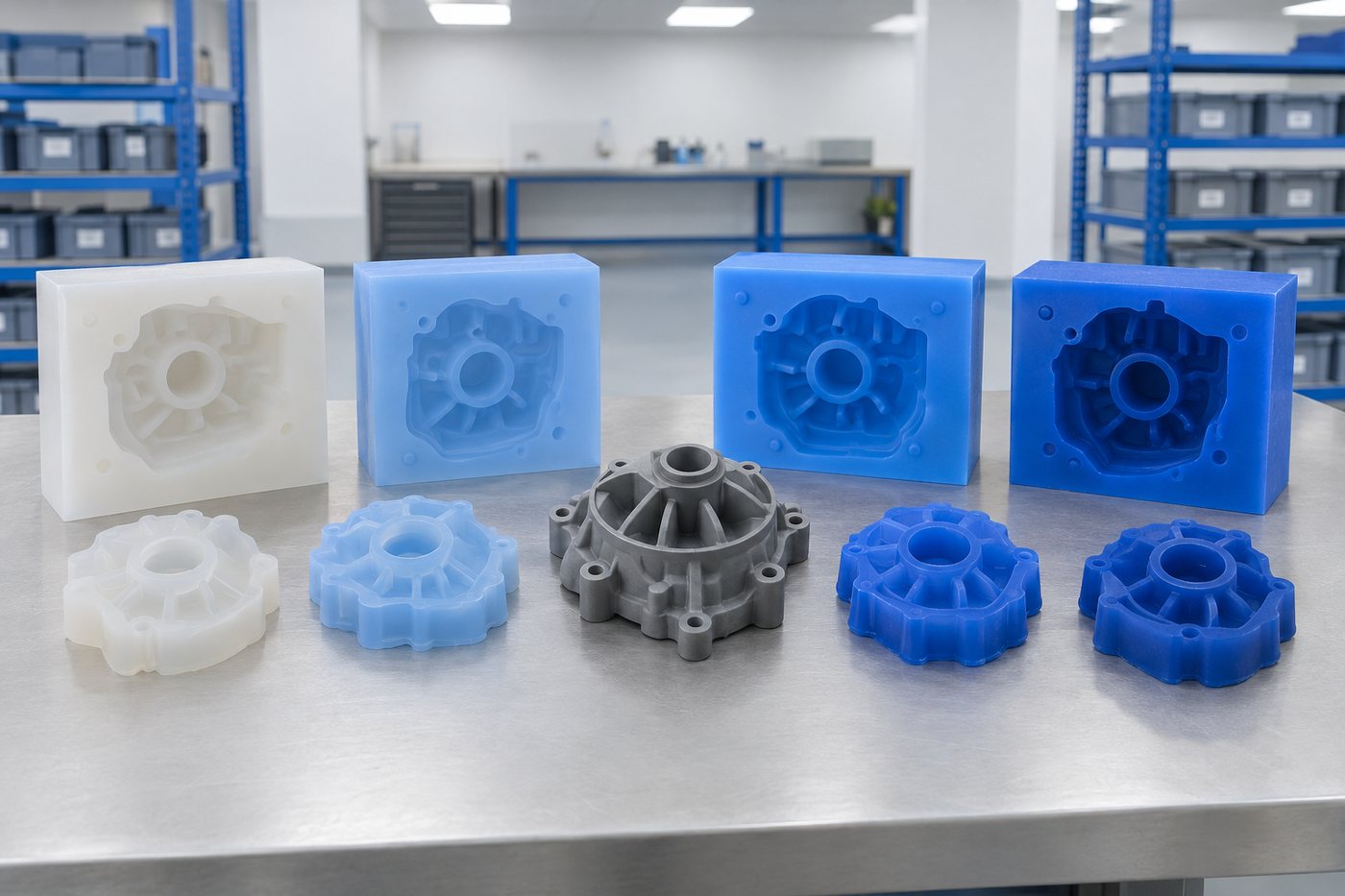
Illustrative example: Silicone samples of different firmness tested around a detailed part
For undercuts

Glove mould

This approach uses a thinner silicone skin taken tight to the part and supported by a rigid jacket. The skin flexes away from features that would lock a solid block, helping ornate and undercut work come out intact. It is more fragile, takes longer per part to use and will not withstand careless handling.

Hardness and release

Boxing and split line

The unglamorous part that decides quality.

Much of the skill behind a cast mould comes before any silicone is mixed. The master is sealed, keyed and boxed, the split line is set, and the orientation is chosen so air has somewhere to go when the pour begins.

If the split line is wrong, every part can show a visible line across the face your customer sees. Worse, the two halves may shift and leave a step. If the orientation is wrong, air can remain trapped in fine detail as a permanent void that no amount of trimming can hide.

This is also where we decide the wall thickness. If it's too thin, the mould distorts under the weight of what you cast into it, leaving parts thicker on one side. If it's too thick, the mould is heavy, slower to work with and unnecessarily expensive.

If your part has fine relief or lettering that needs to come out cleanly without touching up, we pour it under vacuum instead. This is vacuum casting: the same discipline, with the air removed rather than avoided.

Vacuum cast moulds
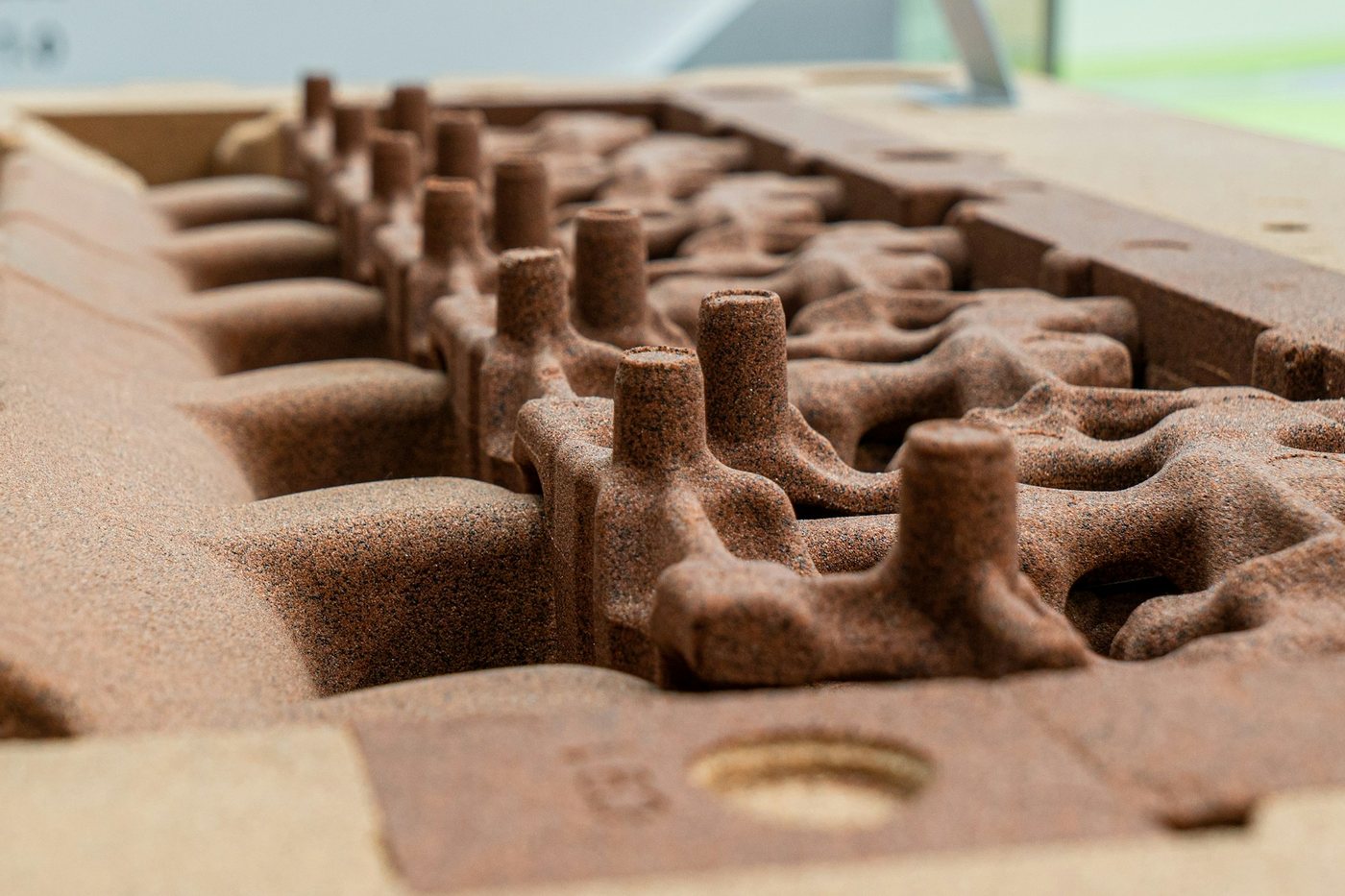
Illustrative example: Two-part mould showing air trap defect and controlled wall thickness

Repeatability

Why the second one matches the first.

Illustrative example: Original master pattern kept beside matching silicone moulds and sample casts
Replacement moulds start from the same original master

A cast mould is a consumable, so it will wear over time. Whatever you pour into it can subject it to chemical attack. Eventually, it may go soft, tear at a thin corner or stop releasing. That is normal and does not mean there is a fault.

What makes a replacement match the original is not the mould, but the master. We keep the master pattern and its recorded grade, so mould four is made from the same geometry as mould one, rather than from a part produced by mould three. Copying a copy is how a range can slowly drift out of shape.

Here are the honest limits of this route. It is not the cheapest option per part once you are producing at higher volumes. The surface finish depends on the finish of the master, rather than the silicone, and a crisp arris will not last as long as it would with a hard tool. Cast moulds are for casting materials into, not for making silicone parts.

If you buy the same item in quantity year after year, the numbers can start to favour compression or injection. We prefer to tell you that rather than sell you a queue of soft moulds.

To quote it

Send us the part or the drawing.

01

The part, a photograph or CAD

A physical sample is ideal because it answers questions a drawing cannot. A photograph with a rule in shot is enough to get started. If you have neither, we can make the master.

02

What will you be casting into it?

Whether you choose wax, plaster, resin, concrete, soap or chocolate, the material sets the grade, release behaviour and whether food-contact paperwork applies.

03

How many parts per mould run

It is not the total for the year that matters, but how many pulls happen before the mould gets a rest. That has a greater effect on wall thickness and hardness than anything else.

04

Who demoulds it

A maker who owns the piece will flex a thin mould carefully. A production operator at the end of a shift will not. Tell us who will use it, and we will build your mould for that.

Send us a part and we'll quote for it

Illustrative example: Sample part, reference photo and casting material examples on a bench
The part, reference and casting material guide the quote

At a glance

The ideas in pictures.

How a two-part mould fits together

Pour spoutAir ventSplit lineYour part in the cavityFlexible siliconeRigidmother mould

Swipe to see the whole diagram

The silicone holds the detail, the rigid case keeps it true, and the split line lets the part come out without tearing.

From idea to finished mould

  1. 01Photo or sampleShow us what you want to cast
  2. 02Drawing agreedWe agree the shape and split
  3. 03Master madeMachined, printed or sculpted
  4. 04Proof pourA first mould to test
  5. 05Full mouldMade once you are happy
  6. 06Kept on fileFor easy reorders

Swipe to see the whole diagram

Every mould follows the same simple route, so you always know what happens next.

Ready to start?

Tell us what you need to make, and we'll explain how to mould it.

Send us a drawing, photograph or sample. We'll come back to you with a mould strategy, a material recommendation and a price.

Real people, a real workshop

You deal with the people who make it.

No call centre and no middlemen. When you contact TCI Mouldings, you speak to the team who design, build and check your mould.

  • A real Warwickshire workshopUnit 15, Waterloo Park, Bidford-on-Avon, Alcester B50 4JG.
  • Real people on the phoneCall the team on 01789 224228, Monday to Friday.
  • The same team on every jobDesign, production and aftercare come from the people you see here.
  • Part of TCI GroupFive specialist brands, one engineering team. Visit TCI Group.
Silicone wax melt moulds made by TCI Mouldings.
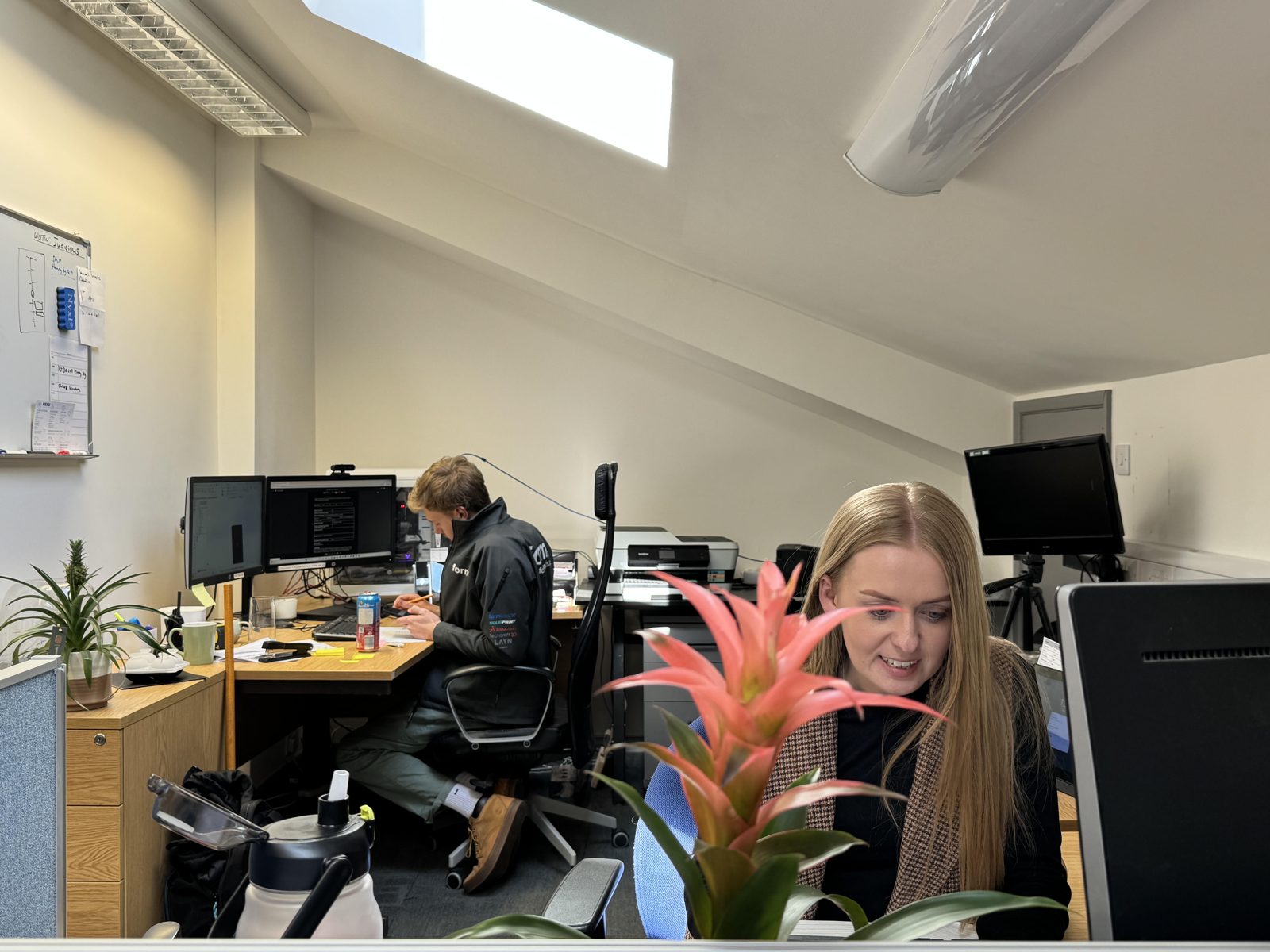
The TCI design and project office.
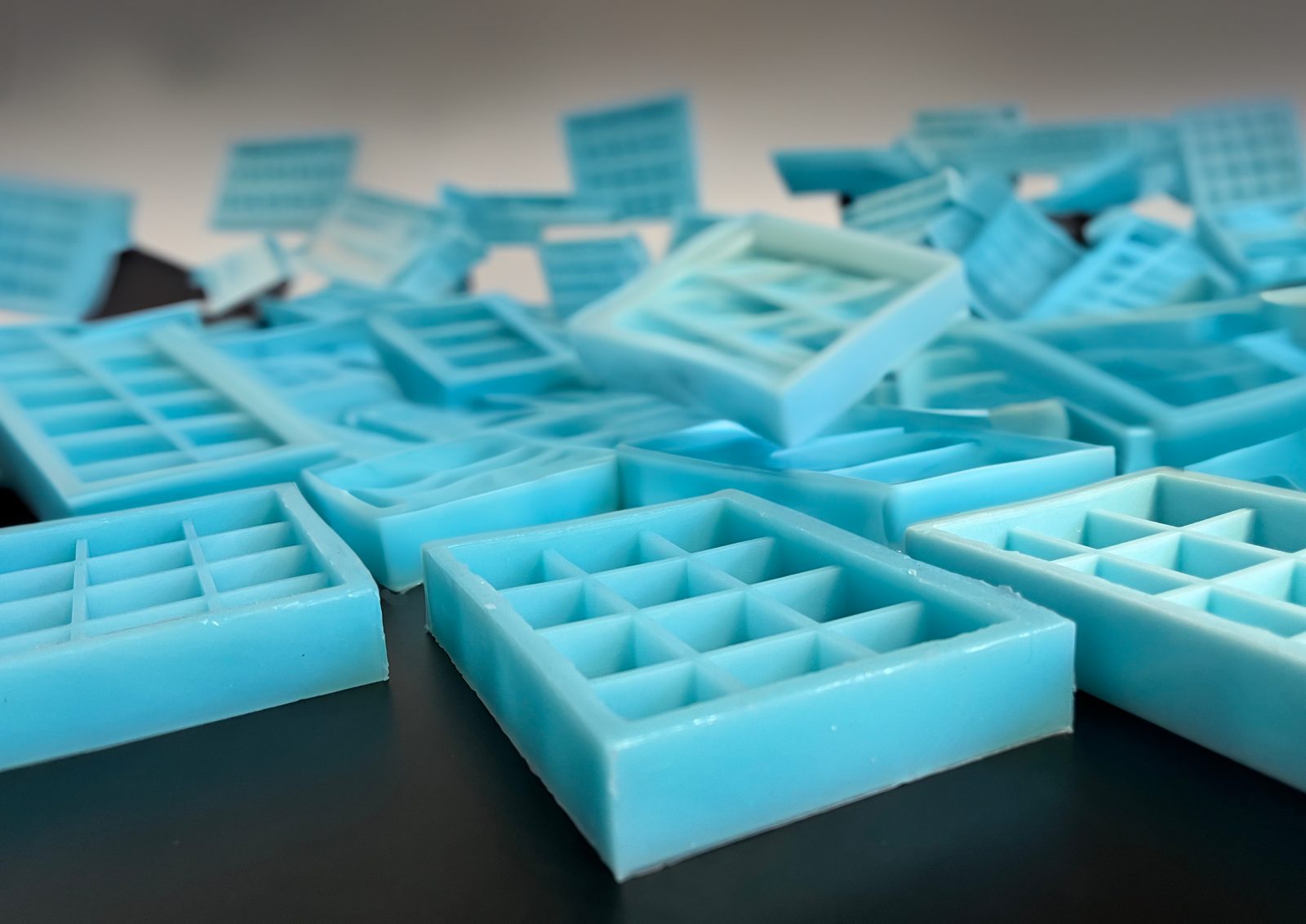
A stack of TCI silicone moulds.
  • Thomas LaneManaging Director
  • George PrestonDesign & Project Manager
  • Kelly BallingerHead of Partnerships
  • Jim AndertonProduction Manager
  • TheodoreEmployee Welfare
Meet the team