Bidford-on-Avon, Warwickshire. Mon to Fri.01789 224228

Part of TCI Group · UK design, UK manufacturing capability, since 2019

Everything we know about silicone, gathered in one place.

This is the technical background, written by the people who cut the tooling. You will find clear guidance on cure chemistry, hardness, inhibition, tool life and mould design, along with the vocabulary used in a mould quote. There is no sales angle here, and we leave the awkward bits in.

4Long-form guides
16Terms explained
8Questions answered
2019Established

Why this page exists

Most silicone problems are specification problems.

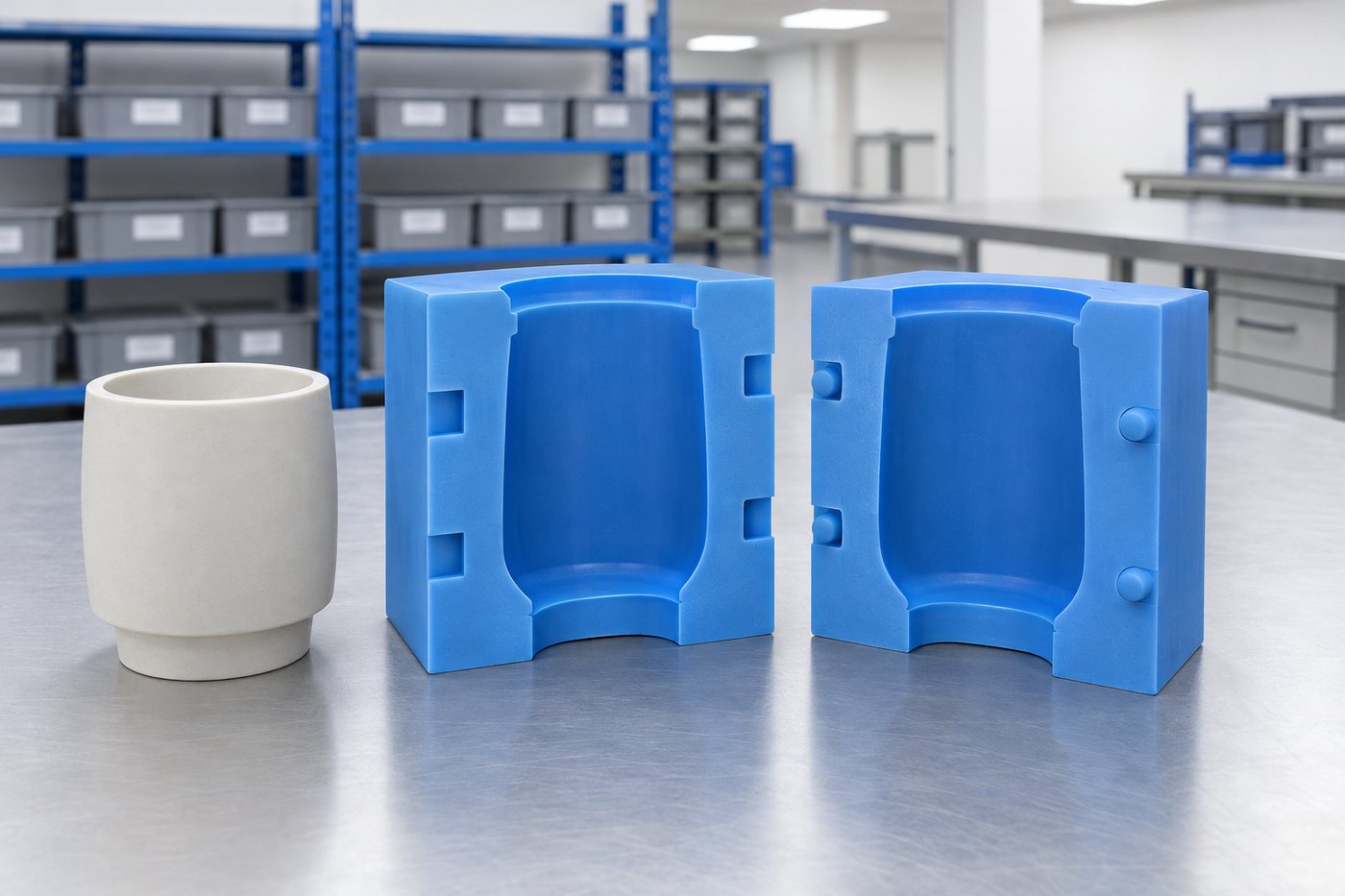
Illustrative example: Silicone mould sections comparing poor and better specification choices
Specification choices shown in the mould itself

When a mould fails, the material is rarely the culprit. Nearly every fault we diagnose comes back to a decision made before the pour: choosing the wrong cure system for a contaminated master, selecting hardness from a catalogue rather than for the part, making the wall too thin for the casting load, or accepting a split line instead of designing it properly.

These decisions cost little to get right and much more to correct later. This page gives you the background in plain English, without a sales angle. If it helps you avoid a poisoned mould or a tool that will not open, it has paid for itself, whether you buy from us or not.

If you'd rather skip the theory, just send us the part. That works too, and it's usually faster.

What we make

Guides

4 articles.

Four things to know before you commission tooling

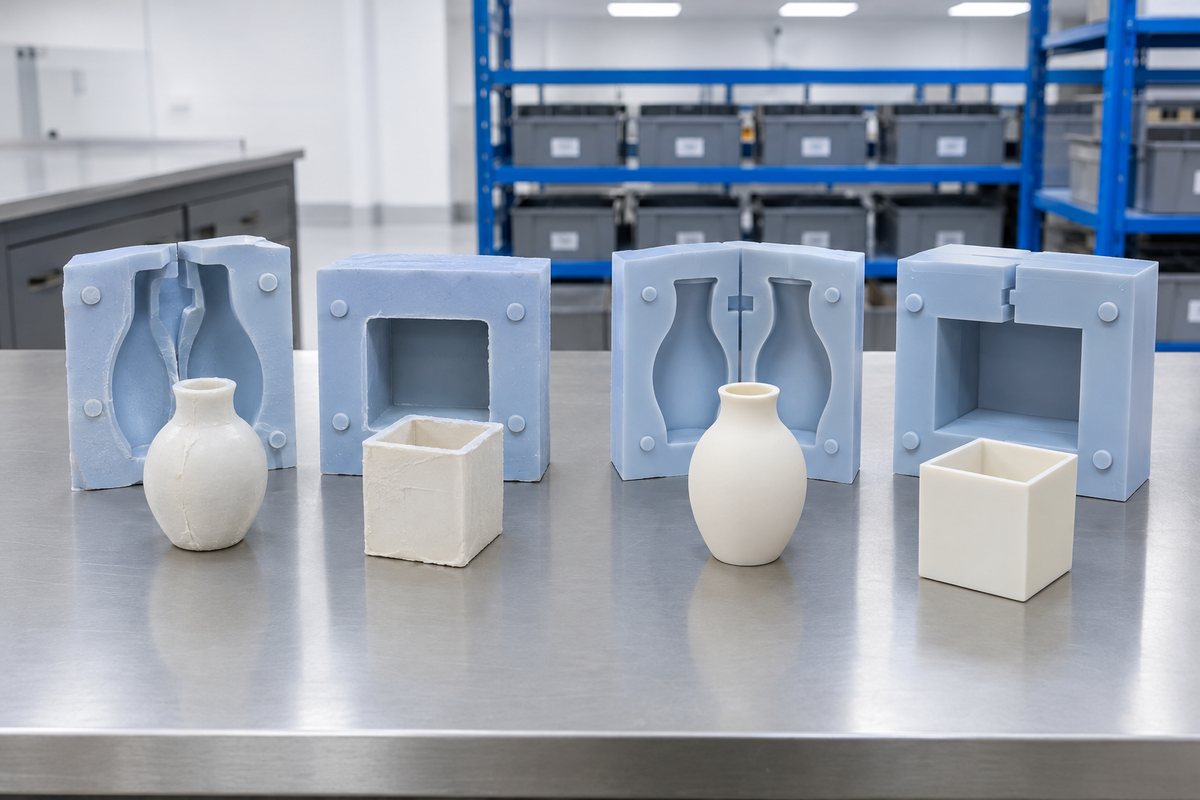
Illustrative example: Material samples and test mouldings compared on a workshop bench
Guide one

Platinum against tin cure

Two chemistries, two personalities. Platinum (addition-cure) silicone gives very low shrinkage, long tool life, excellent detail and food-grade options. However, it can be inhibited by sulphur clay, latex, some resins and a few tapes. Tin (condensation-cure) silicone cures against almost anything, but shrinks more and ages faster. Choose platinum when detail and stability matter. Choose tin when the master is unknown and you need a more forgiving option.

Materials in full
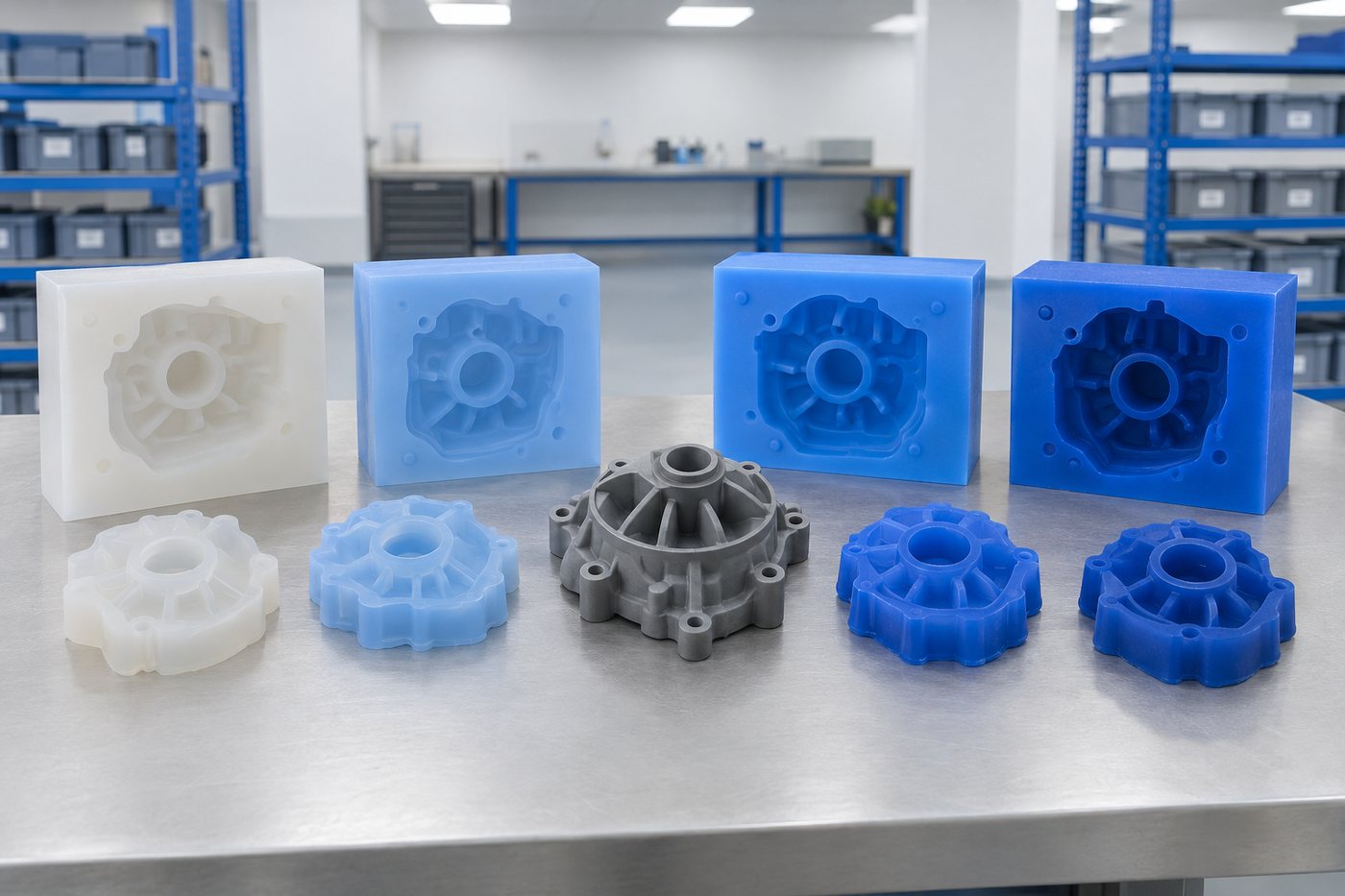
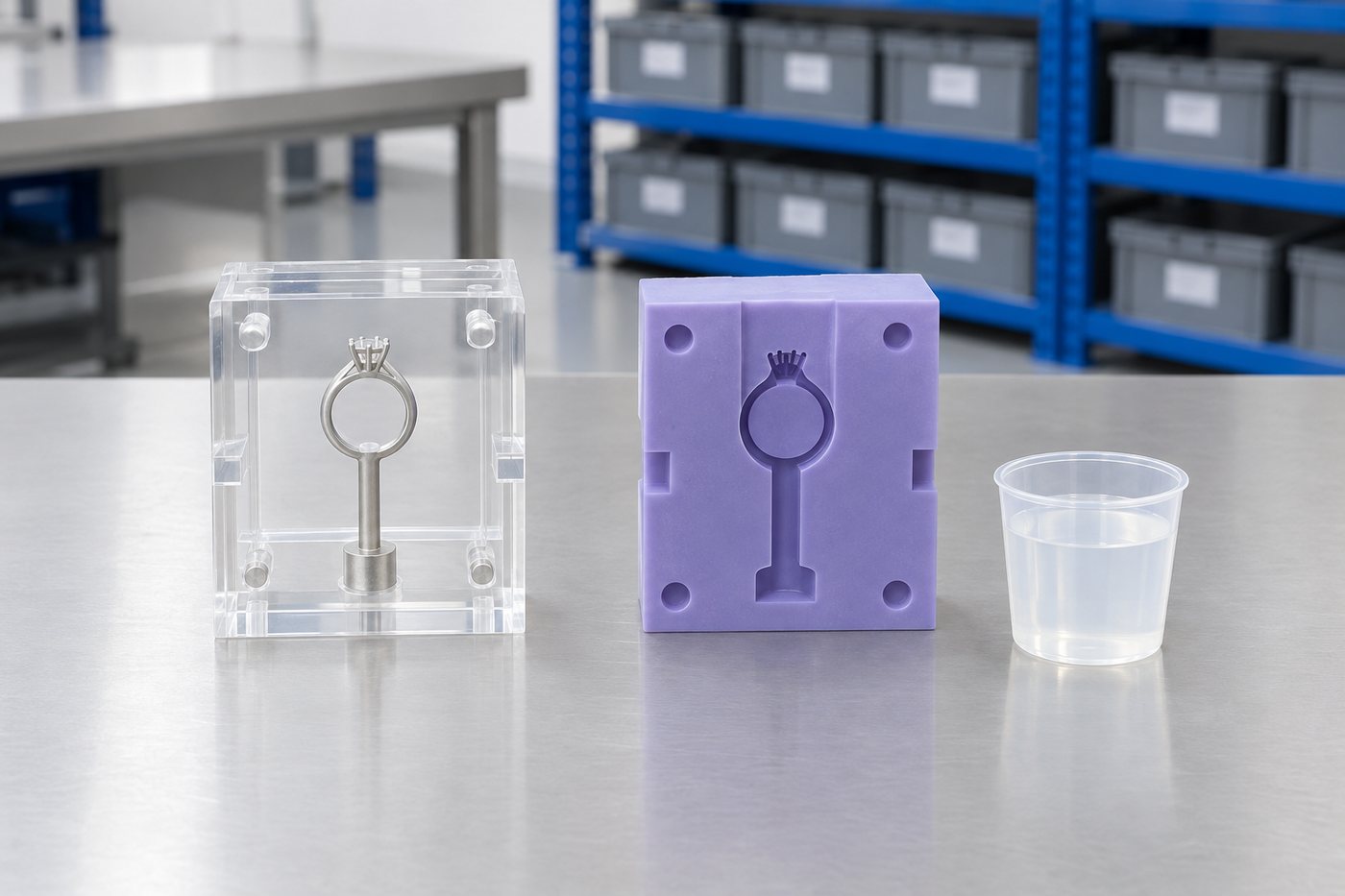
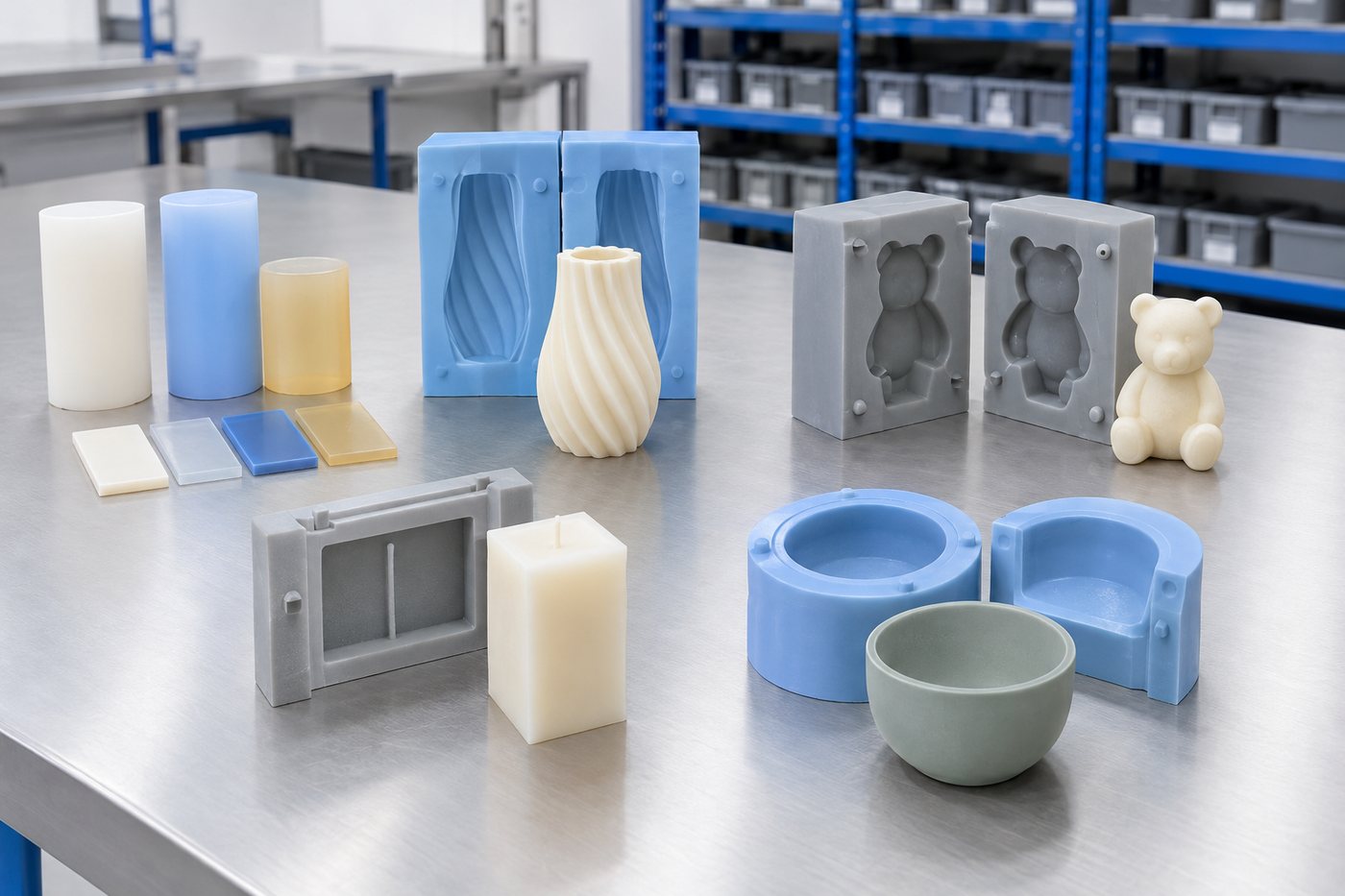
Illustrative example: Silicone samples of different firmness tested around a detailed part
Guide two

Shore hardness: what it does not tell you

Shore A is one measurement: it tells you how far a sprung point sinks into a sample. It does not tell you anything about tear strength, elongation, recovery or heat behaviour. Two grades with the same number can behave completely differently on your part. Treat Shore A as one input, confirm the right choice on real parts, and be cautious with any grade-against-application table.

Shore hardness selection
Illustrative example: Failed silicone cure around a jewellery master under investigation
Guide three

Cure inhibition and how to avoid it

A tacky patch on the mould face does not mean you have a bad batch. It means contamination. Sulphur-based modelling clay is the classic offender, followed by latex, some polyester resins, certain tapes and a few printed materials. The best solution is prevention: seal the master, test a patch on the actual pattern before committing to the pour, and tell your mould maker exactly what the master is made of.

A job where this happened
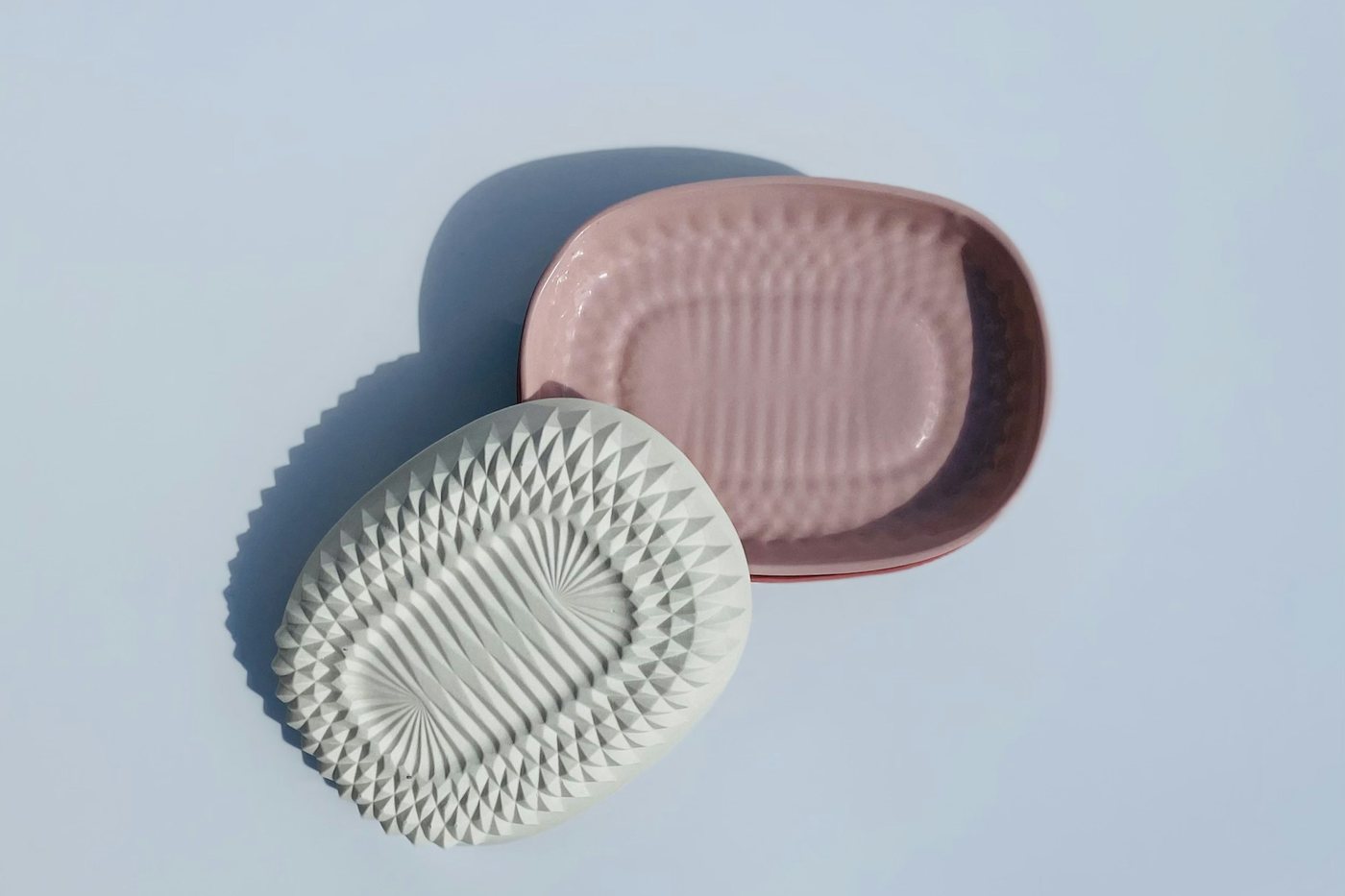
Moulded soap dishes in soft pastel colours
Guide four

Tool life, wear and mould design

Silicone moulds are consumable tooling, so some wear is expected. Wear comes from the cast material, the temperature cycle, the release agent, the cleaning regime and demoulding habits, in roughly that order. The design choices that extend mould life are often unglamorous: even wall thickness, real draft, registration that locates positively, and a split line that places the parting mark somewhere nobody cares about.

Replacement and spares

Designed and developed in the UK, with UK manufacturing capabilities.

Every job is drawn, specified and engineered at our own facility in Bidford-on-Avon, Warwickshire. We hold the moulding capability here too: hand-made, cast, vacuum cast, compression and injection, with tool making, inspection and finishing in the same building. On some programmes we place part of the production with partners we have used for years. We will tell you which route your job is taking before you order, and how that works is set out on our About page.

Glossary

Sixteen terms worth getting straight.

Mould quotations have their own vocabulary. Learn these terms and our emails will be much shorter.

Trade terms used in our quotations and drawings.

TermWhat it actually means
MasterThe original object the mould is taken from. Its surface is inherited by every part you will ever make. See <a href="service-master-patterns.html">master patterns</a>.
Mother mouldA rigid outer shell that holds a thin flexible mould in its correct shape. Essential on brushed-on work.
Split lineWhere the mould comes apart. Designed if you are lucky, accepted if nobody thought about it.
DraftThe taper on a wall that lets a part come out. Not enough draft is the most common design fault we see.
UndercutA feature that locks the part into the mould. Either the mould flexes past it or the tool splits around it.
RegistrationThe keys or locators that put mould halves back in the same place every time. Poor registration shows as a step in the part.
FlashThin excess material squeezed out at the parting line. Managed by tool design and by putting the line where it cannot be felt.
VentA deliberate escape route for trapped air. Cheaper to design in than to chase afterwards.
DegassingDrawing air out of mixed material under vacuum before it cures. See <a href="service-vacuum-cast-moulds.html">vacuum casting</a>.
Pot lifeHow long mixed material stays workable. Sets how big a pour can realistically be.
Cure inhibitionA contaminated master stopping a platinum cure, leaving a tacky, unusable mould face.
Post-cureA controlled heat cycle after cure to stabilise a tool, used where the process demands it.
Shore AA hardness reading taken with a durometer. One measurement, not a quality grade.
ShrinkageMaterial contracting as it cures or cools. Both the mould and the cast do it, and the effects add up.
CavityOne part-shaped void in a tool. More cavities cut cost per part and raise tooling cost. See <a href="service-multi-cavity-tooling.html">multi-cavity tooling</a>.
Release agentA coating that helps a part leave the mould. It also shortens mould life, so the aim is to need as little as possible.

If a term in a quotation from us isn't on this list and doesn't make sense, please ask. We prefer to explain it rather than have you sign it off without reading it.

Who wrote this

Written by the people who make the tooling.

These guides are not marketing exercises. They are written by the people who cut split lines and take the phone call when a tool will not open. That is why they give failure modes just as much attention as capability.

It also means our advice stays within our expertise. We know silicone and polyurethane tooling well. You know your product, your market and your production line better than we do, and we will never pretend otherwise. If a question falls outside what we actually do, we will say so.

If you spot anything here that is wrong or out of date, please tell us. We will correct it rather than defend it.

About TCI Mouldings

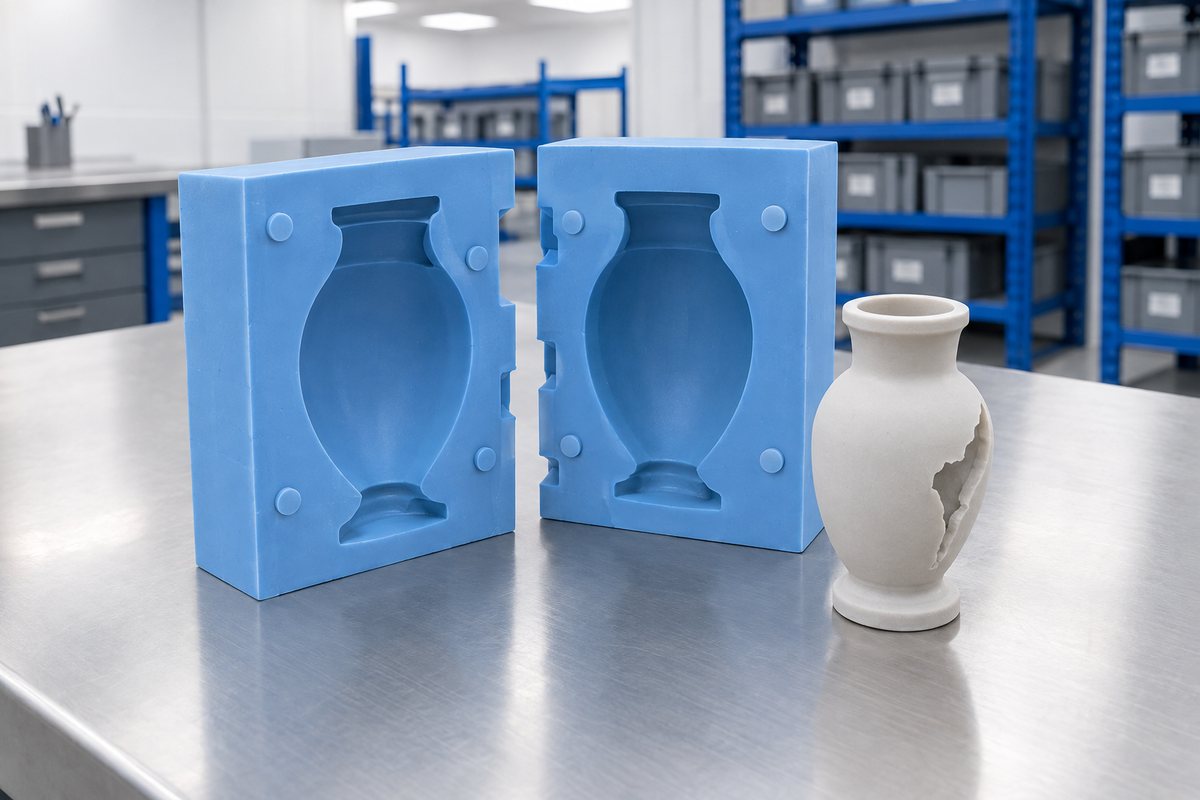
Illustrative example: Opened two-part mould with split line details and failed section

Questions

The eight questions we are asked most often

How long does a silicone mould last?

Mould life is measured in pulls, not calendar time, and the cast material has the biggest influence. Gentle casts in a well-designed tool can extend its life considerably. Abrasive concrete, exotherming resin, aggressive release agents and repeated oven cycling all shorten it substantially. Every mould we make is covered against manufacturing defects for two years or two thousand uses, whichever comes first. Normal wear is not a defect.

Why has my mould gone tacky in patches?

Cure inhibition occurs when something on the master interferes with platinum-cure silicone. Sulphur-based modelling clay is the usual culprit, but latex, some resins and certain tapes can also cause it. Identify the source, then seal or replace the master. Before your next pour, test a small patch first.

Do I need CAD to get a quote?

No, that's not a problem. A sample, a photograph with a rule in shot, or a sketch is enough to get started. If the required geometry does not exist, scanning or reverse engineering can produce it. We will tell you which your part needs.

Should I choose a harder or softer mould?

Choose a softer silicone if your part has deep relief or undercuts, or if you demould it frequently by hand. Choose a harder silicone if the shape is generous, the cast is heavy and you want the tool to hold its geometry over a long run. It is a trade-off, not a ranking.

What is the difference between a mould and a moulded part?

A mould is the tool you cast into to make a product. A moulded part is the silicone item itself, which we press or inject and deliver to you. These are different routes with different economics, so it is worth being clear about which you need in your first email.

Can you copy an existing part?

Usually, yes, if you own the right to have it copied. We measure and model the part, correct what needs correcting rather than replicating the wear, and keep the record. We will not copy a part that is somebody else's protected design.

Why will you not publish tolerances?

A figure on a web page would relate to a different part, so it would not be meaningful for yours. Achievable accuracy depends on the route, the geometry, the cast material and the shrinkage of both mould and cast. Once we have seen your part, we will commit in writing to what it needs.

Is silicone food safe?

Some silicone grades are food-contact grades, with declarations to prove it. Silicone in general is not a food-safety claim, so food work has to be specified around a declared grade and its paperwork. See food-contact moulds.

One group, four specialisms

TCI Mouldings is part of TCI Group.

You benefit from shared engineering, one workshop and four specialisms. The tooling knowledge behind a precast yard is also available to a chandler with one product.

Better than reading

Send us the part itself.

Every guide on this page is a practical substitute for having the object in our hands. A sample can answer questions about draft, undercuts, surface and release in about a minute, so neither of us has to keep guessing.

Post it to us, or send photographs with a rule in shot and tell us what you are casting into it. The partnership team will come back to you with a route, the reason for it, and a cost per part. If the honest answer is that no tooling is justified, you will get that instead.

Six jobs, and what made them challenging

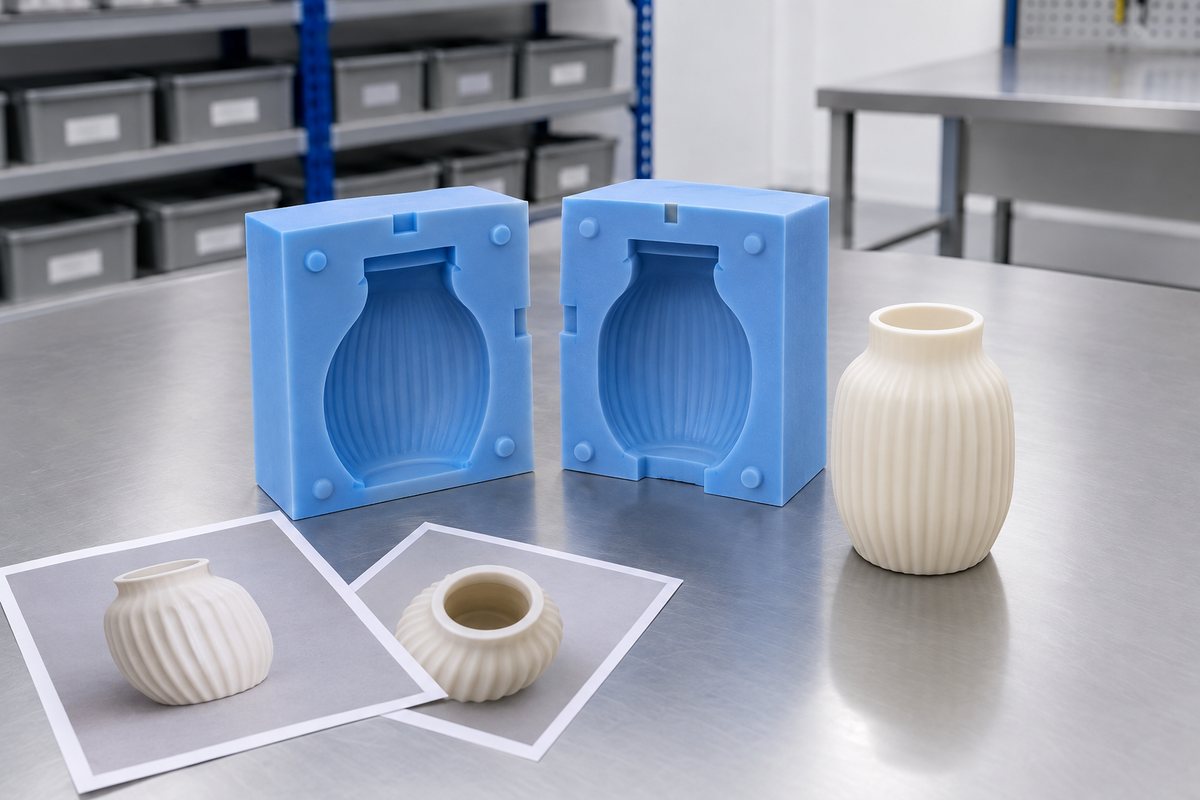
Illustrative example: Sample part, reference photos and trial mould on a workshop bench
The actual part answers more than drawings

At a glance

The idea in a picture.

Silicone hardness in everyday terms

00-30Gel insoleA10Jelly sweetA20Elastic bandA30Pencil rubberA40Shoe heelA60Tyre treadSofter: peels from undercutsFirmer: holds its shape

Swipe to see the whole diagram

A rough guide. We choose the grade for your shape, material and number of pours.

Ready to start?

Tell us what you need to make, and we'll show you how to mould it.

Send us a drawing, a photograph or a sample. We'll come back to you with a mould strategy, a material recommendation and a price.

Real people, a real workshop

You deal with the people who make it.

No call centre and no middlemen. When you contact TCI Mouldings, you speak to the team who design, build and check your mould.

  • A real Warwickshire workshopUnit 15, Waterloo Park, Bidford-on-Avon, Alcester B50 4JG.
  • Real people on the phoneCall the team on 01789 224228, Monday to Friday.
  • The same team on every jobDesign, production and aftercare come from the people you see here.
  • Part of TCI GroupFive specialist brands, one engineering team. Visit TCI Group.
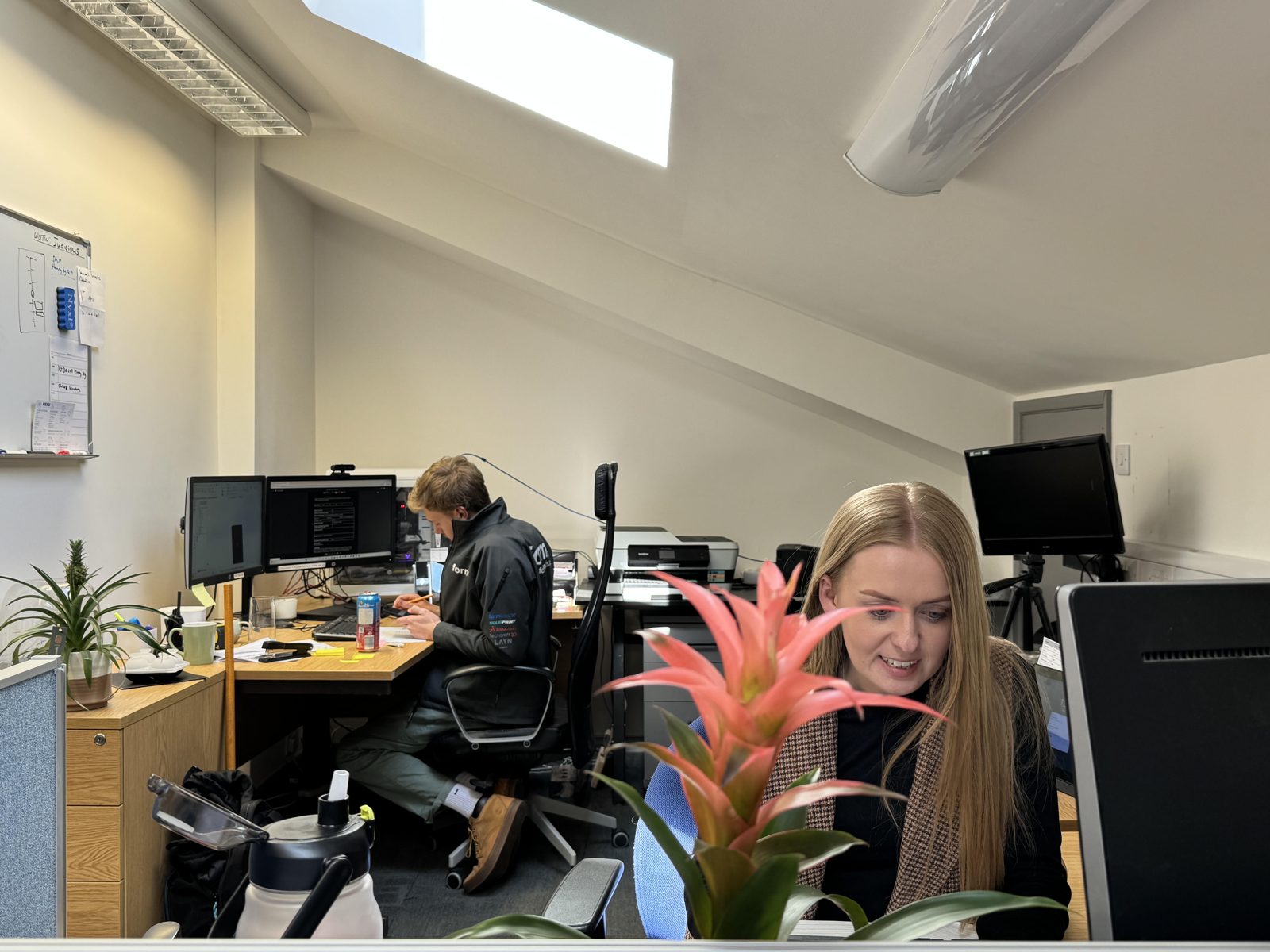
The TCI design and project office.
A stack of TCI silicone moulds.
The TCI workshop, with moulds on the bench mid-build.
  • Thomas LaneManaging Director
  • George PrestonDesign & Project Manager
  • Kelly BallingerHead of Partnerships
  • Jim AndertonProduction Manager
  • TheodoreEmployee Welfare
Meet the team