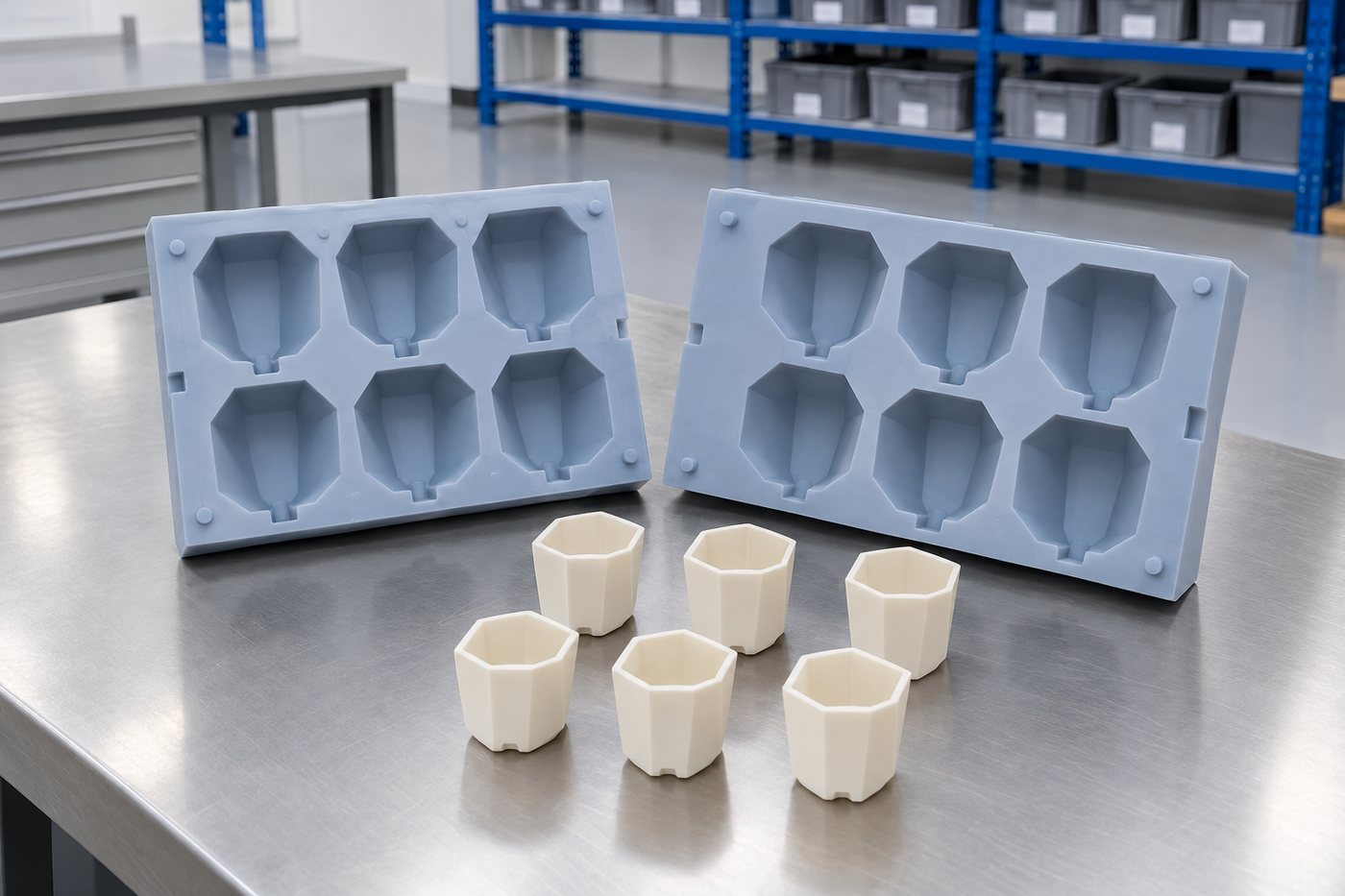
Filling evenly
The far cavity fills last, so it cools differently from the near one. Once the layout passes a certain point, the parts are no longer identical, which defeats the purpose of the exercise.
Cavity count is an arithmetic decision
A mould that makes six parts in one pour, rather than one, costs more to tool but reduces labour per piece. The right cavity count for your job sits somewhere between those two lines. It is a calculation, not a preference, and there is a ceiling.
A worked example
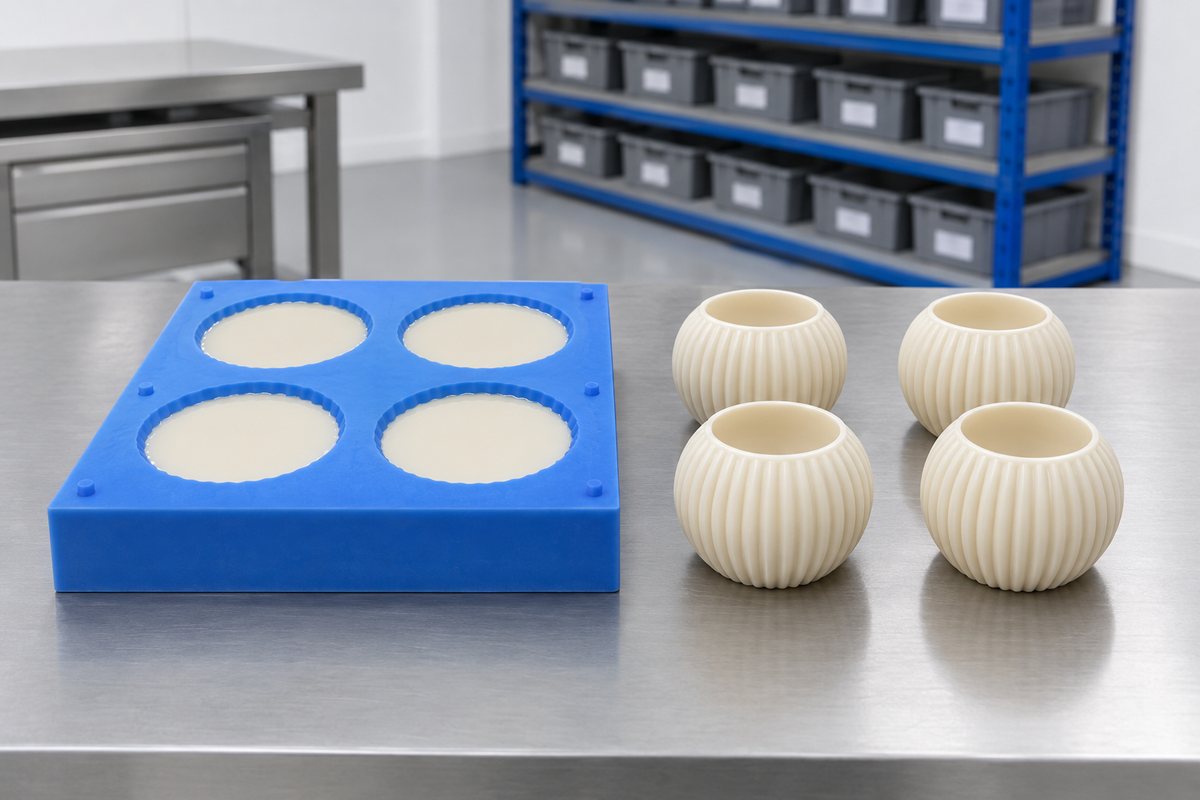
Starting with a small cast part? In a single-cavity mould, one pour gives you one piece. Every piece then carries a full cycle of someone's time: mix, pour, wait, demould, trim and check.
Using four cavities in the same mould means one pour produces four pieces. You mix once, rather than four times, and handle the mould once, rather than four times. The pour takes a little longer, and there is more trimming at the end, but the fixed labour around each pour is divided by four.
The tooling did not cost four times as much either. A four-cavity mould is larger and uses more silicone, with more setting out required. However, the design work, boxing and master handling are largely done once. So, while tooling cost rises with cavity count, it rises more slowly than the yield does.
That is the key point: cavity count is worth deciding deliberately, rather than defaulting to one. The calculation changes at low quantities. If you only need a handful of parts, you will have paid for cavities you never use.
The shape of it
This is about relative behaviour, not a quotation. What matters is the direction of each column.
| Cavities | Tooling cost | Pours for a given order | Labour per piece | Risk if one cavity is off |
|---|---|---|---|---|
| One | Lowest | Most | Highest | Lowest. Scrap one part |
| Two to four | Low to moderate | Fewer | Noticeably lower | Low |
| Six to eight | Moderate | Fewer still | Lower again, gains flattening | Moderate. A bad cavity scraps a share of every pour |
| Many | Highest | Fewest | Barely better than the row above | Highest. Harder to fill evenly and harder to keep matched |
The gains begin to level off. Moving from one cavity to four changes the economics of a job. Moving from eight to sixteen usually changes very little, apart from making it harder to fill the mould evenly.
Do the sum
Here are four figures, in order. You will probably know most of them better than we do.
Tell us the total number of pieces you need and whether they will arrive as one order or as repeats. Repeating quantities can justify more cavities than the same total ordered once.
This is the cavity count you are testing. To work out how many pours you need for the order, divide the total number of pieces by the number of cavities.
Each pour involves mixing, handling, demoulding the mould itself and cleaning down. These are the fixed costs shared across the job, which is why cavities pay.
Trimming, finishing, checking and packing take the same effort for each piece, regardless of cavity count. If this work dominates your part, adding more cavities may disappoint you.
We compare tooling and labour at each cavity count you're considering. The lowest total per piece wins, and it is often not the option with the highest cavity count. We'll work through this with you rather than quote a single option.
Limits
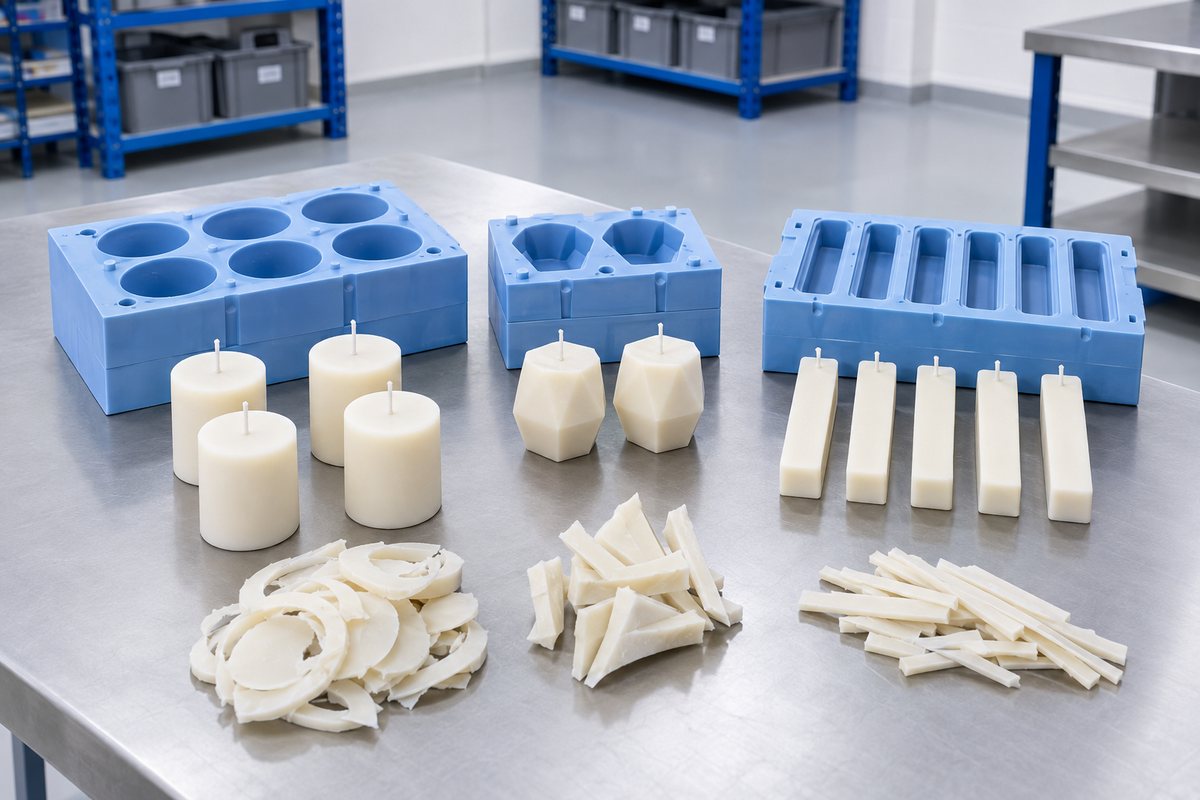
The far cavity fills last, so it cools differently from the near one. Once the layout passes a certain point, the parts are no longer identical, which defeats the purpose of the exercise.
A many-cavity silicone mould can be heavy when someone has to lift it, flex it and put it down throughout a shift. If a mould is uncomfortable to use, it is more likely to be used badly.
If a cavity is damaged or consistently short, you are scrapping a fixed share of every pour until the mould is replaced. Concentrating your production in one tool concentrates the risk too.
With more cavities, you have more parting line, more feed to remove and more edges to check. Those extra tasks apply to every piece, which can quickly eat into the saving you were chasing.
Matched sets
Sometimes, you need several moulds to produce interchangeable parts. This may be because they run side by side on your line, or because the parts are assembled together. That requires a different specification from simply making several moulds.
When you need matched sets, we cast them from the same master, using the same grade from the same batch wherever possible. We check first-off parts from each mould against one another, not just against the drawing. That way, nobody downstream should be able to tell which mould produced a part.
It costs more than making the same number of moulds independently, but it is worthwhile when parts get mixed together in a box. If they do not, just say so and we will not charge you for a discipline you do not need.
If your set needs to stay matched for years rather than months, plan the spares at the same time. You can find out more in replacement and spare moulds. Deciding this now is much cheaper than discovering the need later.
To quote it
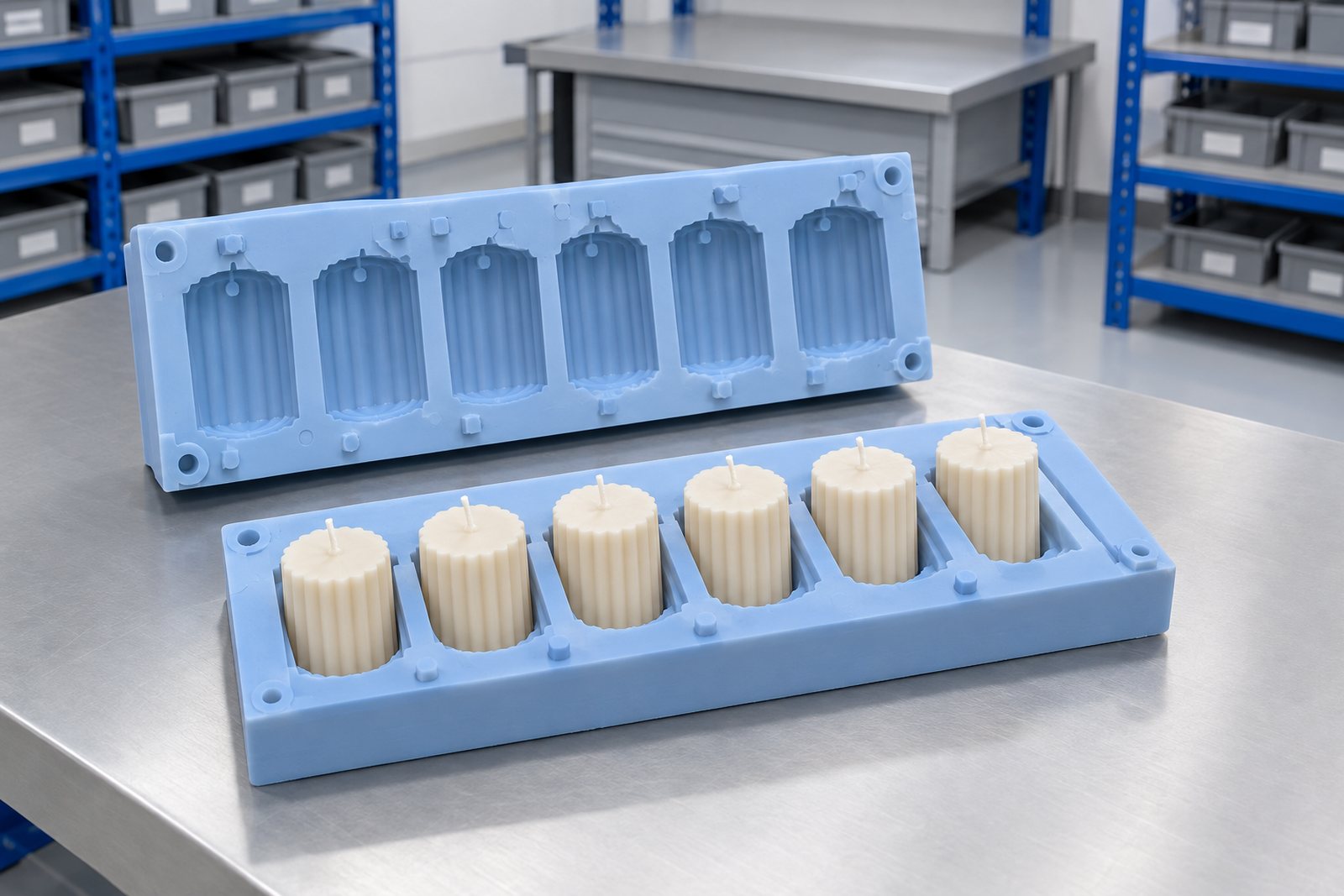
Tell us the total quantity, whether you need repeat production, and how much finishing each piece requires. Together, those three answers determine the cavity count, and we'll show you the comparison rather than simply declaring a number.
If your quantities look too high for cast tooling, we will tell you and point you towards compression moulding. The cavity count is worked out in the same way, but the tool is steel, so the figures can favour a higher cavity count.
At a glance
From idea to finished mould
Swipe to see the whole diagram
Ready to start?
Send us a drawing, photograph or sample. We'll come back with a mould strategy, a material recommendation and a price.
Real people, a real workshop
No call centre and no middlemen. When you contact TCI Mouldings, you speak to the team who design, build and check your mould.



 Thomas LaneManaging Director
 George PrestonDesign & Project Manager
 Kelly BallingerHead of Partnerships
 Jim AndertonProduction Manager
 TheodoreEmployee Welfare