A logo that had to survive a wrist
Moved a printed watch-strap logo into moulded relief without losing the mark.
Read the recordProject record · Confectionery · Silicone tooling for chocolate
The maker wanted the bar's face to carry a fine wordmark, not a printed label. That meant a mould that released cleanly, showed no venting marks on the face, and lasted the pace of a small production run.
The brief
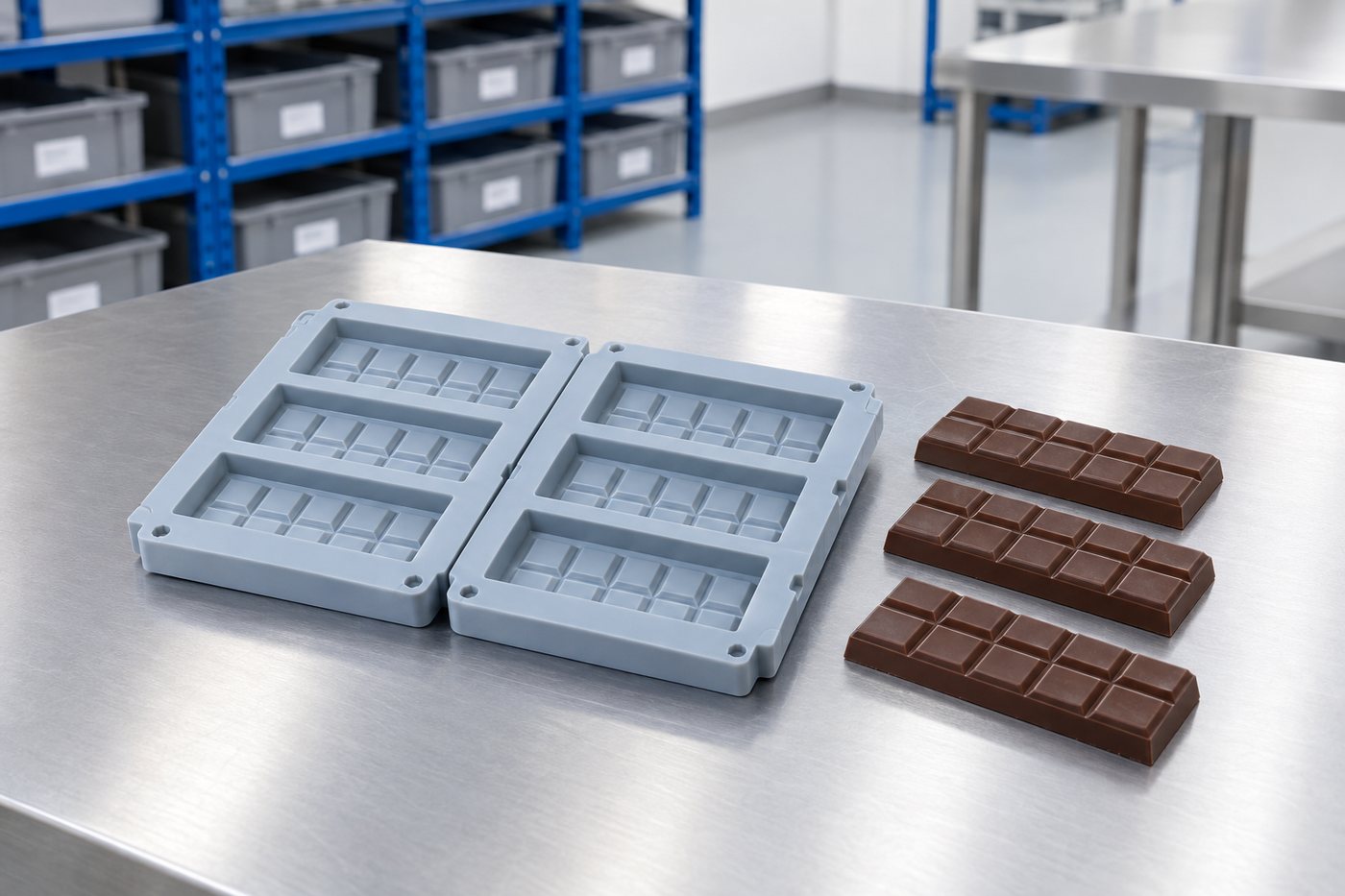
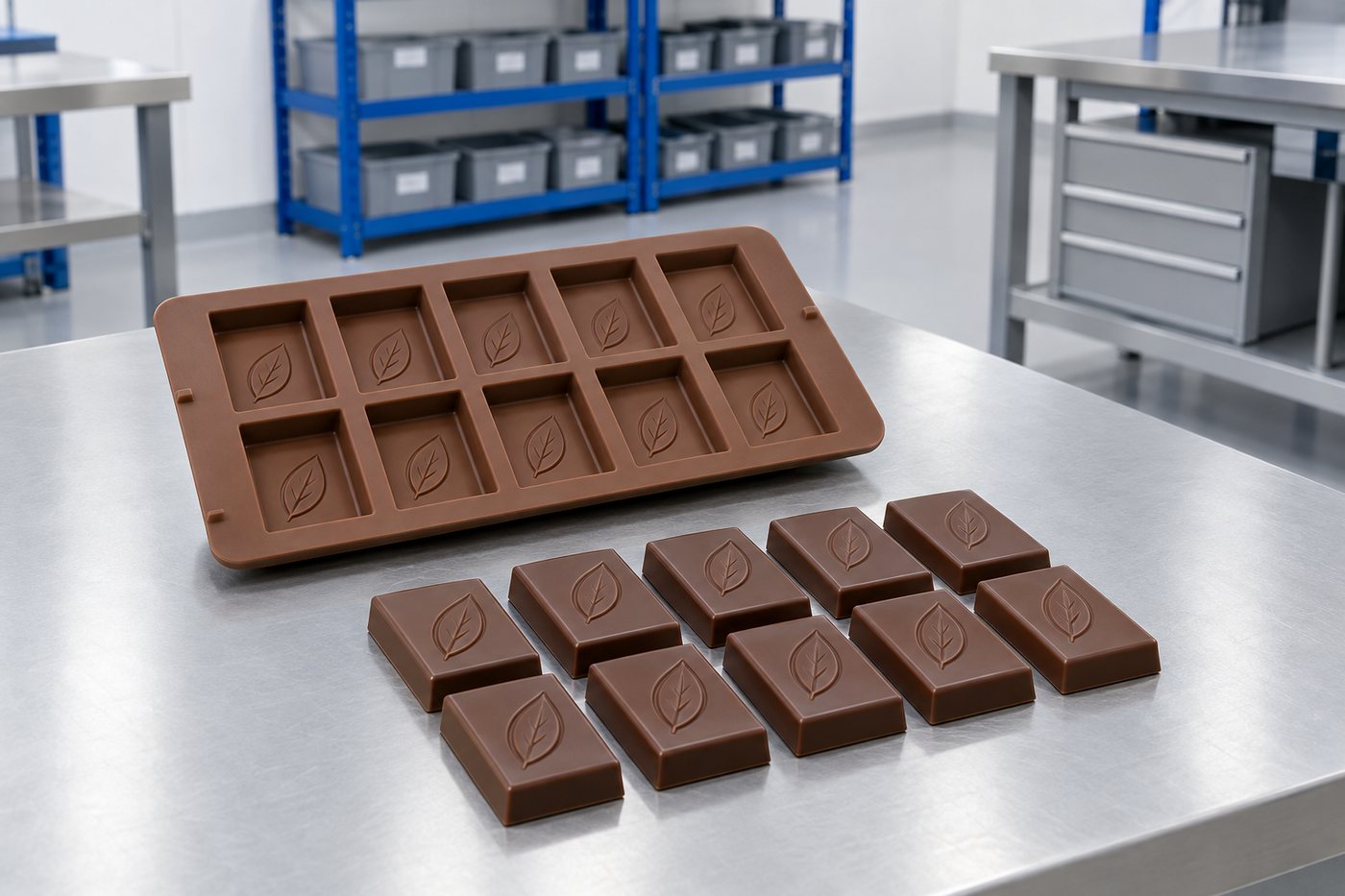
A specialist chocolate maker wanted to move its wordmark off the outer sleeve and onto the bar face itself. Printed sleeves get discarded. A moulded mark sits with the bar on the plate at the end of a tasting menu.
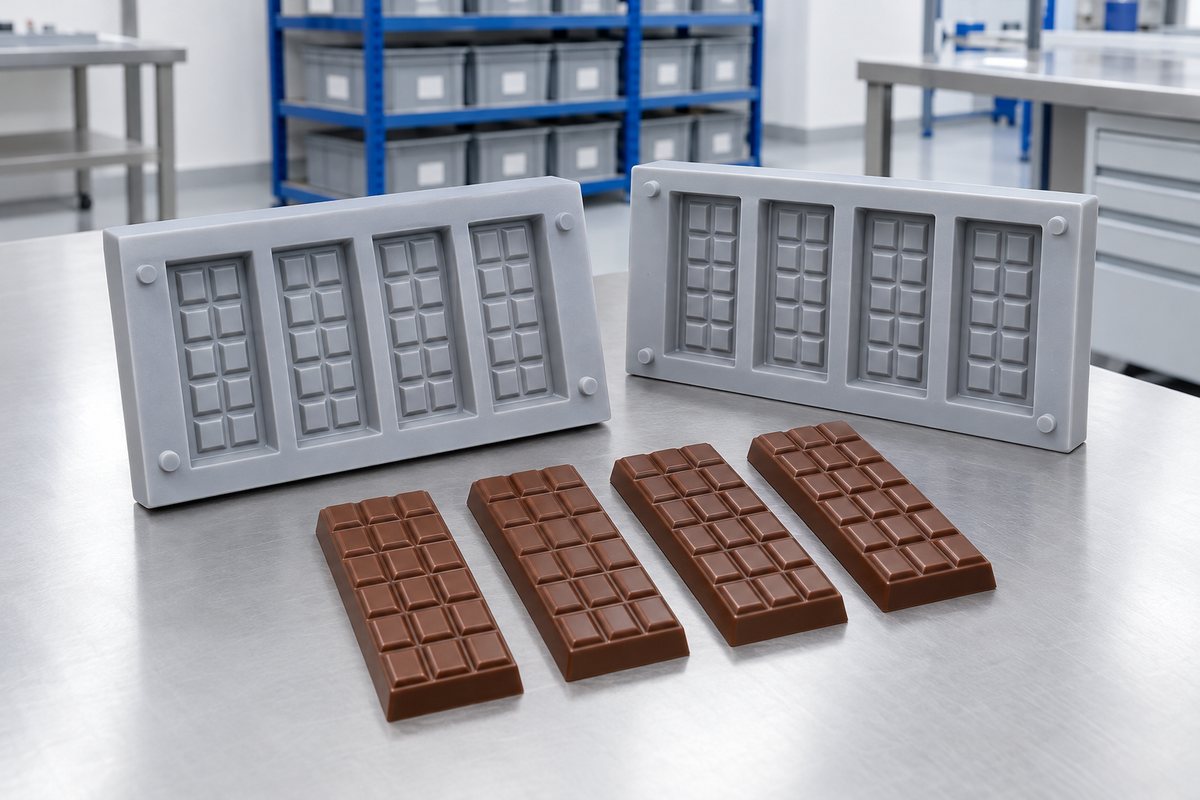
The bar was a 100 g rectangular format with a scored break pattern. The wordmark sat centred across two of the segments, and had to release with the chocolate rather than tear at the letter edges.
The tools they had been buying were rigid polycarbonate. Rigid tools give you a glass finish, but the release is unforgiving on any relief, and their throughput needed a mould they could flex to release, not tap to release.
The problem
Chocolate copies everything the mould has to offer. Every scratch, every witness line, every vent mark ends up on the face of the bar. On a food-contact mould, vents cannot sit where they would leave a visible stub.
The letters on the wordmark had closed counters, meaning enclosed spaces inside the letters, that would trap air the moment the chocolate flowed over them. Trapped air prints as a dull spot in the middle of the letter. It ruins the mark.
The bar had to release with a single upside-down flex of the mould over a tray, not with a knife or a tap. That put a ceiling on relief depth and demanded generous draft on every edge, including inside the letters.
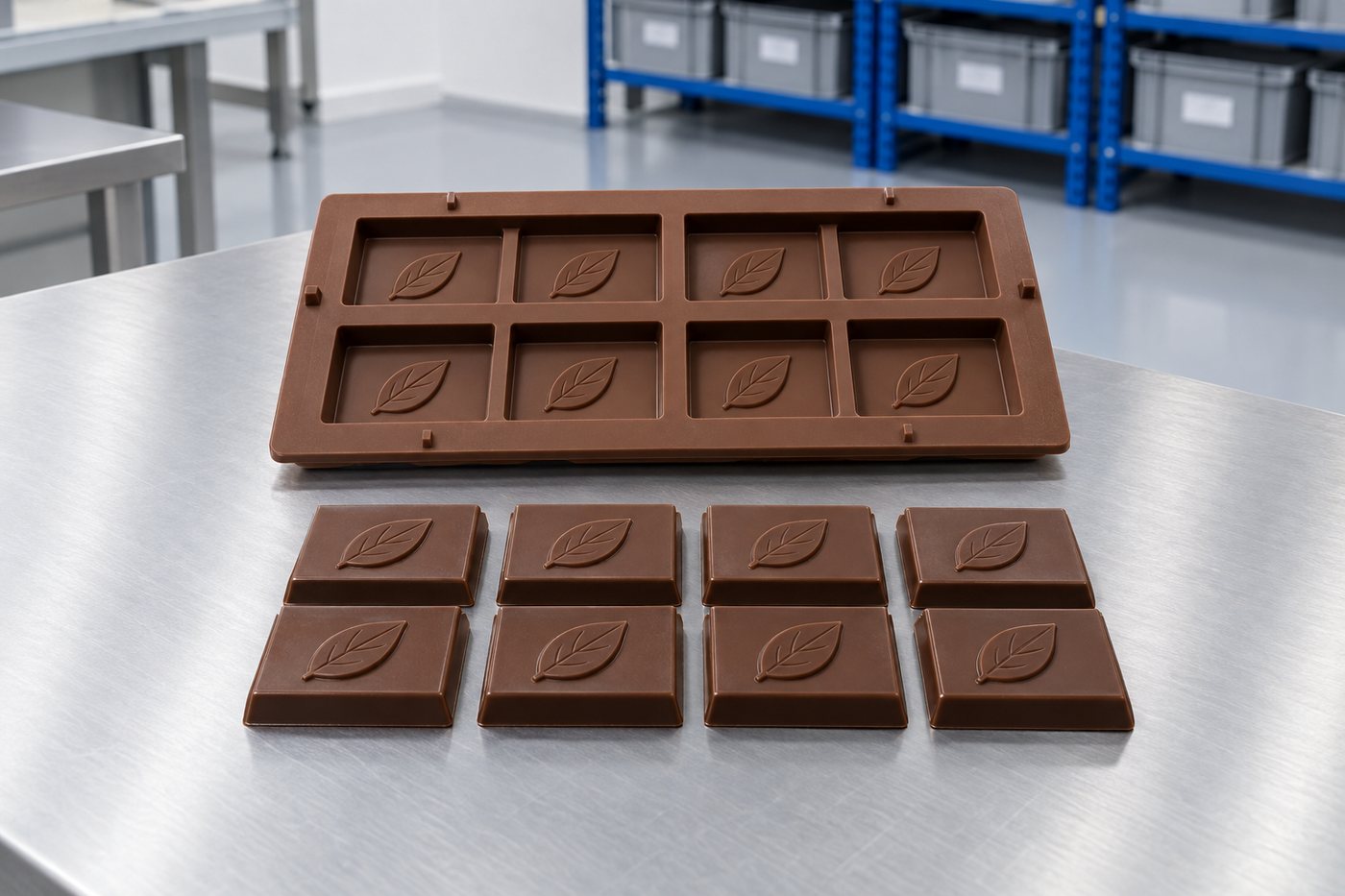
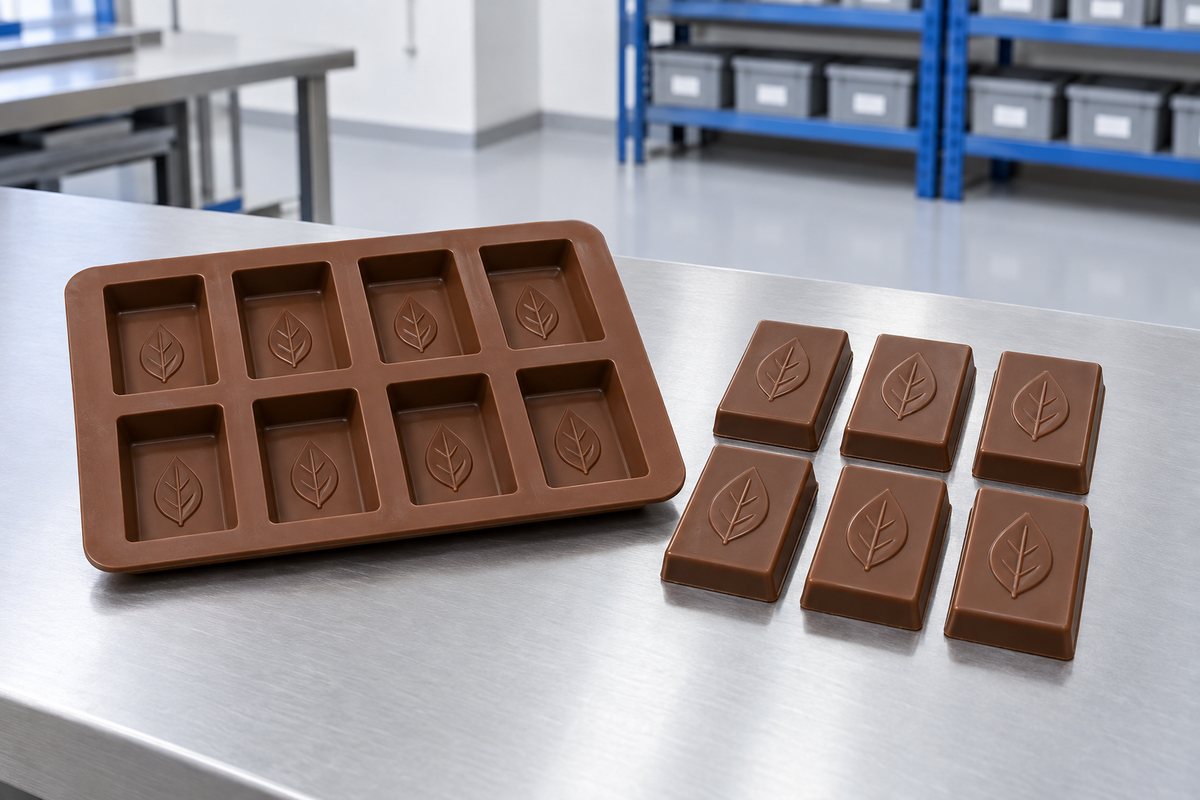
Illustrative schematic. Real tools include additional detail (runners, vents, ejector positions).
What we did
Every choice on this mould started from the moment the bar leaves it.
The print artwork was reworked. Stroke widths were opened up, counters made larger, and letter angles given draft. The mark still reads as the brand mark on the shelf and in the mouth.
Platinum cure keeps the mould inert against fats in the chocolate, and gives the mould a working life measured in years rather than months. It is more expensive up front and cheaper over the run.
Vents were moved to the edges of the segment scoring, where any witness disappears into the break pattern. No vents were placed on the letter faces.
The master was CNC-machined from a food-safe polymer, then hand-finished. Casting from a machined master gives crisper edges on relief than 3D-printed masters, which can carry layer lines.
First-off chocolates were run on the maker's own bench, in their own tempered chocolate. Release was tested cold, warm and after freezer shock. Adjustments were made to draft on two letter angles.
The mould shipped with a written care sheet: wash cycle, storage, and what to do about scuffs. Chocolate moulds are cheap to look after and expensive to replace.
The stages
Drag the timeline left and right, or use the arrow keys. Each stage explains what happens and roughly how long it takes.
Drag · tap a stage for detail
Total working time on a job of this shape: about 3 weeks (22 working days). Lead times shift with drawing changes, sign-off pace and material availability.
The commercial bit
Rather than quote a figure that would only be right for one job, here is a worked example based on a realistic project of this shape. Your quote follows the same shape, with your part, your volume and your material.
A chocolate maker running 400 bars a shift, three shifts a week, over an 18-month bar release cycle.
| Master pattern (CNC + hand finish) | £1,850 one-off |
|---|---|
| Two production silicone moulds | £1,400 one-off |
| Tool amortised over 30,000 bars | ≈ £0.11 per bar |
| Chocolate + labour | your existing cost |
| Landed tool cost per bar | ≈ £0.11 |
Numbers are indicative for a 100 g rectangular bar with a 12 mm wordmark relief. Your quote will follow a review of the bar geometry and artwork.
The bar looks like they printed it on. It's not printed on. That's the point.
Head chocolatier
Where it landed
Every project record on this site is a real piece of work delivered to a real client, with the tooling and the numbers to back it up. This one is no exception.
If you have a similar problem, please send a drawing or a photograph. We will come back with a route, a lead time, and an indicative cost.
More records
Moved a printed watch-strap logo into moulded relief without losing the mark.
Read the recordThe mould geometry that carries fine relief without dulling under wash cycles.
Read the record384 cavities that still release upward on a single flip.
Read the recordNext step
Send us the artwork and the bar format. We will tell you whether the mark will read at the depth chocolate can hold, and what a mould set of the right silicone will cost you.
If you're currently buying rigid polycarbonate moulds and getting cracks or release trouble, we can review that too. Flexible silicone changes the release entirely and often changes the throughput number as well.
Ready to start?
Send us a drawing, photograph or sample, and we'll come back with a route, a material recommendation and a price.
Real people, a real workshop
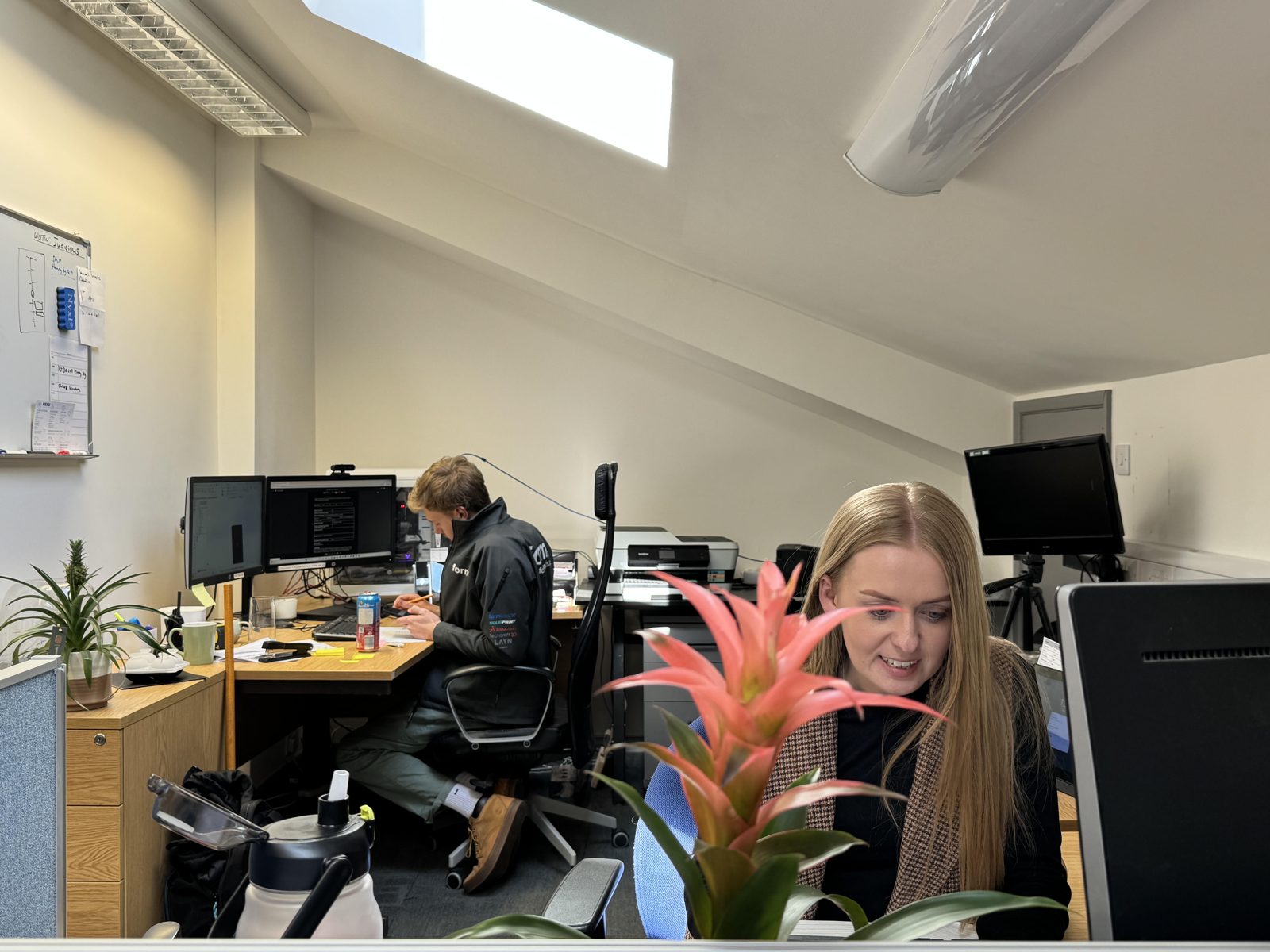
No call centre and no middlemen. When you contact TCI Mouldings, you speak to the team who design, build and check your mould.


 Thomas LaneManaging Director
 George PrestonDesign & Project Manager
 Kelly BallingerHead of Partnerships
 Jim AndertonProduction Manager
 TheodoreEmployee Welfare