
Classical
Column capitals, bases and shafts
Split, supported rubber moulds for capitals, bases and fluted shafts, with crisp acanthus and moulding detail and a case that opens around the casting.
Industries · Construction and architectural
Supported polyurethane and silicone rubber moulds for precast, GRC, cast stone, formliners, large architectural elements and heritage reproduction. Detail in the rubber, rigidity in the case, and an expected cycle life written into the quote.
What precast and GRC manufacturers need

Concrete is heavy, abrasive and unforgiving. A mould that bows, tears at a sharp arris or loses detail after a few pours costs far more in remedial work than it saved.
We build construction moulds with a thin, accurate face in polyurethane or silicone, backed by a rigid jacket that keeps the geometry true under load. Drainage, draft and demould direction are designed in from the start, along with the cycle life you need for the programme.
For larger formliner and precast programmes, our sister company TCI Construction leads, with TCI Mouldings building the specialist tooling behind it.
Large concrete parts
Large elements are where a supported rubber mould pays back: the rubber carries the detail and releases undercuts, the rigid case carries the weight.
Split, supported rubber moulds for capitals, bases and fluted shafts, with crisp acanthus and moulding detail and a case that opens around the casting.
Textured formliners and panel moulds for precast cladding, feature walls and architectural relief, sized to your casting tables.
Large reusable formliners for parapets, abutments, retaining walls and noise barriers, built for repeat pours on site or in the yard.
Long-run rubber moulds for copings, cornices, sills and string courses, with joints and returns that line up from piece to piece.
Supported moulds for large planters, troughs, seating and bollards in concrete, GRC or jesmonite, designed for crane or forklift demoulding.
Rubber moulds taken from surviving balusters, finials and carved stone, so replacement pieces match listed buildings.
Typical construction work
Six families of tooling cover most construction enquiries.
Supported moulds for copings, sills, cladding units, sinks, worktops and bespoke precast elements.
Moulds for glass-reinforced concrete and cast stone, with the face detail and draft that spray-up and vibration need.
Reusable textured liners for in-situ and precast concrete facades, from standard textures to bespoke architectural relief.
Moulds taken from or rebuilt around existing stonework, so replacement pieces match listed and historic buildings.
Production moulds for planters, basins, pavers and homeware made in concrete or jesmonite, sized for yard handling.
Replacement mould faces built to the archived master, so the programme carries on when a face wears out.
Mould types
A general guide. Element size, detail and cycle count decide the final build.
Typical guide values, confirmed on your quotation. We quote expected cycle life with every construction mould.
| Mould type | Best for | Typical cycle life | Typical lead time |
|---|---|---|---|
| Supported polyurethane | Precast elements, sinks, worktops | Dozens to hundreds of pours | Lead time depends on the agreed scope, review stages, material availability and current workload. Request a schedule with your quotation. |
| Split case rubber mould | Large capitals, columns, balusters | Dozens to hundreds of pours | Lead time depends on the agreed scope, review stages, material availability and current workload. Request a schedule with your quotation. |
| Supported silicone | Fine detail, undercuts, heritage | Dozens of pours | Lead time depends on the agreed scope, review stages, material availability and current workload. Request a schedule with your quotation. |
| Textured formliner | In-situ and precast facades | Programme dependent | Lead time depends on the agreed scope, review stages, material availability and current workload. Request a schedule with your quotation. |
| GRC tooling | Spray-up and cast stone | Programme dependent | Lead time depends on the agreed scope, review stages, material availability and current workload. Request a schedule with your quotation. |
Release agent, demould method and curing regime all affect cycle life. We record them with the mould so performance can be compared across the programme.
Examples
Eight typical jobs for silicone, polyurethane and rubber tooling in this industry. Each one can be a single development tool or a full production set.
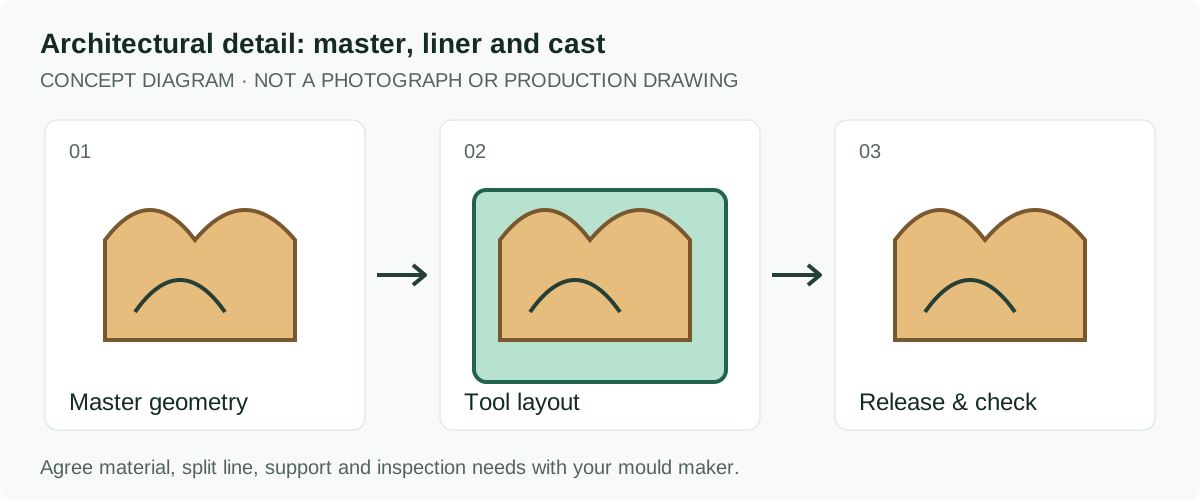
Split rubber moulds that release acanthus, scrolls and mouldings without damage.
Supported PU, siliconePanel moulds and liners for precast and GRC cladding with relief and texture.
PolyurethaneLong-run moulds for copings, sills and string courses with drips and returns.
Supported PUMoulds for balusters, rails and plinths that match an existing run.
Silicone, PUDoor surrounds, quoins, keystones and porticos in cast stone.
Supported PUMoulds for kitchen and bathroom basins, worktops and splashbacks.
Silicone, PUReusable liners for stone, timber and bespoke textures in concrete.
PolyurethaneMoulds for special bricks, slips and heritage brick matches.
PolyurethaneTooling ideas, clearly explained
Larger customers ask the same questions: how is it checked, what is it made from, and can you make another one exactly the same? This is how we answer them.


Photos: Brandable Box, Jessica Streser, Wilhelm Gunkel, laura adai on Unsplash.
How we work with contractors and manufacturers
Please contact us before sending sensitive drawings or samples so that any confidentiality arrangements can be agreed.
You have a named contact for your programme, from feasibility to repeat supply, and is the person your engineering, quality and procurement teams speak to.
Material documentation, inspection requirements, manufacturing responsibilities and any necessary approvals should be specified and confirmed for your project before work is authorised.
Any tooling-specific terms, expected service conditions and remedies must be confirmed in your written quotation and order agreement.

Programme stages
We review the element, finish, pour method and cycle count, and propose the mould build.
Please contact us before sending sensitive drawings or samples so that any confidentiality arrangements can be agreed.
Master made from CAD or scan, first mould built and trial-poured.
Duplicate moulds built from the approved master for your production rate.
Replacement faces and jackets from the archived master as the programme runs.
Questions from construction buyers
Yes. We build moulds for precast yards, GRC and cast stone manufacturers, and for contractors and architects specifying bespoke elements. Our sister company TCI Construction handles larger formliner and precast programmes.
A thin, accurate polyurethane or silicone face carries the detail, and a rigid jacket holds the geometry so the mould does not bow under the weight of concrete. It is lighter and cheaper than a solid rubber mould and keeps faces flat over repeat pours.
Yes. We scan or take moulds from existing stonework, rebuild missing detail, and produce production moulds so replacement pieces match the originals.
It depends on the concrete, release agent, demould method and detail depth. We quote an expected cycle life with every construction mould and plan replacement faces into longer programmes.
Pricing depends on your design, materials, quantities and tooling scope. Ask us for a quotation against your project brief.
Related industries

High-end custom food-contact moulds for restaurant groups, luxury hotels and pastry kitchens: signature desserts, branded chocolate and banqueting tools.
Read more
Multi-cavity production tooling for candle, soap, wax melt and home fragrance manufacturers, sized to your line and supplied as matched sets with spares.
Read more
Potting and encapsulation moulds, gaskets and seals, compression-moulded keypads and wearable straps, from validation batches to production supply.
Read moreStart a programme
We will propose the mould build, the expected cycle life and a fixed price.
Your project, our expertise
Contact TCI Mouldings with your drawings, samples and production requirements so the technical brief and next steps can be discussed.


 Thomas LaneManaging Director
 George PrestonDesign & Project Manager
 Kelly BallingerHead of Partnerships
 Jim AndertonProduction Manager
 TheodoreEmployee Welfare