A mould to cast into
You make the product yourself, so you need the tool that shapes it. We make the mould for wax, plaster, resin, concrete, chocolate or soap. The mould is our deliverable, and the part is yours.
Part of TCI Group · UK design, UK manufacturing capability, since 2019
Everything we sell, brought together on one page. You will find moulds to cast into, moulded silicone components, the design work that comes before either, and the commercial arrangements that support a repeat order. If you know what you need, go straight to it. If you are not sure, start with the routes.
Start here
Almost every enquiry we receive at Bidford falls into one of these four categories. Choose the one that best describes you, and the rest of this page gets shorter.
You make the product yourself, so you need the tool that shapes it. We make the mould for wax, plaster, resin, concrete, chocolate or soap. The mould is our deliverable, and the part is yours.
If you need the rubber part itself, such as a seal, gasket, ear pad or strap, we take care of the tooling. You buy the finished part, either in batches or on a schedule.
If you have no drawing, no master, an obsolete part or nothing else, that's fine. CAD, scanning, reverse engineering and pattern making are jobs in their own right, and they are usually what makes the mould possible.
You already know the part works. Now you need the same part again next quarter, a spare tool on the shelf, and one person who can answer your questions about it.
Anatomy
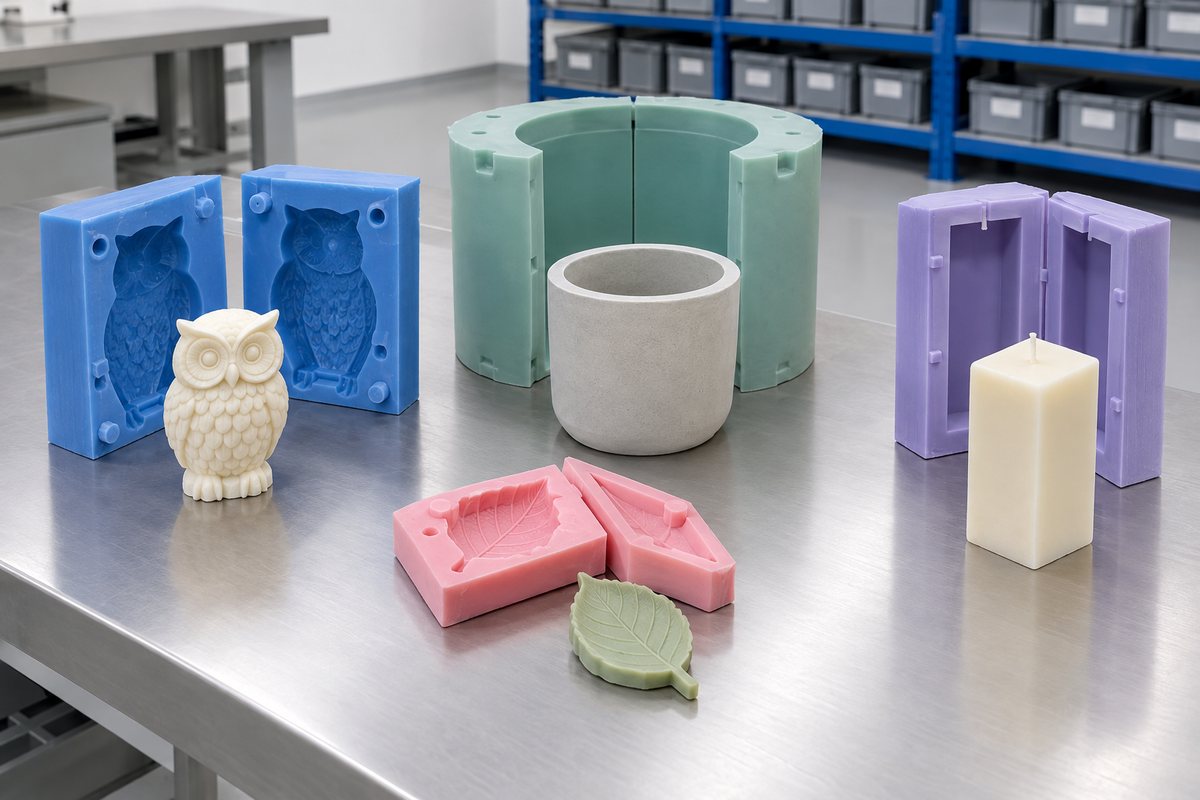
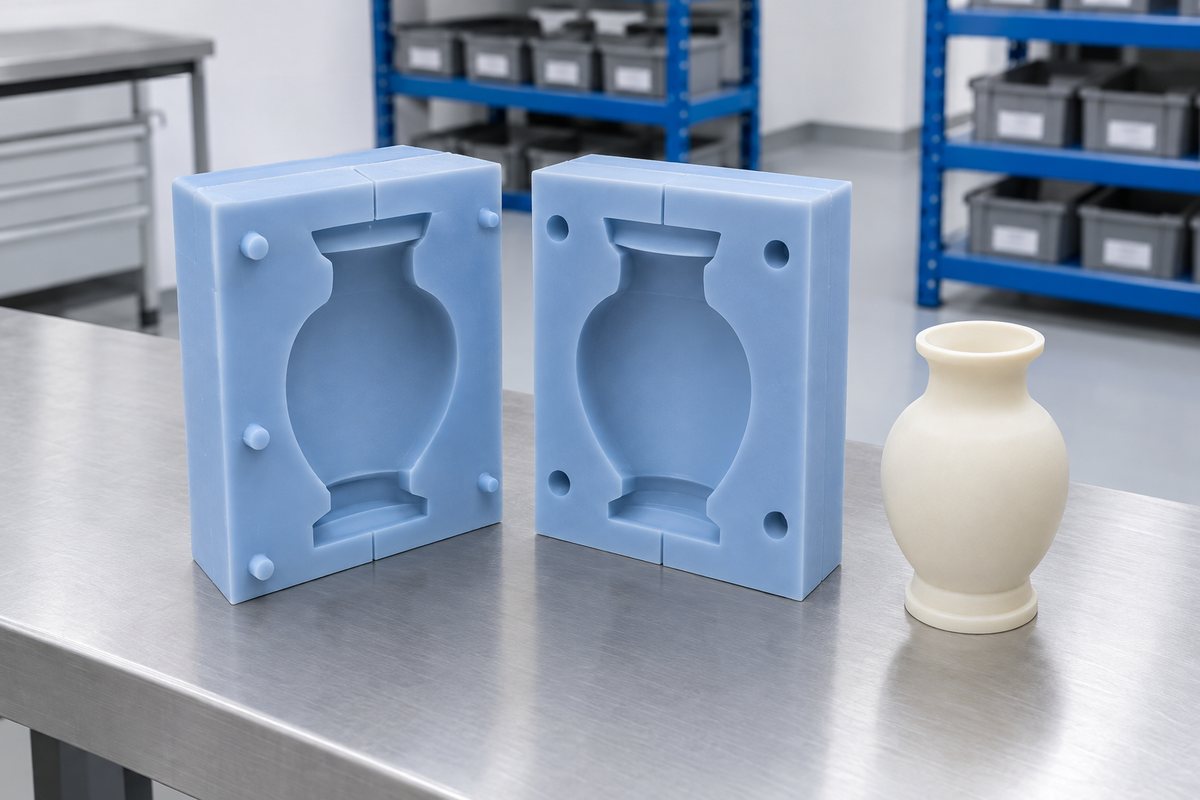
A mould is more than a lump of rubber with a hole in it. It has a split line someone has chosen, a wall thickness someone has worked out, and registration that puts the halves back in the same place every time. Its hardness is selected around the person who has to open it.
These four decisions are where the money is. If the split line is wrong, the part locks in. If the wall is too thin, the mould distorts under its own casting load. If the hardness is too high, the undercut tears on the tenth pull. None of this is visible in a photograph, so we ask the awkward questions before we quote.
The same principle applies to a hard tool for pressed or injected parts. The mistakes are more expensive because steel does not forgive. That is why the design review comes first, as a separate step.
Compare
Tooling cost and cost per part move in opposite directions. Your run length tells you which matters more.
These figures are indicative only. Every column is subject to change once we have seen the actual part.
| Route | Typical run | Tooling cost | Cost per part | Detail held | Where it stops making sense |
|---|---|---|---|---|---|
| <a href="service-hand-made-moulds.html">Hand-made</a> | 1 to 50 | Lowest | Highest | Moderate | Once you need every part to match the last one |
| <a href="service-cast-moulds.html">Cast</a> | 10 to 500 | Low | Moderate | Good | Once the labour per pull outweighs a hard tool |
| <a href="service-vacuum-cast-moulds.html">Vacuum cast</a> | 10 to 500 | Low to medium | Moderate | Highest of the soft routes | On generous shapes that never needed degassing |
| <a href="service-compression-moulds.html">Compression</a> | 250 upwards | Medium to high | Low | High and repeatable | On a one-off, or a shape still being argued about |
| <a href="service-injection-moulds.html">Injection</a> | 1,000 upwards | Highest | Lowest | High and repeatable | Anywhere the annual quantity will not repay the tool |
The run bands overlap deliberately. A 400-piece job can sit in three of these rows because your part decides where it belongs, not just the number.
Decorate
This is the largest single group of work we receive, where the finish itself is the product.
For pillars, vessels, sculptural shapes and melt trays, wax shrinkage matters. As wax cools, it pulls away from detail, so the draft and surface are designed around the pour temperature rather than the drawing alone.
Cast moulds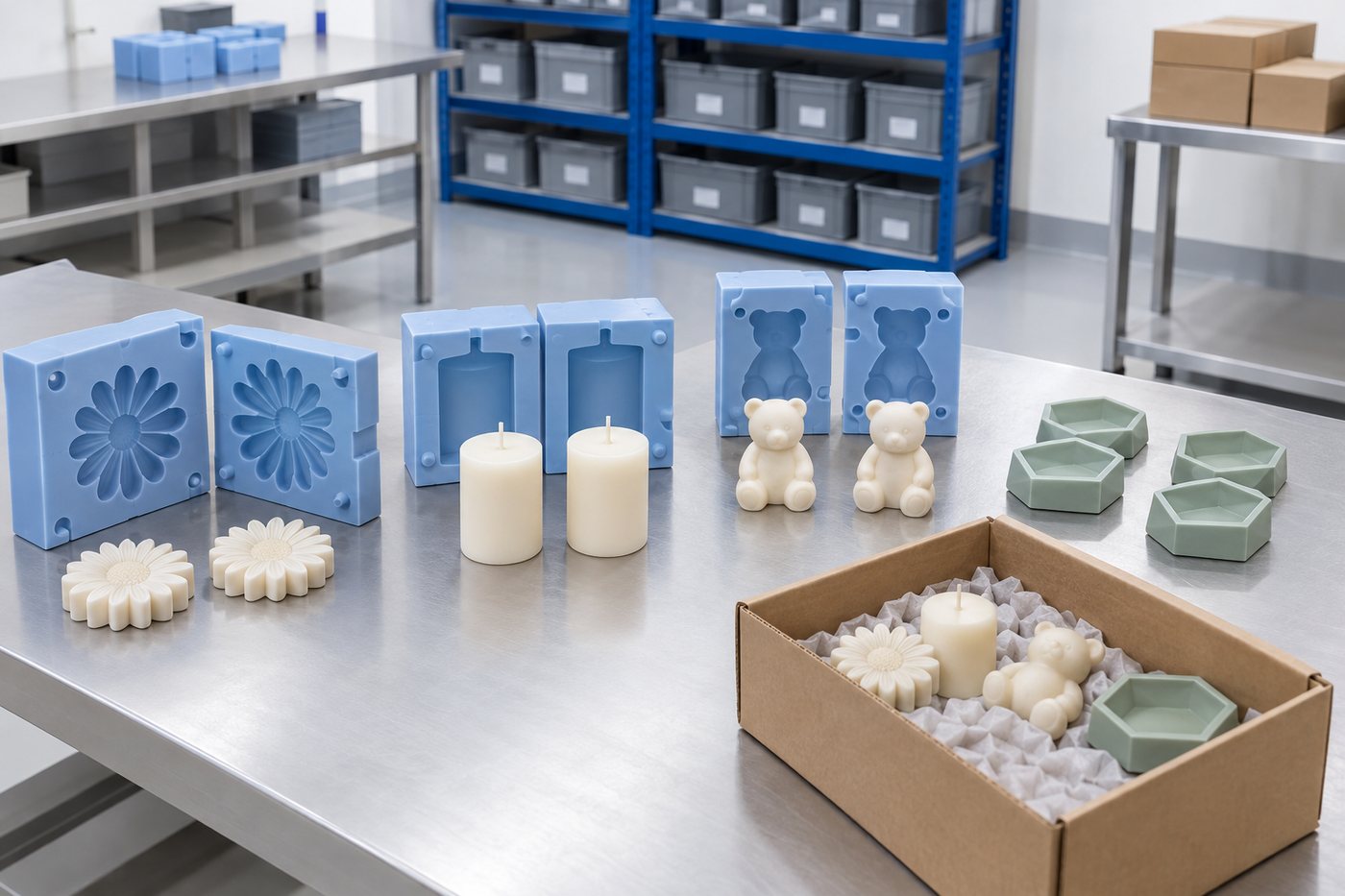
Cold process and melt-and-pour behave differently in the same mould. When you're choosing one, remember that caustic soap batter is harder on a mould face than resin, so the grade matters just as much as the shape.
Low-volume production
Trays, coasters, vessels and ornament: resin picks up every pinhole in the mould face. That is the usual reason a decorative job is cast under vacuum instead of poured on the bench.
Vacuum castingCook
Food work involves paperwork as much as moulding. The shape is usually the easy part. The real time goes into specifying a food-grade platinum-cure grade, matching the declarations to your order, and recording which material batch went into which tool. That way, the answer is still there in two years.
Bakery and patisserie trays need to withstand thermal cycling (repeated temperature changes), repeated washing and the pressure of a production operator working in a hurry. That means increasing the hardness and wall thickness, creating a different type of mould from the one a home baker would want.
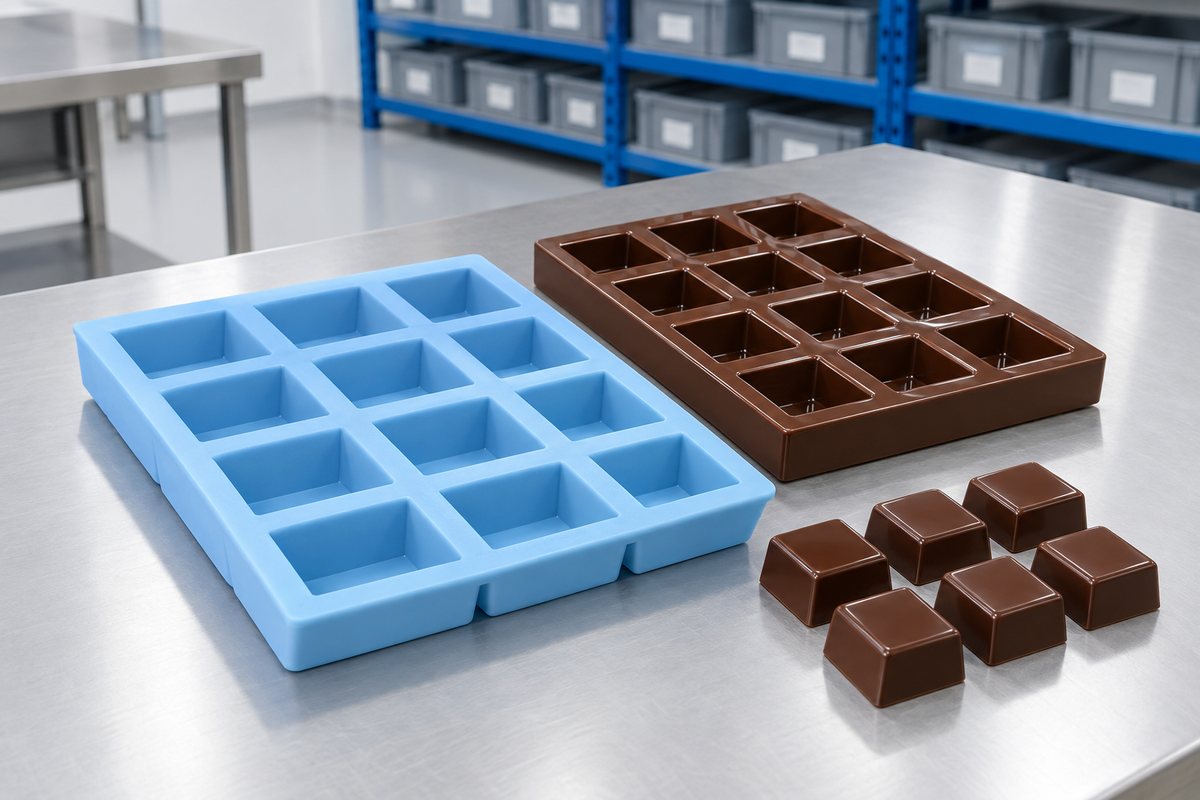
Chocolate presents the opposite challenge: low temperature, high gloss, and a surface that reveals every defect in the mould. The mould face needs to be treated as the product surface, because that is exactly what it becomes.
Build
Heavier and more abrasive, these tools are judged by how many pulls they survive rather than by how they photograph.
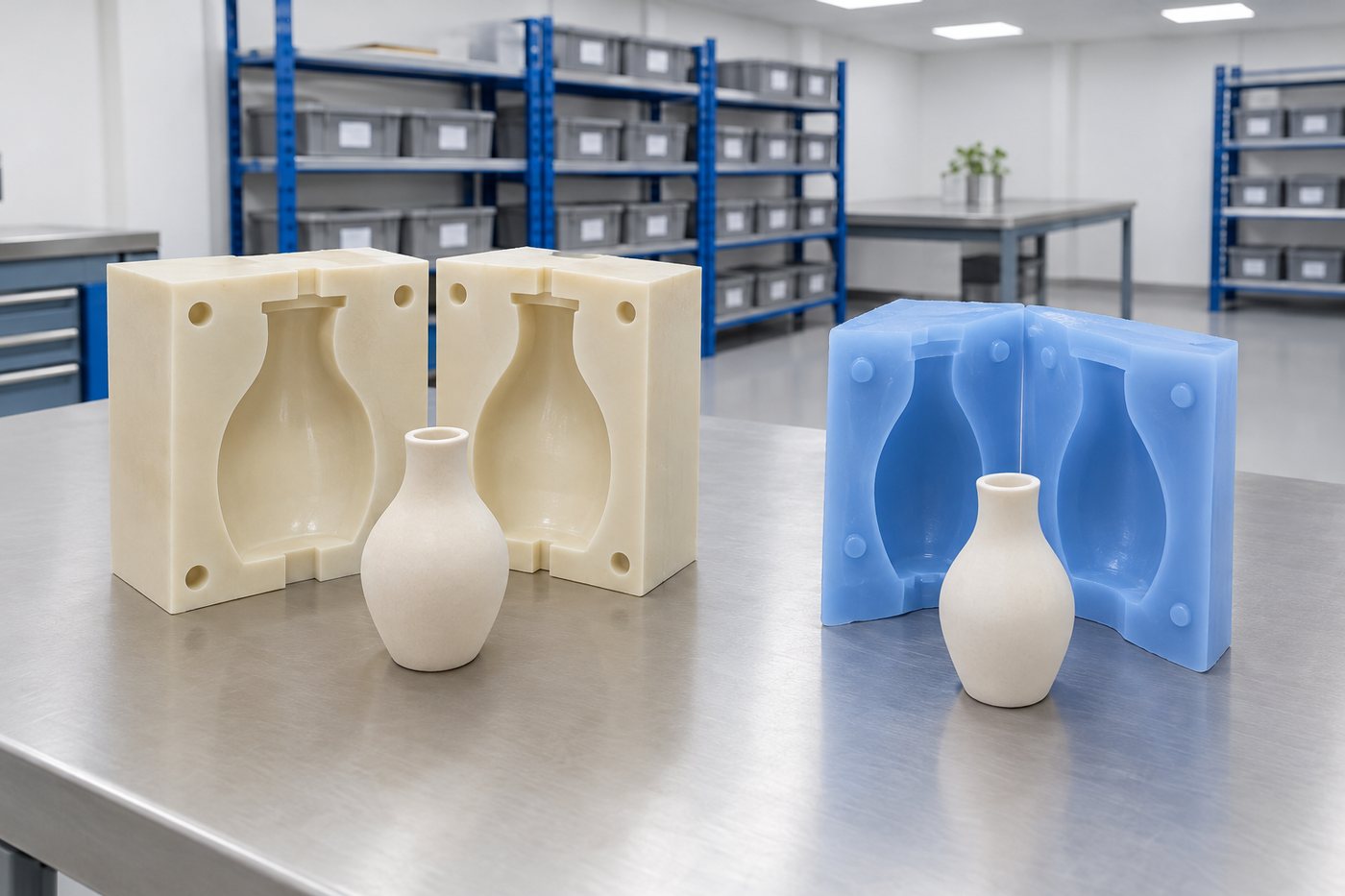
Copings, corbels, balusters and panels can all be recreated as replacement details for a building that no longer has a supplier. Here, abrasion and tear strength matter more than fine detail, which often makes polyurethane a better choice than silicone.
Polyurethane tooling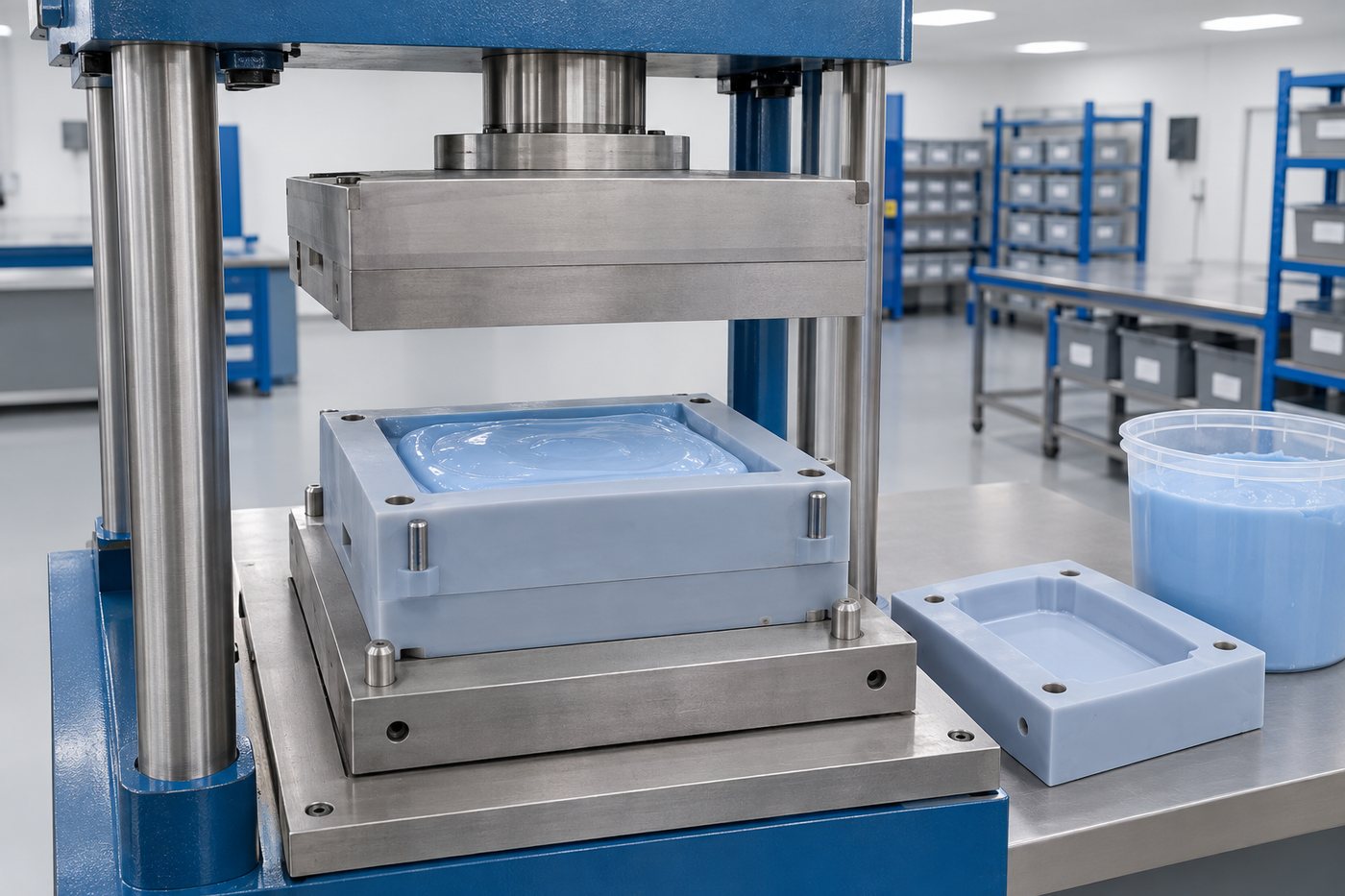
Gaskets, seals, bungs, pads and membranes all start with the right shape. Once that is settled, the part moves to a heated tool, where pressing delivers repeatable results that hand-casting cannot match.
Compression moulding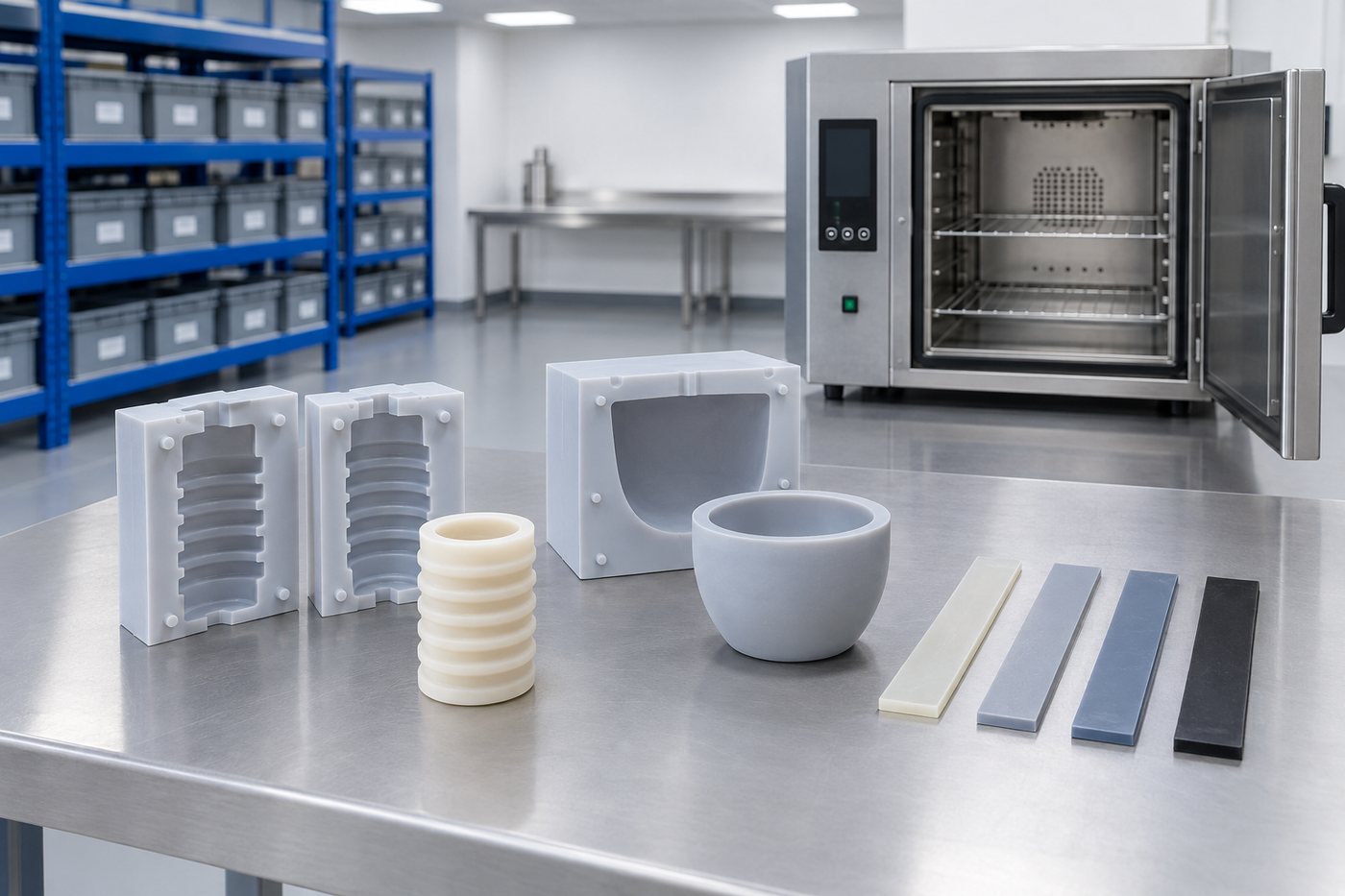
Whether your mould is used in an oven, an autoclave or a heated line, we choose the grade around the cycle. Any rated range we quote comes from the material supplier in writing, not from us.
High-temperature mouldsThe range
We sell seventeen things. Rather than list them alphabetically, we've grouped them below in two useful ways: by the kind of customer who buys them and by what the job actually involves.
Choose whichever grouping best matches how you think about the problem. The pages are the same either way, and each one explains what the route is good at, as well as where it may not be the best fit.
If two groups look like they both apply, they probably both do. Send us the part and we'll tell you which one it belongs in.
Group one
You want the silicone item itself, made the same way every time.
For repeat batches, heated steel tooling and solid silicone are well suited to gaskets, seals and thicker sections.
Compression mouldingFor parts you'll keep buying, closed tooling and metered liquid silicone offer the highest tooling cost, but the lowest cost per part.
Injection and LSROnce your part is in production, cavity count is the main factor affecting unit price. Matched sets and support frames are included.
Multi-cavity toolingThe specification follows the thermal cycle rather than the shape, with post-cure used where the process needs it.
High-temperature mouldsGroup two
A good fit for short and medium runs where the surface is what your customer is paying for.
Boxed two-part moulds with a chosen split line and even walls. A reliable choice for candles, resin, plaster and giftware.
Cast mouldsWhen even one pinhole means a reject, choose degassed pours. This soft route holds the finest relief.
Vacuum castingChoose brushed-on silicone with a rigid mother mould for large, deep-relief or immovable patterns.
Hand-made mouldsWhether your master is printed, machined or hand-made, it is finished properly so your parts inherit that surface for years.
Master patternsGroup three
For bakery, patisserie and confectionery work, declarations matter just as much as geometry.
We use food-grade platinum-cure silicone, with declarations supplied against your order and grades recorded batch by batch.
Food-contact mouldsFor trays that repeatedly go through an oven and wash cycle, the hardness and wall thickness are increased to suit.
High-temperature mouldsMatched cavities help your tray fill evenly, so every cake, bar or shell comes out at the same weight.
Multi-cavity toolingWe keep a spare on the shelf, made against the retained master, so a damaged tray can be swapped rather than waited on.
Replacement mouldsGroup four
Ideal for precast yards, restoration work and applications involving abrasive cast material.
For concrete, cast stone and abrasive mixes, this is the right choice when abrasion and tear strength matter more than fine detail.
Polyurethane toolingFor a large or fixed pattern that cannot be boxed and poured, the mould is taken off as a brushed skin.
Hand-made mouldsIf an architectural detail is worn or obsolete, we measure, model, correct and tool it, then write down the record.
Reverse engineeringWe digitise existing geometry so you can reproduce, mirror or scale a detail. Hand measurement fills in the areas the scanner misses.
3D scanningGroup five
For brands that want a finished part delivered, rather than a tool to run themselves.
Whether you need a single prop or steady weekly batches, we handle short runs and one-offs cast or pressed in the real material.
Low-volume productionDevelopment tooling lets you make real parts in the real material before committing to a production tool.
Prototype toolingThis route suits parts ordered on a rolling annual quantity once the shape has stopped changing.
Injection and LSRWe choose the hardness to suit the cast, the undercut and the operator, using real parts rather than relying on a catalogue table.
Shore hardnessBy the job
These are the same seventeen pages, arranged in a different order. Use this grouping if you already know the technical shape of your problem and want to find the right page.
Each page explains what we need from you to quote and shows where the route runs out. Nothing here is simply a brochure entry with no page behind it.
Sorted by route
The material is brushed or laid up around a master, using a rigid mother mould. This is the cheapest way to create a working mould, but it is also the least repeatable.
Hand-made mouldsBoxed and poured with registration keys, the split line is chosen deliberately rather than simply accepted.
Cast mouldsWe use chamber degassing for both moulds and casts, giving you fine relief, crisp arrises and no pinholes to repair.
Vacuum cast mouldsA metal frame with a silicone face is heated and pressed to make repeat batches of solid silicone parts.
Compression mouldingWe meter liquid silicone into closed steel tooling, with the cavity count matched to your annual quantity.
Injection and LSRSorted by input
Most jobs arrive with a few details still to be worked out. These pages explain how we help.
Splits, draft, venting and shrinkage are worked through in CAD while changes are still cheap. This is where we ask the awkward questions early.
CAD and DFMIf you do not have a master to cast from, we can make one in printed polymer, machined stock or by hand.
Master patternsWe digitised an existing part for tooling, clearly explaining what a scan does well and where a caliper is still the better choice.
3D scanningWe can work back from a worn sample to recreate a drawing and mould, even when the original tooling is long gone.
Reverse engineeringSorted by property
When the specification, rather than the shape, is the challenging part of the job.
Shore A: its limits and why we will not publish a grade-against-application table
Shore hardnessOur food-grade platinum-cure grades come with declarations against the order, and we retain the batch records.
Food-contact mouldsWe can carry out heat and thermal cycling, with post-cure where the process needs it, and provide supplier-stated ranges in writing.
High-temperature mouldsFor concrete and cast stone, this is the abrasion-resistant choice, although it captures less fine detail.
Polyurethane toolingSorted commercially
The arrangement around the tool is often what determines whether a job is worth doing at all.
We run the tool, and you buy the parts. It makes sense when the quantity does not justify investing in your own production kit.
Low-volume productionTest real parts in the real material before committing to a production tool. Most design faults surface in the first handful of parts.
Prototype toolingWe show how cavity count relates to unit price, working through the arithmetic rather than simply asserting it.
Multi-cavity toolingWe retain masters and hold spare stock for repeat orders, so if a tool is damaged, we can swap it rather than remake it from scratch.
Replacement and sparesIncluded
These are not extras added as separate lines on the invoice. They are the steps that ensure your mould is made correctly.
Before anything is cut, someone reviews your geometry for draft, the angle needed for release, the split line, wall thickness and any features that could make moulding difficult. If we think your part needs changing, you'll hear it then, not after tooling.
We assess every mould and first part against what it was meant to be. We check dimensions where they matter, surface where it matters, and carry out a physical check to make sure your part demoulds without a fight.
We record the material grade, batch and specification against your order, then retain the master. That makes a matching replacement possible later and keeps food declarations easy to find.
Scale
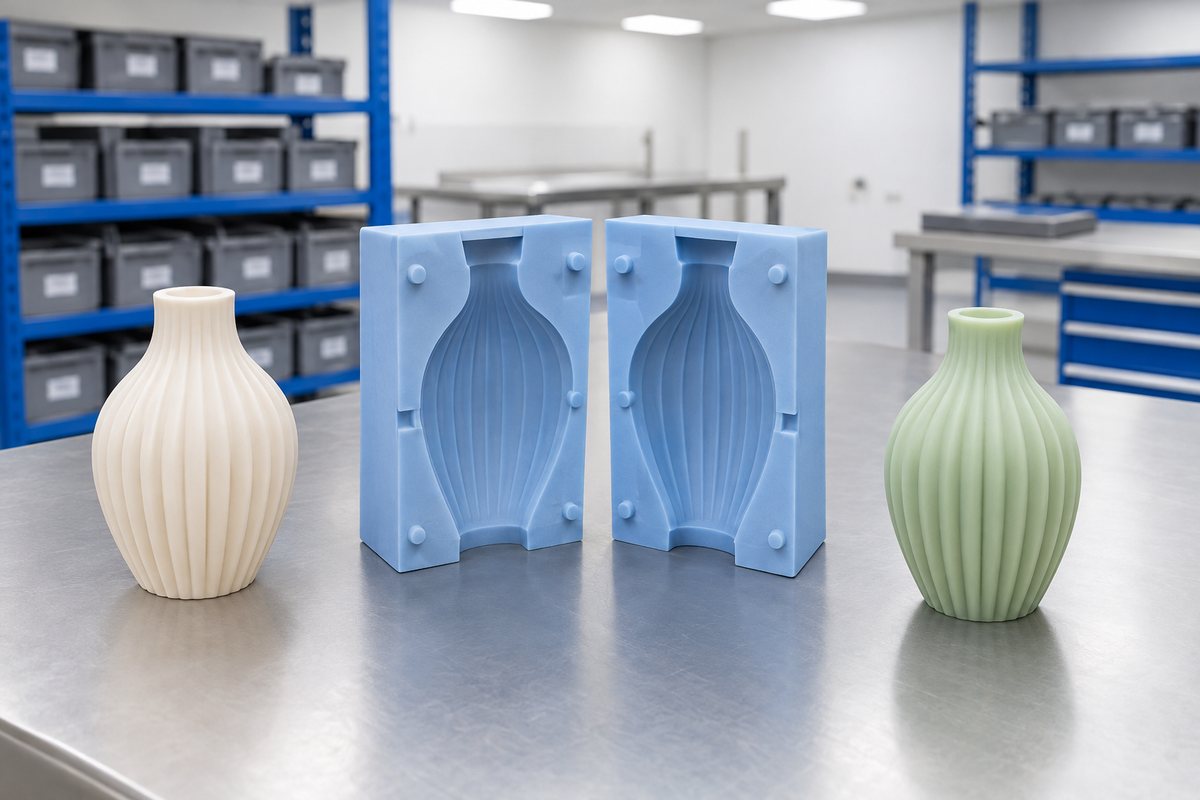
Need just one mould? That is absolutely fine. Plenty of our work is a single tool for a maker who needs exactly that. We prefer to do it properly rather than talk you into something bigger.
We also offer repeat programmes: the same tool refreshed on a schedule, spares kept on the shelf against the retained master, or parts pressed in batches to a call-off. These are different ways of working, so it helps to tell us at enquiry stage which one you need.
The awkward middle is when a job starts as one mould and quietly becomes a programme. If that's a realistic outcome, tell us at the start. The design decisions that make a tool cheap as a one-off are not the same ones that make it cheap over four years.
Cost
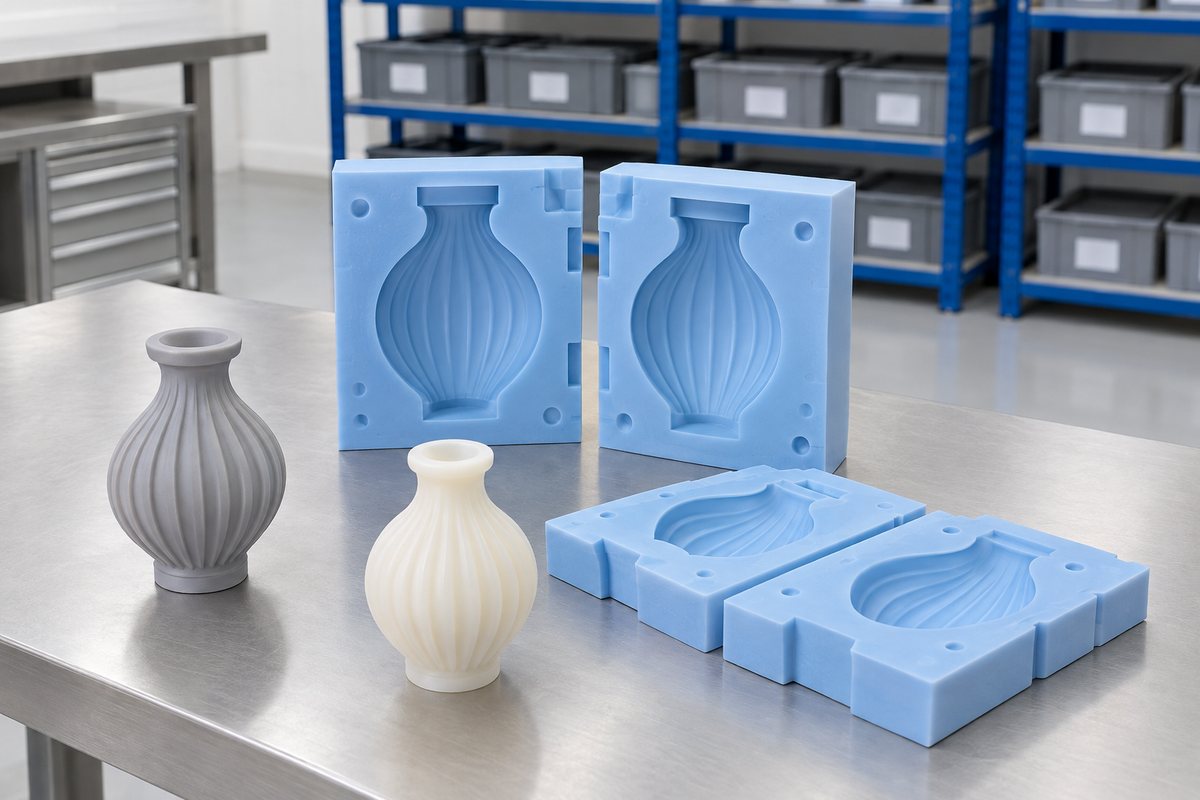
The tooling price alone does not tell you what matters. A tool that costs more but lasts four times as long is cheaper in the long run, while a low-cost tool that produces inconsistent parts is no bargain at all.
We quote the tooling, then spread that cost across the production run to work out your cost per piece. That is the figure that shows whether a job makes commercial sense, and we will discuss it openly with you rather than hide it.
It also makes route selection honest. Soft tooling usually wins on the first order, then loses over four years. Hard tooling works the other way round. Neither is a sales position; it is arithmetic, and it changes with your quantity.
If a route we sell is not right for your quantity, we will tell you. That conversation is cheaper than buying a tool nobody uses.
Arithmetic
We will ask you for four figures. Together, they determine the cost per part.
To compare a soft mould with a hard one fairly, divide the tooling cost across the product's whole life, not just this order.
A tool with more cavities reduces the labour and machine time for each part. It also increases the tooling figure, so the best choice is an optimum rather than simply the maximum.
How many pulls can you expect before the mould face degrades? Cast material, hardness, demoulding habits and cleaning regime all affect this, which is why we ask about all four.
If a scrapped cast wastes expensive resin or leads to a wasted batch of chocolate, tighter tooling pays for itself. If a reject costs almost nothing, it does not.
Warranty
Every mould we make is covered against manufacturing defects for two years or two thousand uses, whichever comes first. In plain terms, a manufacturing defect is something we got wrong, such as a bond that failed, a wall built too thin for the load, registration that does not hold or a cure that was not properly completed.
If that happens, we remake the tool. We keep the master and material record, so your replacement matches the one you had, rather than being a fresh interpretation of the same drawing.
What the cover does not include is normal wear. Silicone moulds are consumable tooling, so the mould face naturally degrades with use. This happens faster with abrasive casts, aggressive release agents, caustic soap batter or repeated thermal cycling. A mould that has completed its two thousand pulls and lost its crispness has not failed. It has been used.
It also does not cover damage caused by use outside the specification: for example, running a mould hotter than the grade allows, cutting it with a blade, forcing it open with a tool, or cleaning it with something that attacks silicone. If you are unsure whether your process is within the specification, ask us before committing to a production method, rather than afterwards.
If your job is on a repeat programme, we prefer to hold a spare against the retained master rather than debate which category a worn tool falls into. It keeps your line running and the conversation simple.
Making a claim is straightforward: send the tool back with a description of what it was doing when it went wrong, along with photographs of the parts it was making. We prefer to see the failed part rather than rely on a description.
One group, four specialisms
Shared engineering, one workshop and four specialisms work together. You can draw on the tooling knowledge behind a precast yard, even if you are a chandler with one product.
Next step
If you can, send us a sample in the post. It is more useful than a long specification. If that is not possible, a photograph with a rule in shot, a sketch or the CAD, if you have it, will also help. Tell us what you are casting into it, roughly how many you need and who has to demould it.
We'll give you a clear route, explain why it suits your part, and outline the cost per part. If your quantity doesn't justify tooling, we'll say so honestly. Send your details to the partnership team, and someone who makes moulds will read them.
At a glance
Which route suits your quantity
Swipe to see the whole diagram
Ready to start?
Send us a drawing, photograph or sample. We'll come back with a mould strategy, material recommendation and price.
Real people, a real workshop
No call centre and no middlemen. When you contact TCI Mouldings, you speak to the team who design, build and check your mould.



 Thomas LaneManaging Director
 George PrestonDesign & Project Manager
 Kelly BallingerHead of Partnerships
 Jim AndertonProduction Manager
 TheodoreEmployee Welfare