Bidford-on-Avon, Warwickshire. Mon to Fri.01789 224228

Part of TCI Group · UK design, UK manufacturing capability, since 2019

Six mould jobs and the challenges behind each

Here are six anonymised jobs across the hand-made, cast, vacuum, compression and injection routes. Each focuses on the part that was genuinely difficult, rather than the thing the enquiry led with, and explains the trade-offs behind the fix.

6Written-up jobs
5 routesHand-made to injection
In-houseDesign to production
2019Established

Six jobs

What the work actually looks like.

Every one of these started as a simple request, then revealed one difficult problem underneath. That's the usual shape of a tooling job.

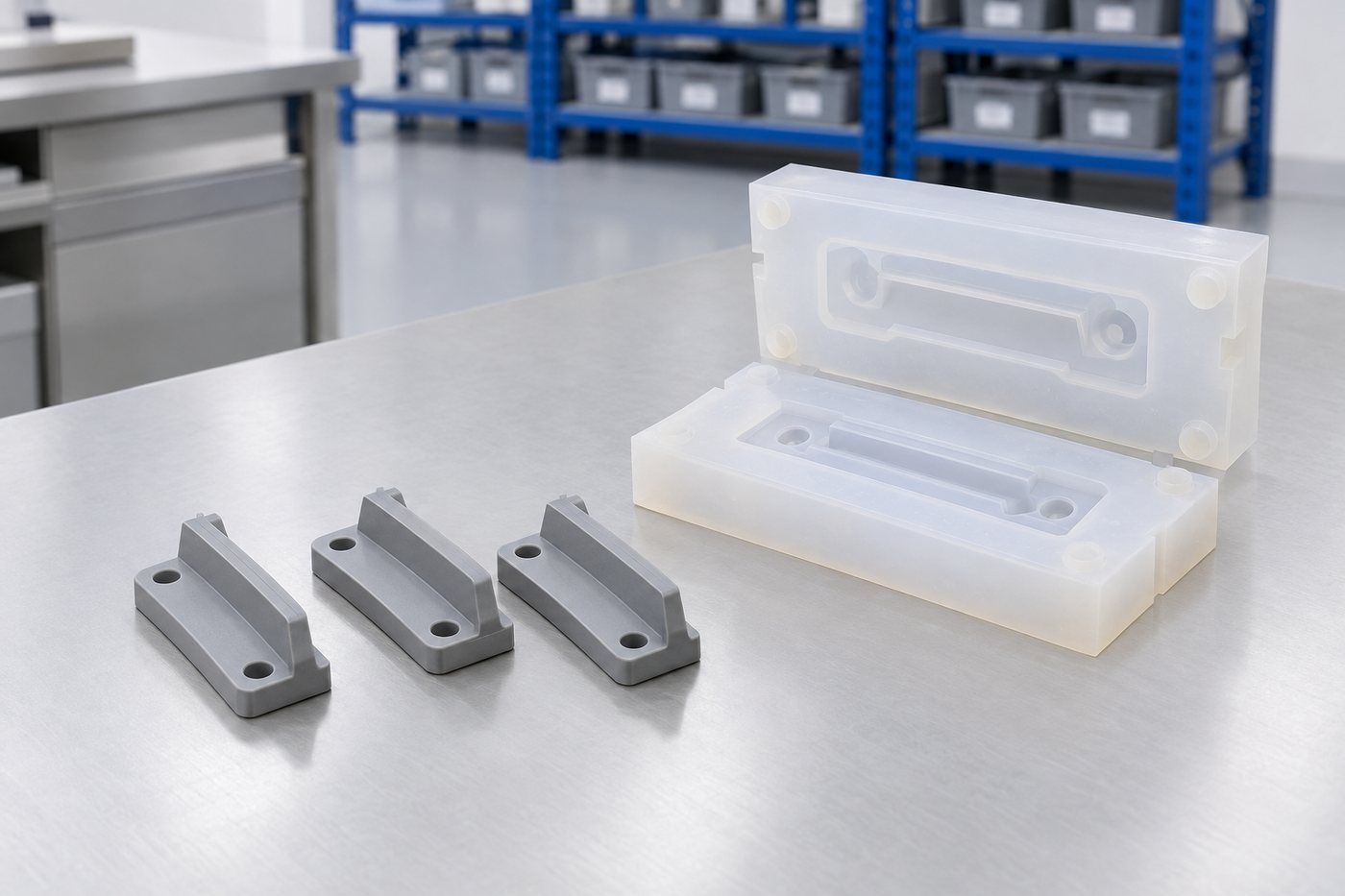
Illustrative example: Fine-feature mould detail inspected beside a small cast component
Aerospace subcontract

A fine feature that could not retain air

When your aerospace subcontract part includes a very small raised feature, even a trapped bubble can make a real difference. At this scale, it does not simply mark the feature; it can delete it altogether. That's why both the mould and the cast went under vacuum, with the pour reworked around degassing rather than speed.

Read the job
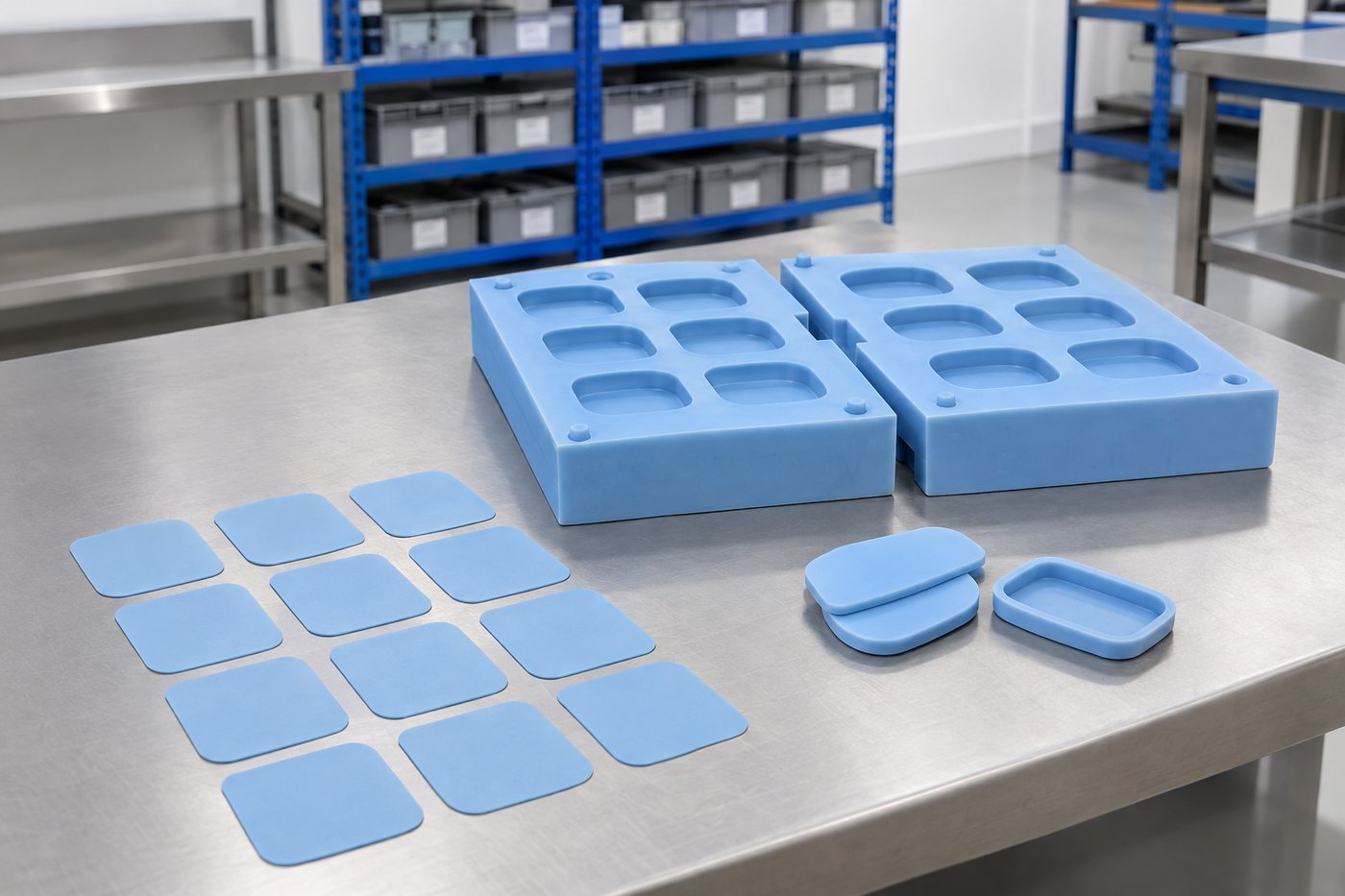
Illustrative example: Thin silicone patches checked for flatness beside a multi-cavity tool
Electrical

An electrical patch that would not lie flat

A thin cast patch curled at the corners, and changing the material did not fix it. The fault was in the mould construction. Once it was rebuilt on a rigid base, the patches came out flat. The diagnosis is the useful part of this example.

Read the job
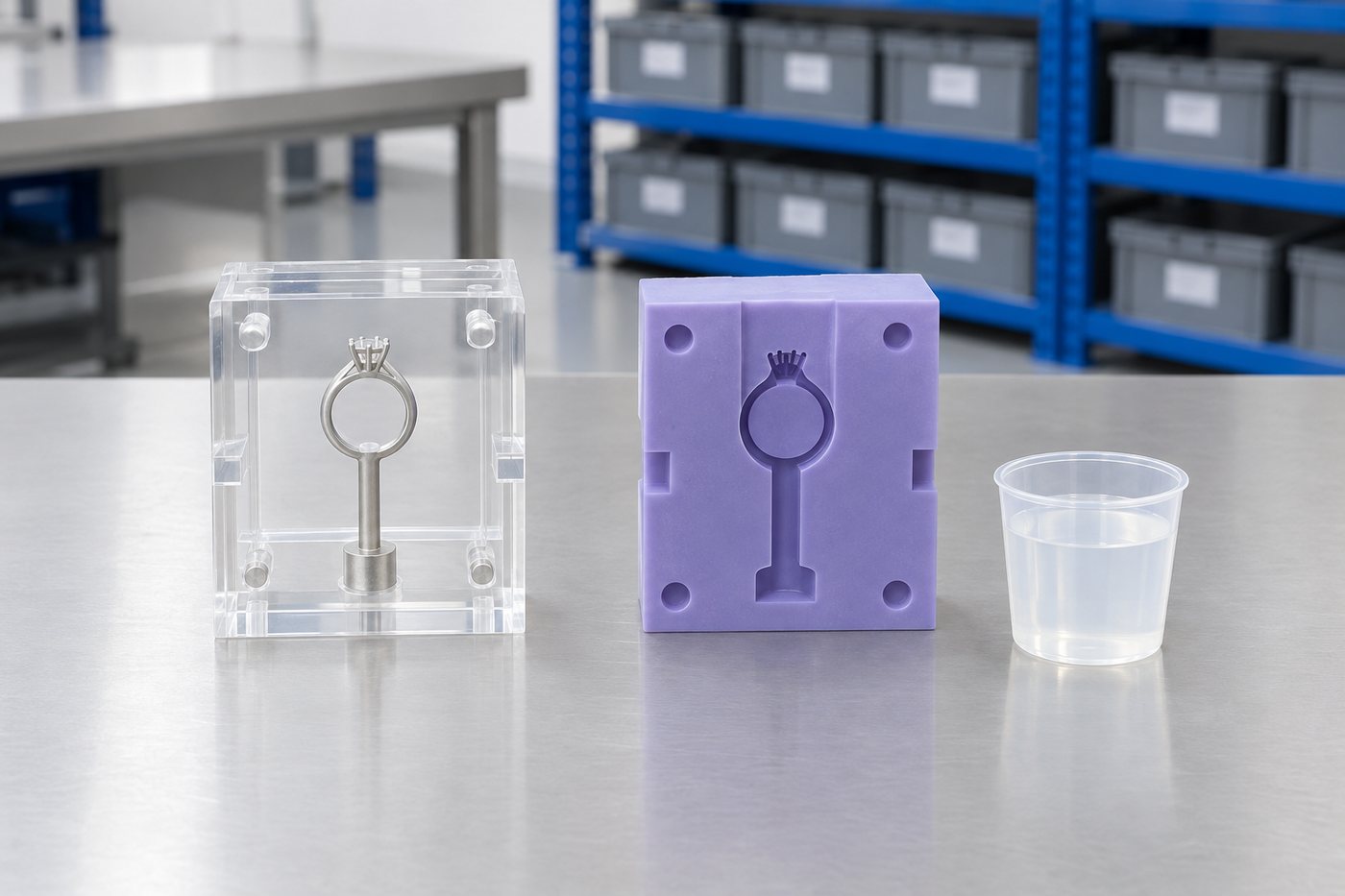
Illustrative example: Failed silicone cure around a jewellery master under investigation
Jewellery

A jewellery master that stopped the curing process

When a hand-modelled master inhibited a platinum cure, it left a tacky mould face. Identifying the contamination mattered more than simply remaking it. Without finding the cause, the next master would do the same thing.

Read the job
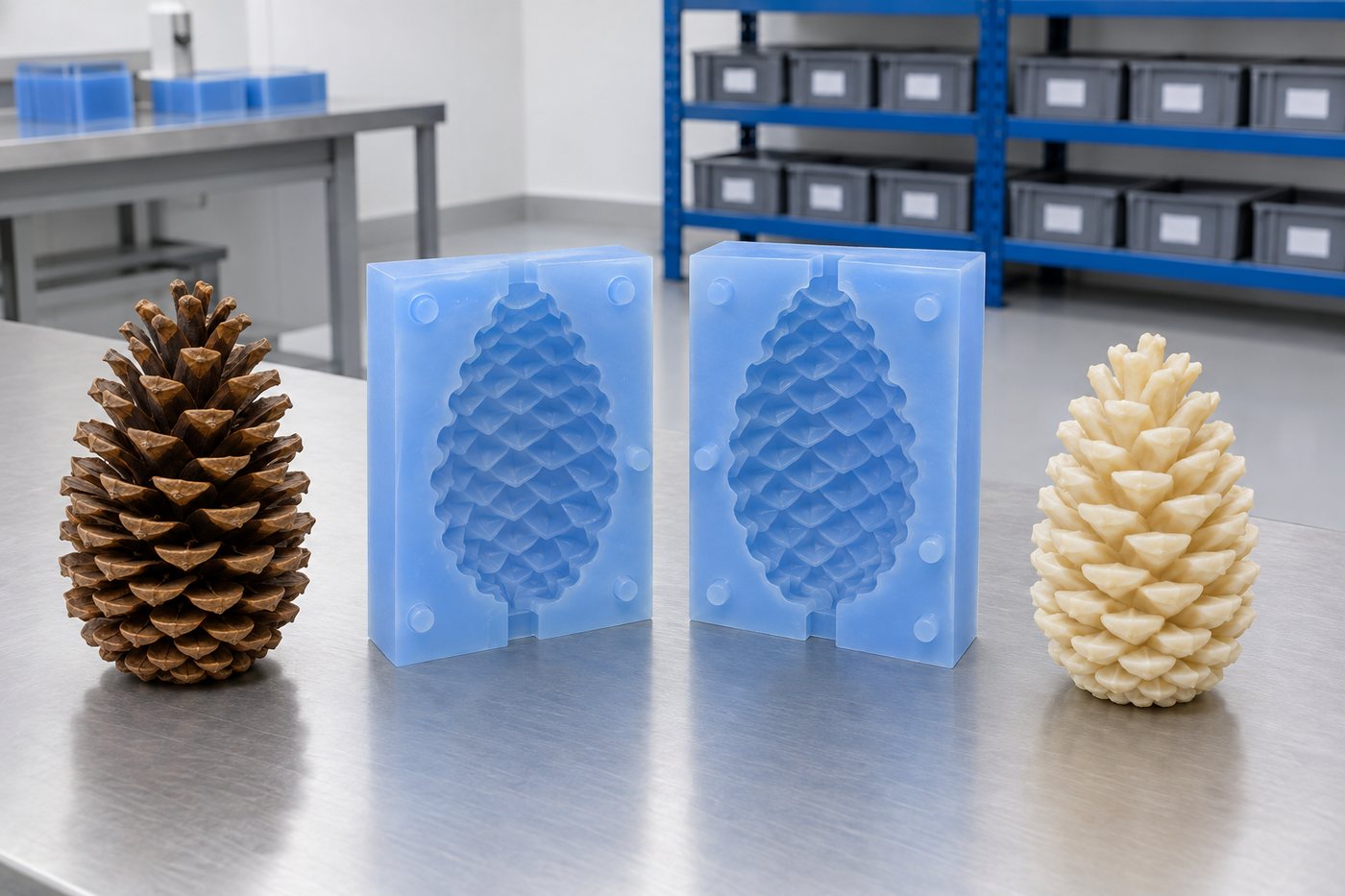
Illustrative example: Pine cone glove mould inside a rigid supporting mother mould
Giftware

Pine cone tooling, where every scale is an undercut

A natural form with hundreds of overlapping undercuts needs a different approach. No rigid mould could open around that shape, so it became a brushed silicone glove inside a rigid mother mould. The trade-off is a slower cycle per cast.

Read the job
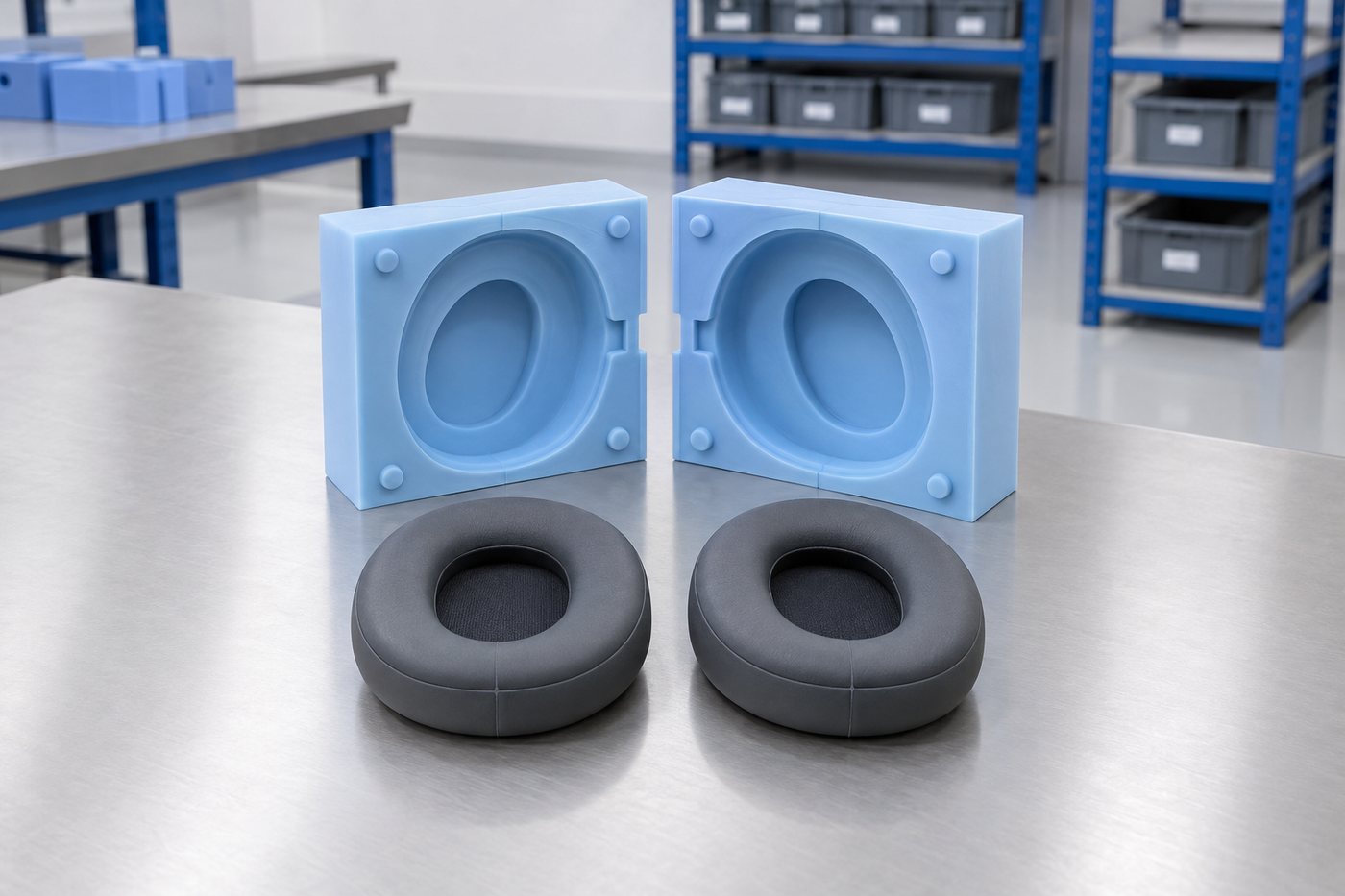
Illustrative example: Soft silicone ear pads compared for flash line position
Consumer audio

Ear pads with a flash line nobody could feel

We moved the soft silicone ear pads from casting to a compression tool. The parting line was moved away from the sealing lip, so the wearer could not feel it. We set the hardness using real parts rather than relying on a datasheet.

Read the job
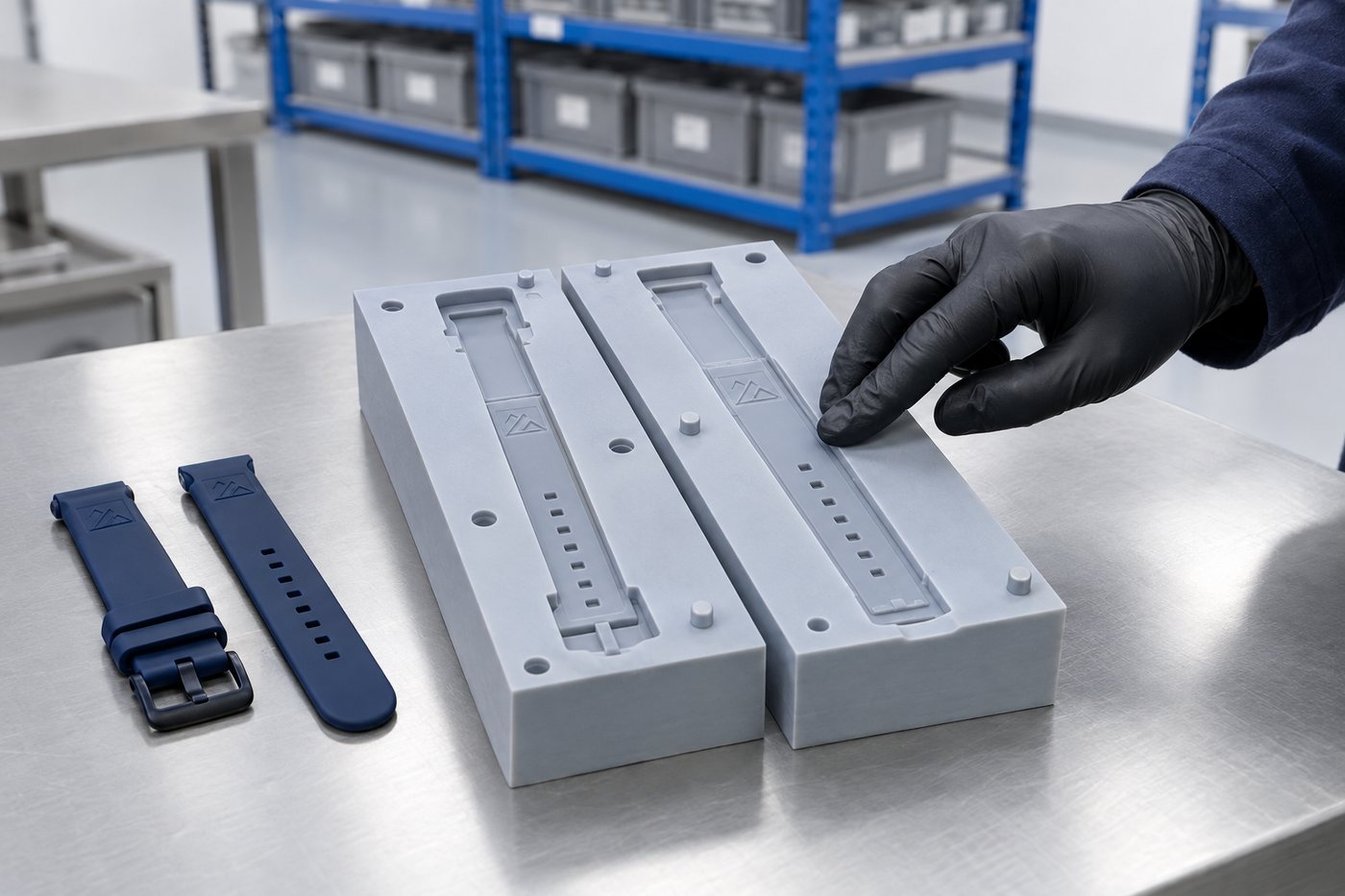
Illustrative example: Gloved hand checking raised logo detail on watch strap mould trial
Wearables

A strap logo that stays legible in volume production

We moved a printed strap logo into moulded relief because print wears off on a wrist, while relief does not. The mark was drafted to stay crisp throughout a long production life, without filling or feathering.

Read the job

Why anonymous

The customers are described by sector on purpose.

For us, the shape created in tooling is your commercial asset. A candle brand's silhouette, a wearables company's strap profile and a component buyer's sealing geometry can all set them apart in the market. That is why we do not place customer names next to photographs of their moulds.

What we can describe honestly is the engineering: what the part had to do, which route it took, what went wrong along the way and what the fix cost in trade-offs. That is the detail that helps someone facing a similar problem, without identifying anyone.

Across all six, you'll notice the same pattern. The headline is almost never the difficult part. The real challenge is usually flatness within a material enquiry, contamination within a remake, or a parting line within a hardness argument. That's why we ask so many questions before quoting. The problem as first described and the real problem are usually different things.

There is another pattern worth knowing: every fix costs something. A vacuum route is slower than a bench pour. A glove mould in a mother mould takes longer per cast than a two-part tool. A harder tray lasts longer, but is less pleasant to demould. If a supplier tells you a change is free, they have not finished thinking it through.

If your job resembles one of these, tell us when you get in touch. It is a quicker way to describe your problem than writing a specification, and helps us see straight away which questions we can skip.

Sector by sector
Route by example

The five routes, with the job each one shows.

We include one worked example for each route, so you can compare them in practice rather than just in theory.

The sixth job involved a jewellery master that inhibited a platinum cure. It is a story about materials and contamination, rather than the manufacturing route.

RouteThe job that shows itWhat it was chosen for
<a href="service-hand-made-moulds.html">Hand-made</a><a href="project-pine-cone-tooling-undercuts.html">Pine cone tooling</a>A brushed skin was the only thing that would come off hundreds of overlapping undercuts
<a href="service-cast-moulds.html">Cast</a><a href="project-electrical-patch-flatness.html">Electrical patch flatness</a>Simple geometry, where the mould construction rather than the material decided the result
<a href="service-vacuum-cast-moulds.html">Vacuum cast</a><a href="project-aerospace-component-0-2-mm-feature.html">Aerospace fine feature</a>Degassing mould and cast alike, because one bubble removed the critical feature
<a href="service-compression-moulds.html">Compression</a><a href="project-silicone-ear-pads-compression.html">Silicone ear pads</a>Repeatable soft parts with the parting line placed where nobody could feel it
<a href="service-injection-moulds.html">Injection</a><a href="project-watch-strap-moulded-logo.html">Watch strap logo</a>A long production life at the lowest cost per part, with moulded detail that had to stay legible

Take a look at the routes side by side on the processes page, or send a part to the partnership team. We'll tell you which of the five it belongs in and why.

More records

Six further jobs, added this cycle.

Six more project write-ups covering different sectors, formats and problems, in the same warts-and-all style.

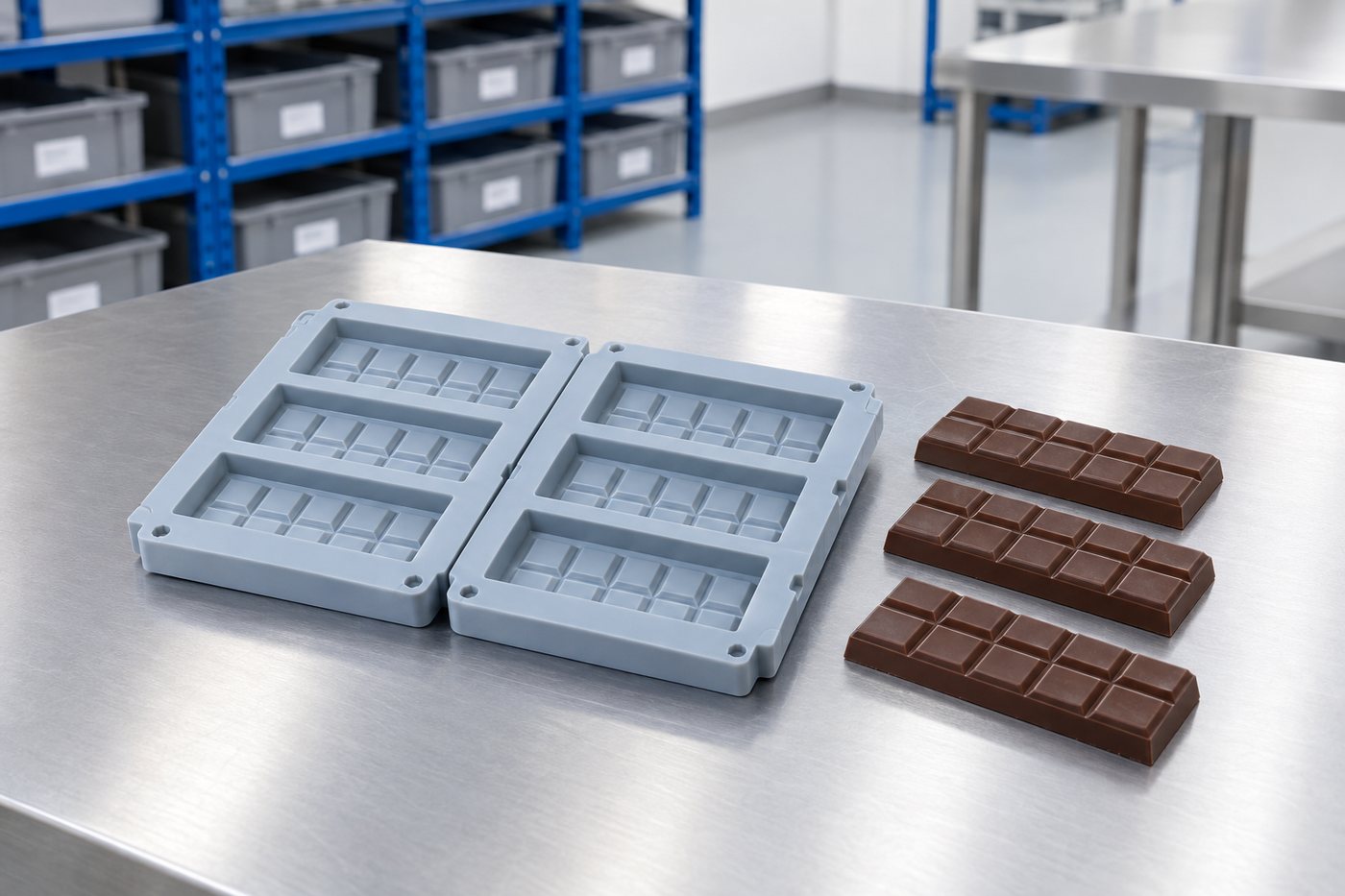
Illustrative example: Silicone chocolate bar mould with crisp cavities and finished bars nearby
Project record

Chocolate bar logo mould

The maker wanted the bar's face to carry a fine wordmark, not a printed label. That meant a mould that released cleanly, showed no venting marks on the face, and lasted the pace of a small production run.

Read the record
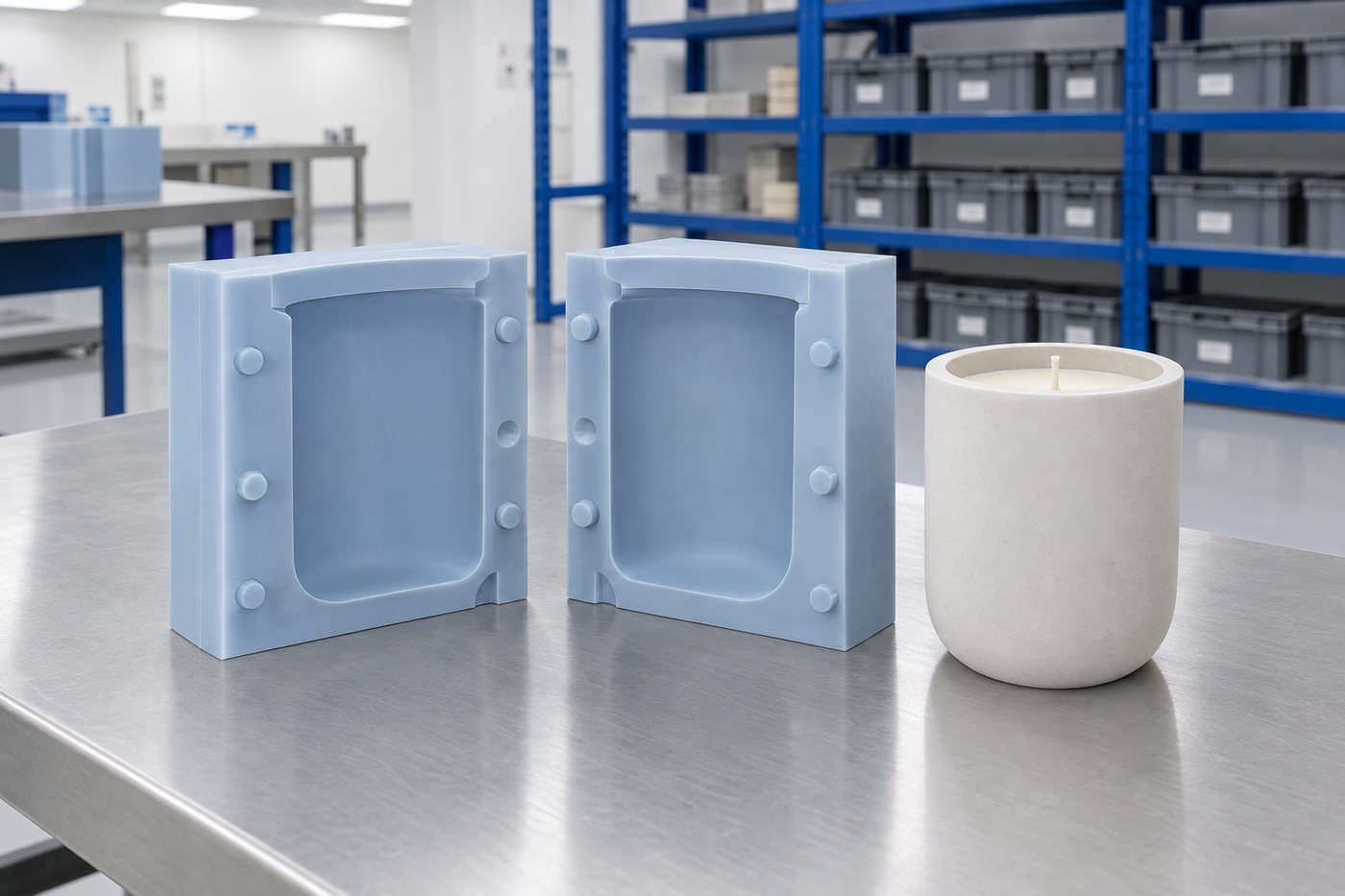
Illustrative example: Two-part silicone mould for a vessel candle with clean seam
Project record

Two-part vessel candle mould

The brand wanted a fragrance candle whose outer vessel was also its packaging. That meant a two-part silicone mould that could release a doubly curved shape with a decorative fin, without leaving a seam anyone would run a thumb over.

Read the record
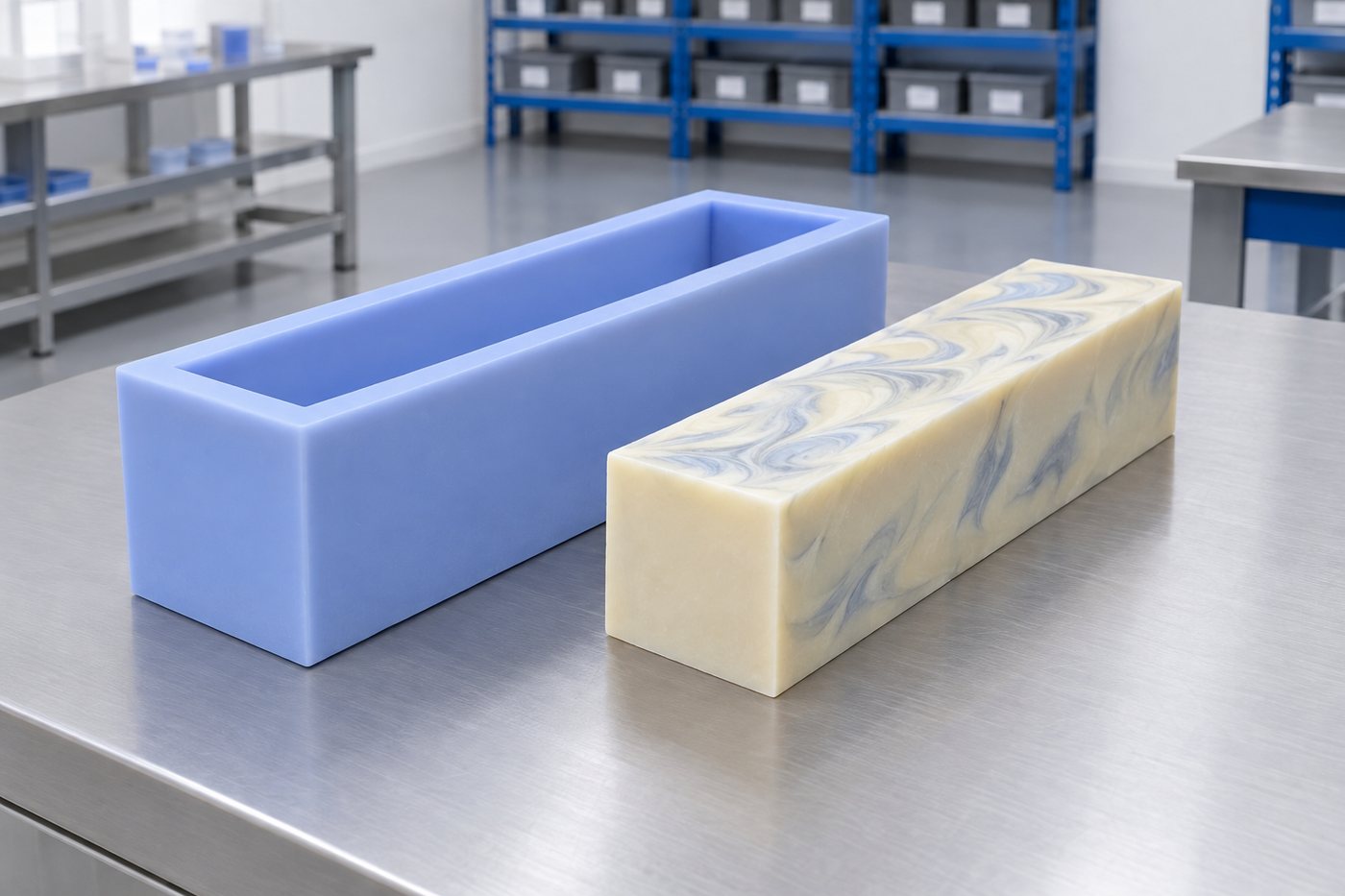
Illustrative example: Large silicone soap loaf mould beside a freshly released loaf
Project record

Large soap loaf mould

A wholesale soap maker was pouring cold-process loaves into wooden boxes lined with baking paper. They wanted a moulded silicone loaf mould that took the same volume, released cleanly, and left a subtle brand mark on the base of every bar.

Read the record
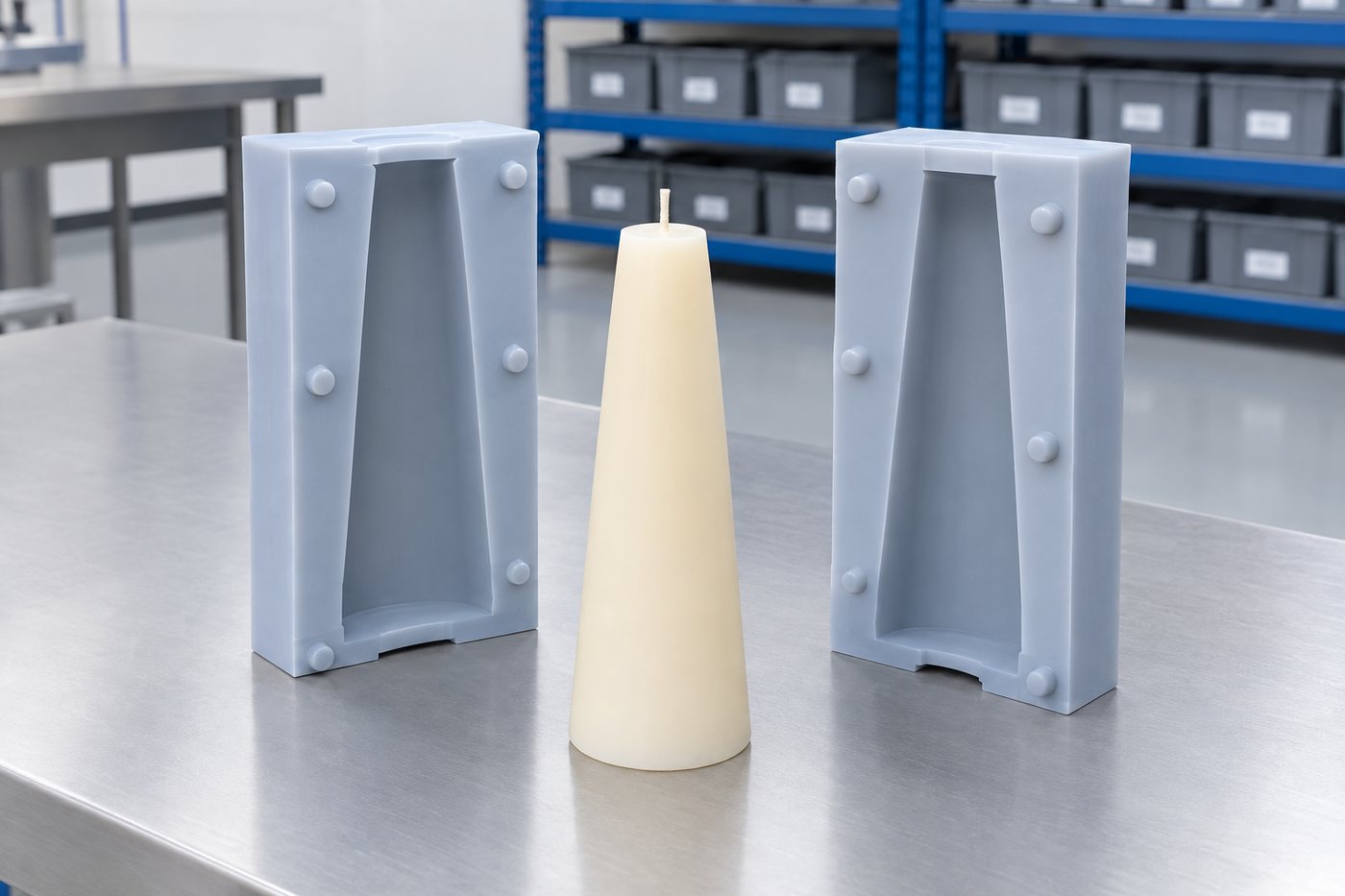
Illustrative example: Tapered pillar candle released from a split silicone mould
Project record

Tapered-wall pillar candle mould

A brand poured tall tapered pillar candles from a stack of hand-built cardboard formers. Every candle came out looking hand-built. They wanted a reusable mould that gave a clean face, a straight taper and a level base.

Read the record
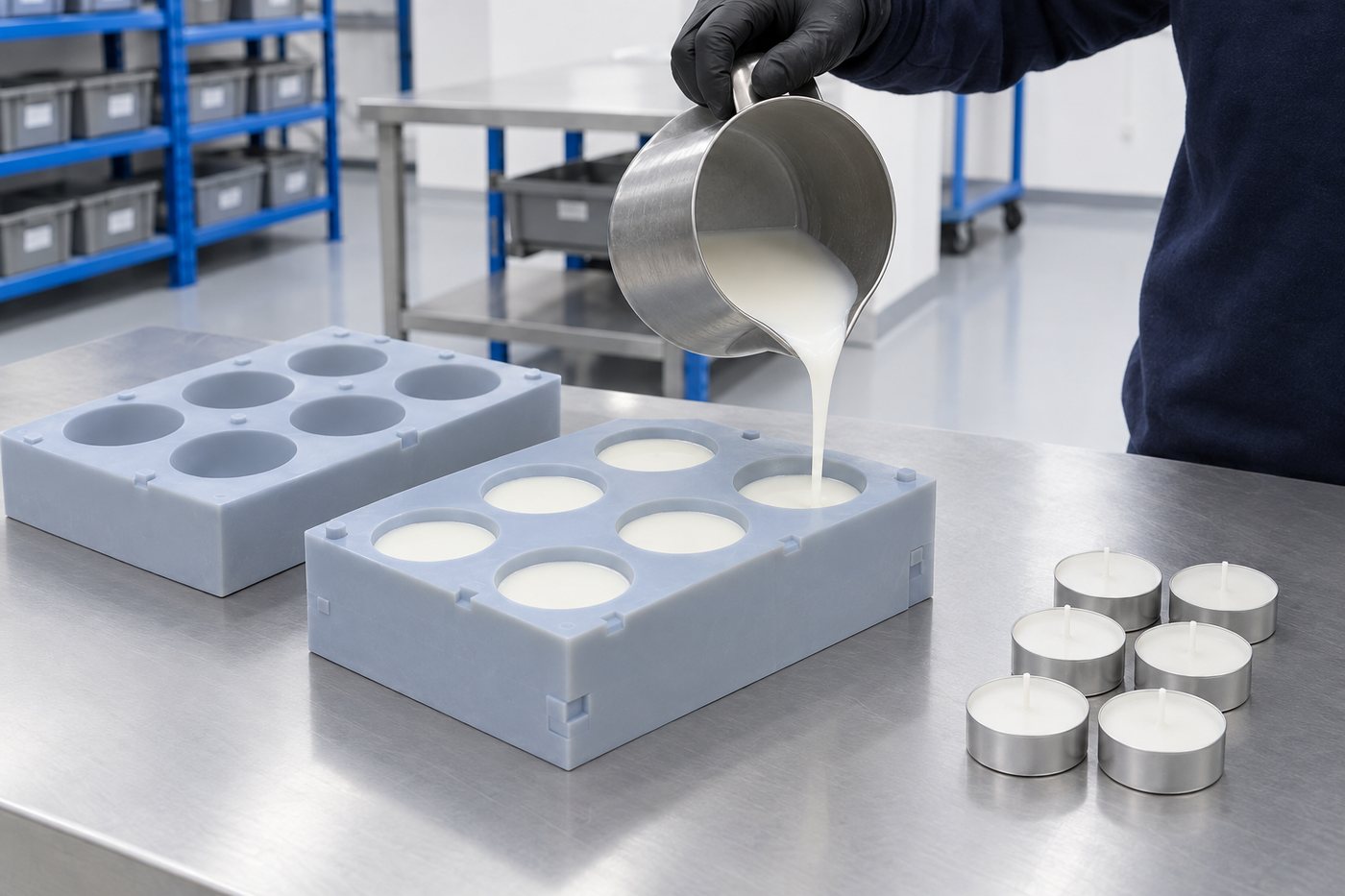
Illustrative example: Multi-cavity tealight mould being filled from a metal pouring jug
Project record

20-cavity tealight mould

A home-fragrance brand was pouring tealights into a rack of individual metal cups. The rack pour worked, but was slow, cluttered the bench, and stopped them scaling. They wanted a single mould that gave the same result in a single pour.

Read the record
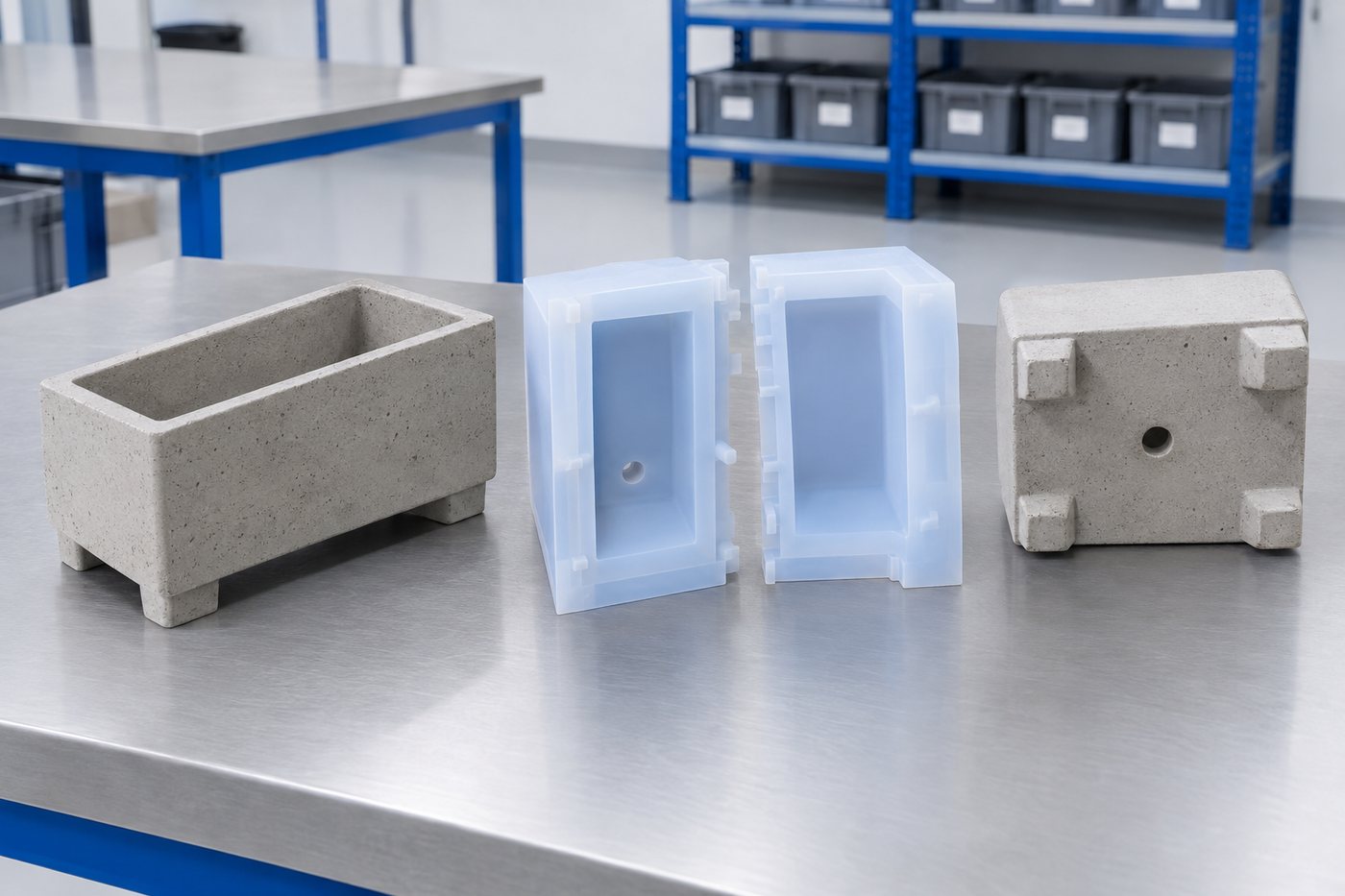
Illustrative example: Concrete planter casting and mould showing drainage hole and base feet
Project record

Concrete planter mould with drainage detail

The brand had a planter range that sold well, but every finished piece went through three post-cast steps: drilling a drainage hole in the base, sanding the drill marks, and gluing on three rubber feet. Each step added time, added cost, and added a failure mode.

Read the record

At a glance

The idea in a picture.

Which route suits your quantity

PrototypesHundredsThousandsTens of thousandsHand-made mouldsCast silicone mouldsVacuum-cast mouldsCompression toolingInjection and LSR tooling

Swipe to see the whole diagram

A general picture. Shape, material and detail also decide the route, and we talk it through with you.

Ready to start?

Tell us what you need to make, and we will show you how to mould it.

Send us a drawing, a photograph or a sample, and we'll come back to you with a mould strategy, a material recommendation and a price.

Real people, a real workshop

You deal with the people who make it.

No call centre and no middlemen. When you contact TCI Mouldings, you speak to the team who design, build and check your mould.

  • A real Warwickshire workshopUnit 15, Waterloo Park, Bidford-on-Avon, Alcester B50 4JG.
  • Real people on the phoneCall the team on 01789 224228, Monday to Friday.
  • The same team on every jobDesign, production and aftercare come from the people you see here.
  • Part of TCI GroupFive specialist brands, one engineering team. Visit TCI Group.
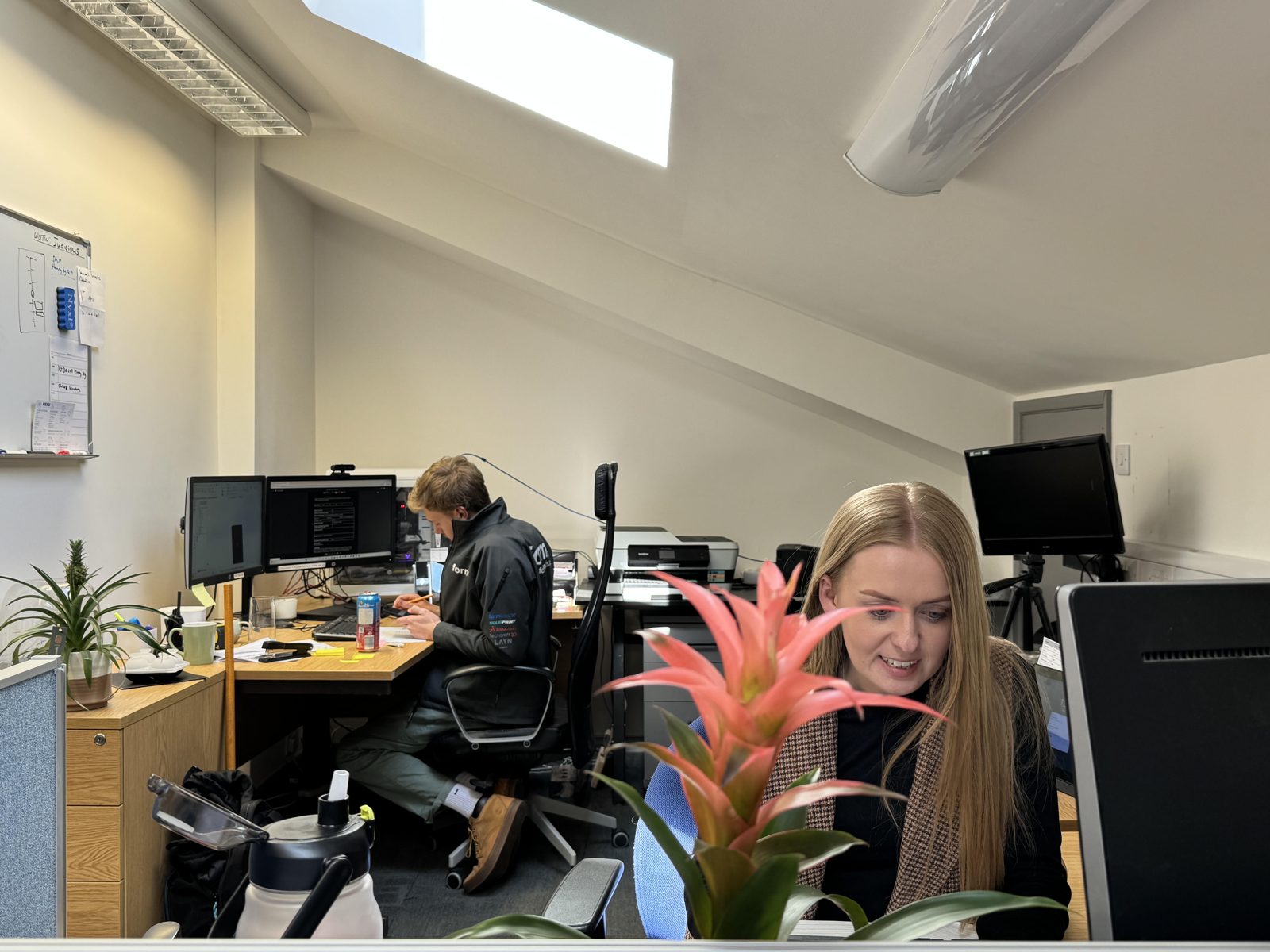
The TCI design and project office.
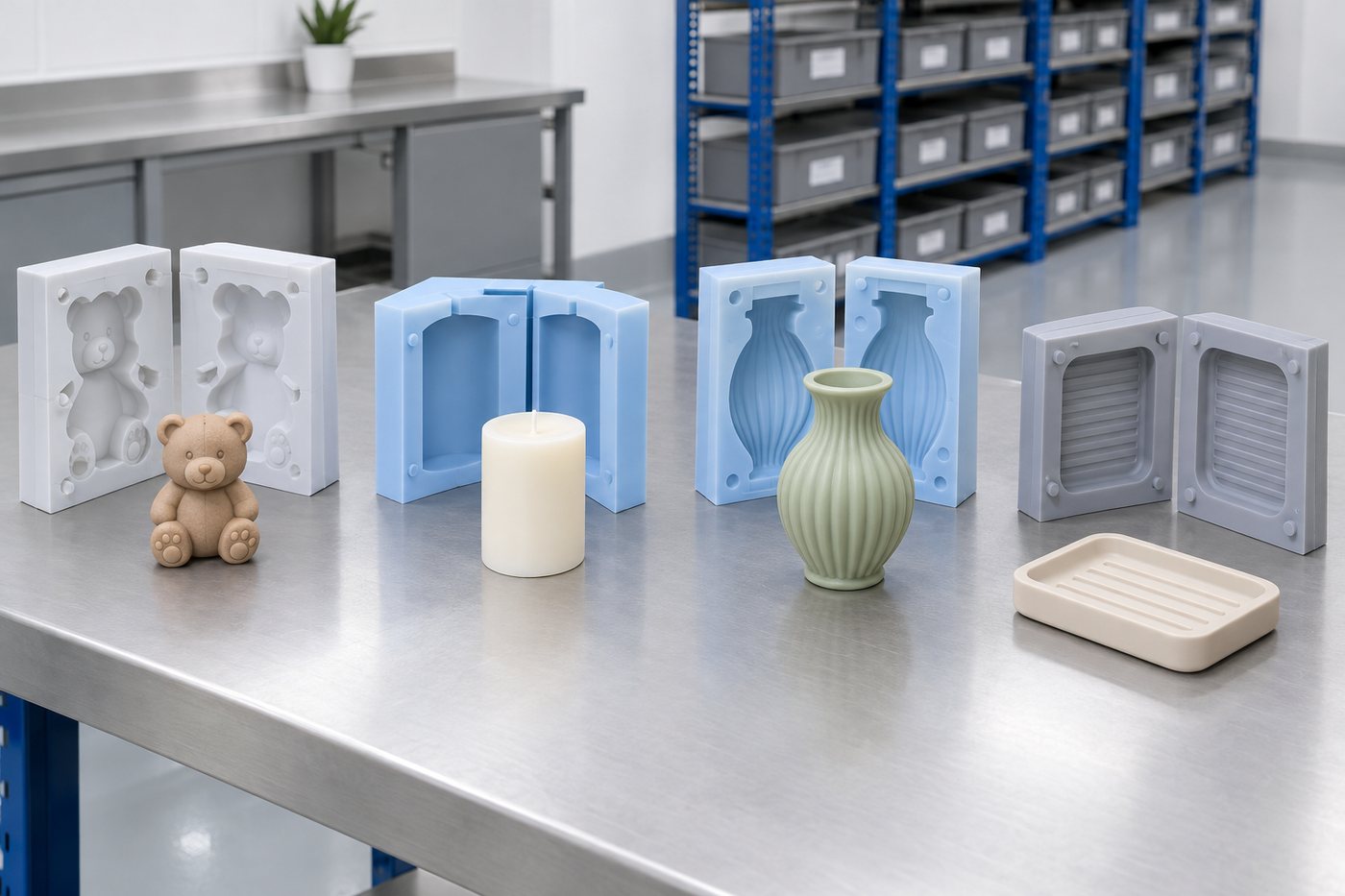
A stack of TCI silicone moulds.
The TCI workshop, with moulds on the bench mid-build.
  • Thomas LaneManaging Director
  • George PrestonDesign & Project Manager
  • Kelly BallingerHead of Partnerships
  • Jim AndertonProduction Manager
  • TheodoreEmployee Welfare
Meet the team