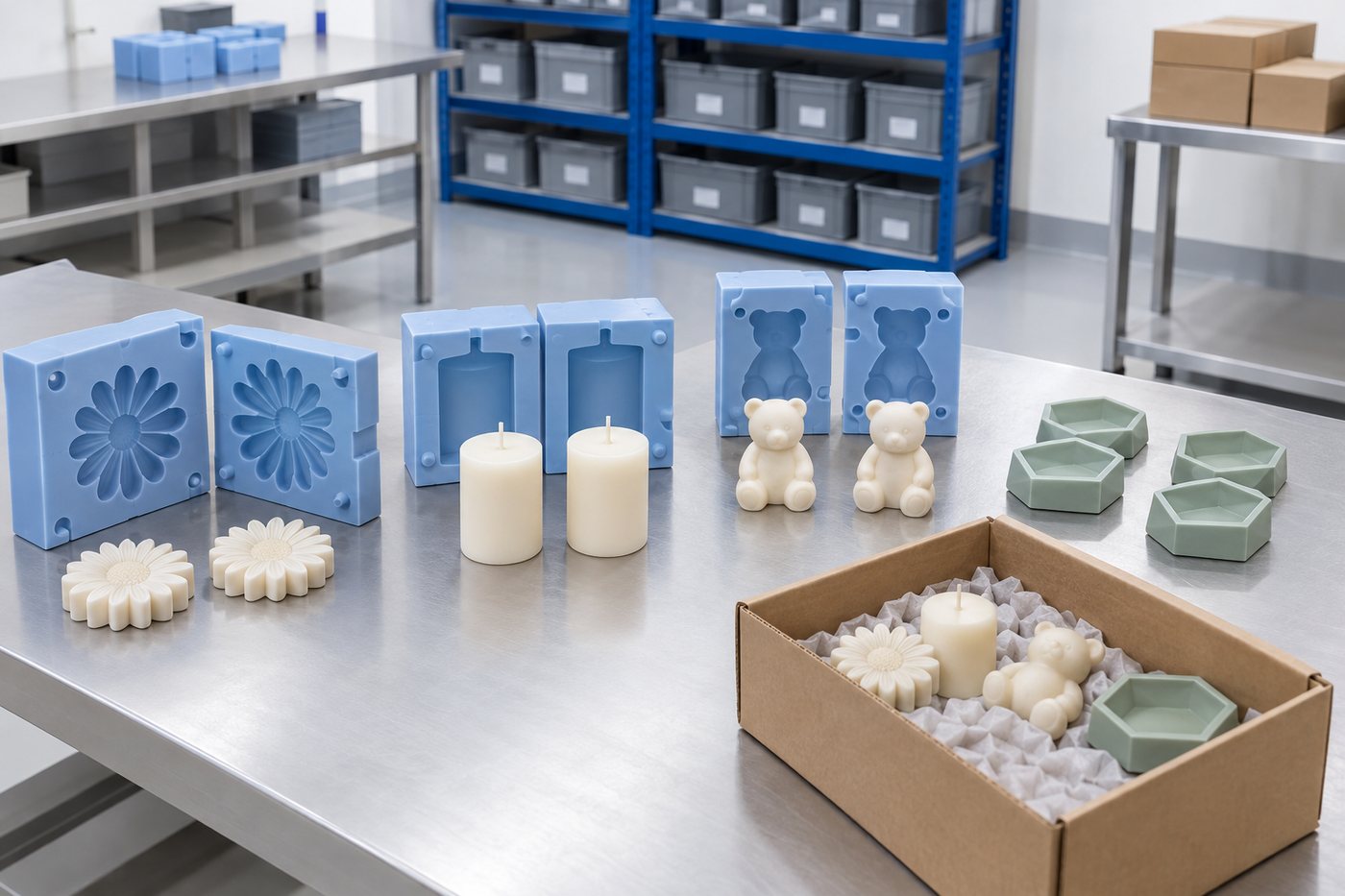
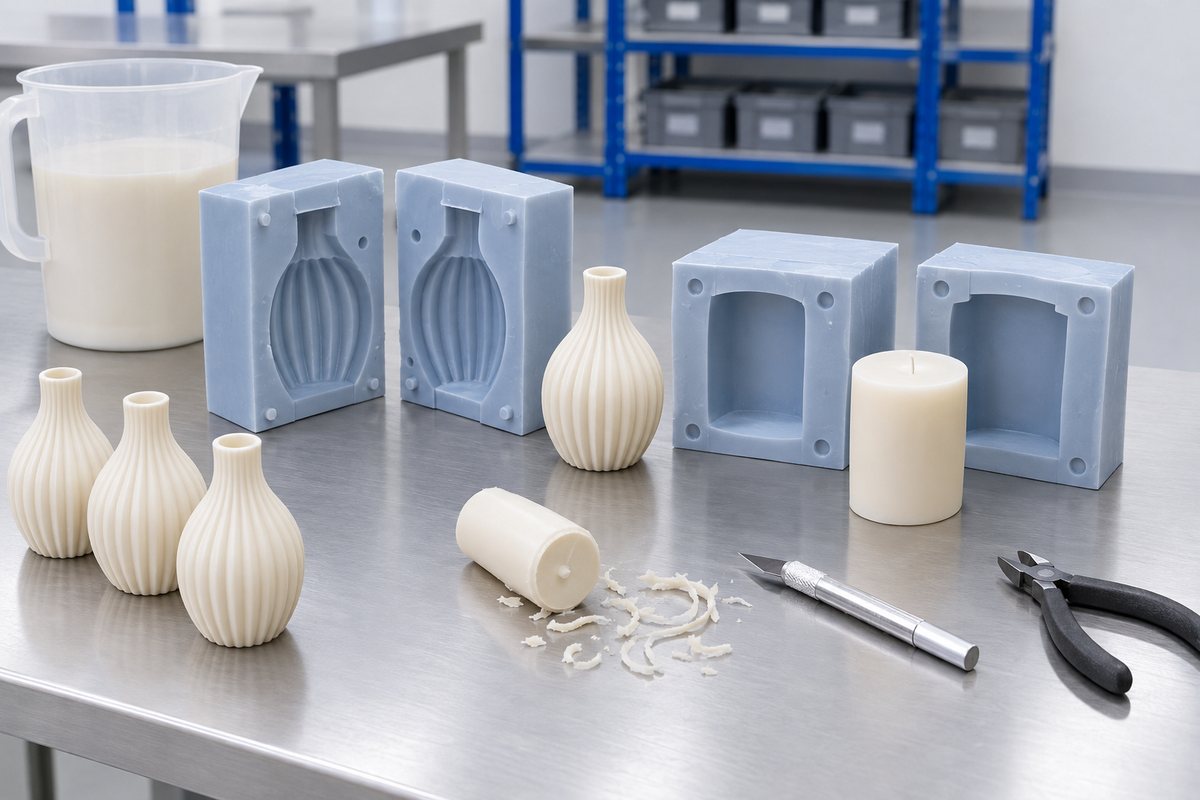
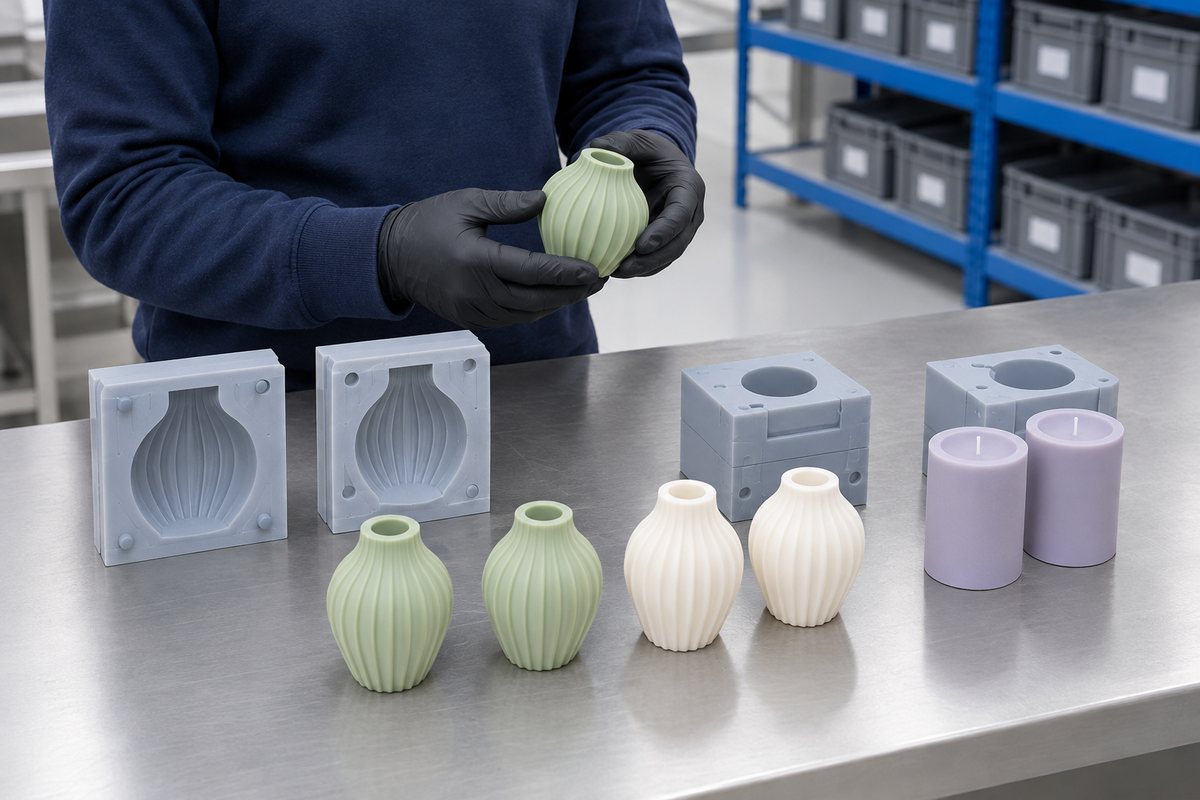
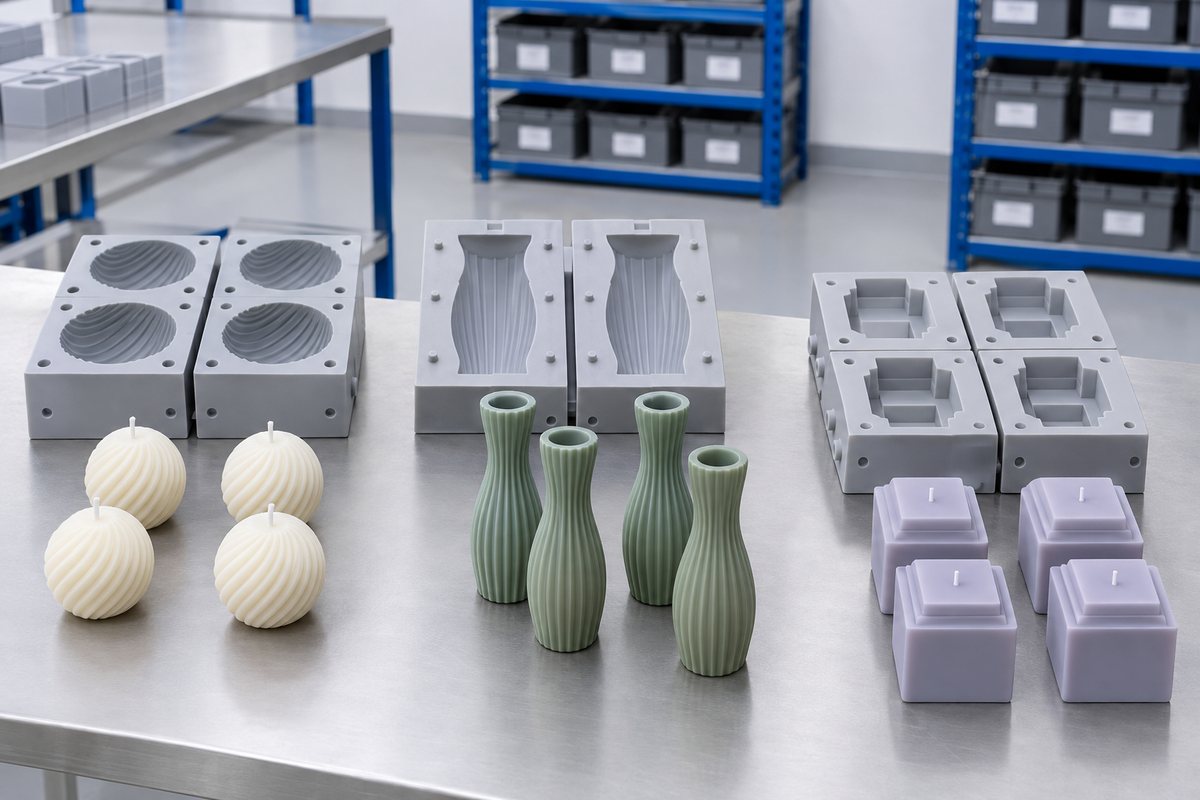
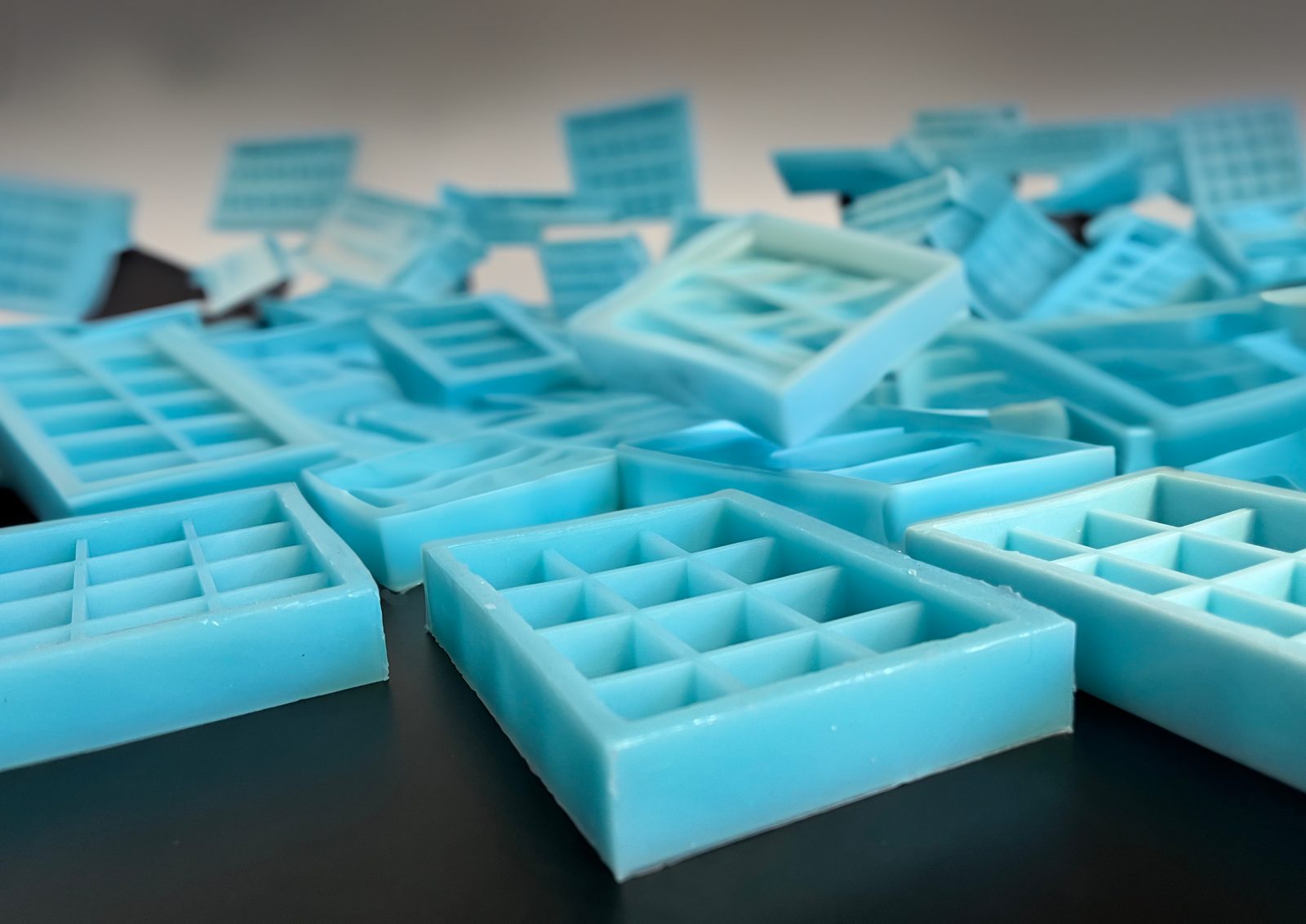
The cost of casting work has a simple structure, and it is helpful to understand it before asking for a price. Tooling is paid for once. Every part then includes a person's time, from mixing and pouring to demoulding, trimming, checking and packing.
The saving does not increase as much as you might expect. Doubling the order does not halve the unit cost, because the labour needed for each piece stays nearly the same. What a larger quantity can do is spread the tooling cost across more parts and use more cavities in the mould, so each pour produces more pieces. That is where multi-cavity tooling earns its money on this route.
That is the crossover point. Below it, casting by hand is cheaper overall because you do not pay for hard tooling. Above it, the labour involved in making each piece becomes the main cost, so a pressed or injected part is cheaper even after the tool has been paid for.
We will show you which side of that line your job sits on. We quote a cost per part, rather than a total, so you can see the comparison for yourself.
If your quantities are growing, let us know early. Moving from casting to compression moulding is a normal progression, and the design work can carry across when the geometry is considered properly from the start.