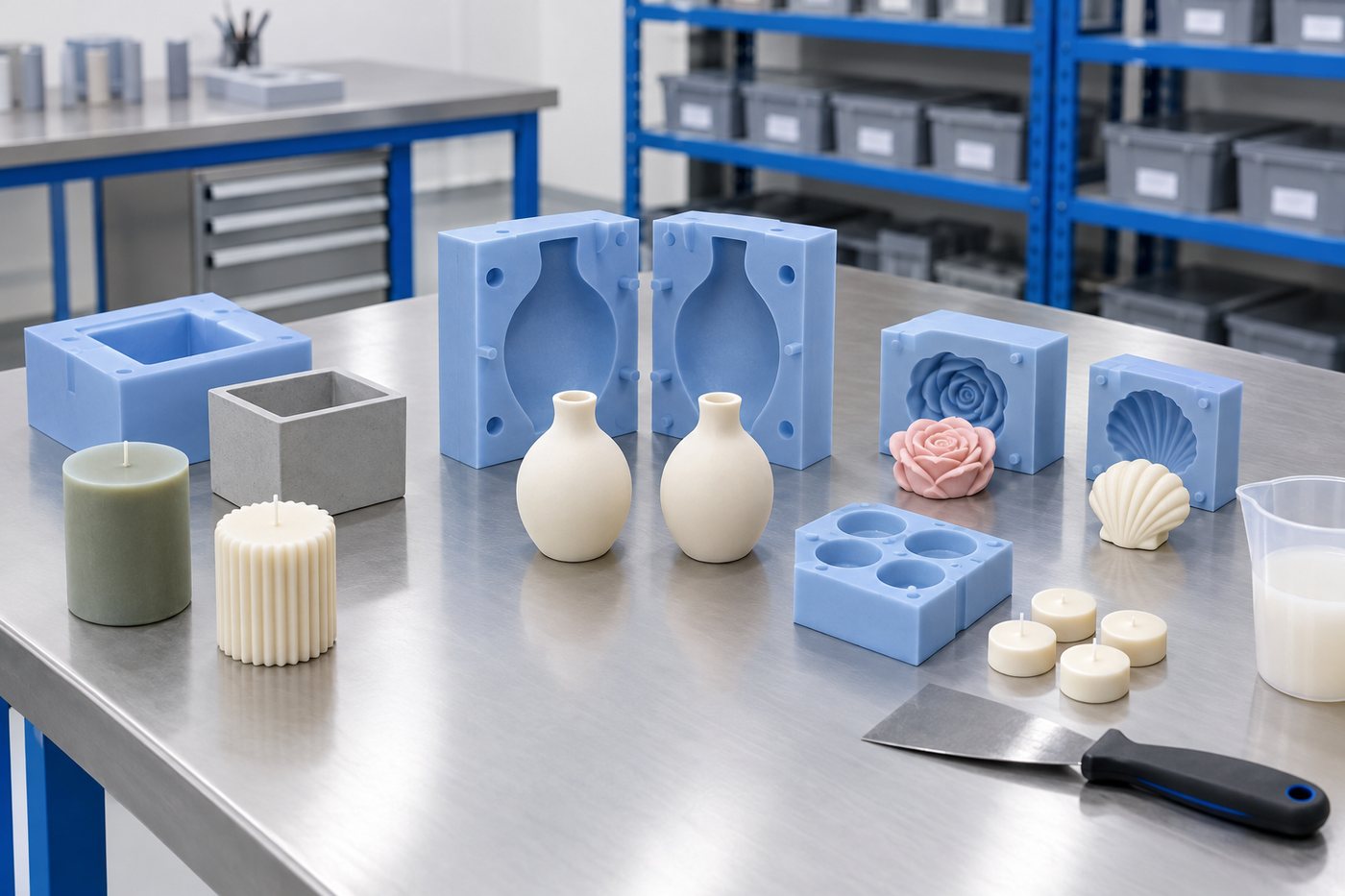

Chandlers
Silicone moulds for candle makers
From your first pillar to a repeat production schedule, we consider release, hardness, edge definition and wick behaviour.
For chandlersPart of TCI Group · UK design, UK manufacturing capability, since 2019
Read about ordering, materials, design, production, cost and what it is really like to work with us. Written by the people who cut the split lines, with the awkward answers left in and nothing dressed up.
Why this page exists
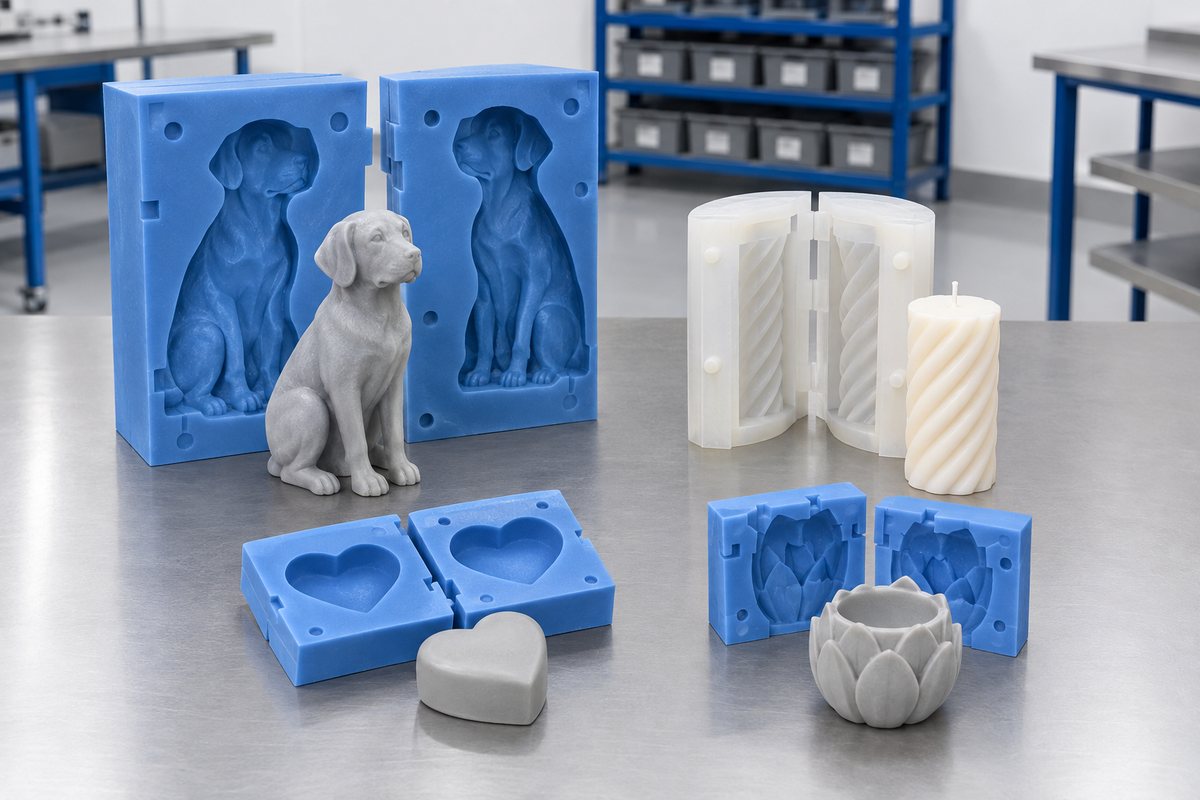
If you're buying tooling for the first time, you'll find that most of what you need to know never makes it onto a website. It can be awkward, specific or unflattering, so this page is our attempt to do the opposite.
If you're considering an enquiry, these are the questions we hear most often: how small an order we will take, what happens when you pour lye-heavy soap into silicone, who owns the tool once it is paid for, and what happens when part of a run goes to a partner. We've grouped the answers into six categories. This is not a quotation, but it should help you decide whether an enquiry is worth your time before you send one.
Category A — Ordering and lead times
Minimum order, what we need from you, timings and what happens if the first sample isn't right.
Not as a minimum unit count. We will make one mould if that is what your job needs, and many of our projects start exactly there. The practical limit is engineering time: designing a tool, choosing a material and cutting a split line takes roughly the same amount of work whether you need one mould or six. With a single tool, you cover all that work yourself, so the price per mould falls sharply after the first. If you are working to a budget, tell us in your first email. We will explain what fits within it, rather than quoting for something you cannot use.
If you can, send us the part itself. If that is not possible, photographs with a rule in the shot, a rough sketch showing the important dimensions, and a sentence explaining what you will be casting into the mould and how often will give us a useful starting point. CAD is welcome but not required. Around half of the quotes we prepare arrive without it. The most useful information you can give us is the cast material and the temperature it goes in at. These details determine the silicone before anything else. If the geometry needs to be created, scanning or reverse engineering can produce it. We will tell you which approach your part needs.
The lead time depends far more on the route than on our queue. A hand-made or cast silicone tool taken from a master you already own is usually the quickest option. If a master pattern needs to be designed, printed and finished first, that adds another stage. Compression and injection tooling is a different level of work again, because steel has to be cut and proved. We quote a lead time for your specific job in writing before you commit. We prefer to give you a date we can hold rather than an overly optimistic one. If your deadline is genuinely fixed, tell us early. It can sometimes change the route we recommend.
Here is how we handle it. If we make a dimensional mistake, we correct it at our cost. That is what the warranty is for. If you change your mind about the shape, wall thickness or branding, that is a revision. We price revisions honestly and clearly rather than hiding the cost. The best approach is to sample early, while the tool is still inexpensive to alter. That is why we recommend getting a first-off part in your hands before making a multi-cavity version. Nobody wants to discover a design problem after eight cavities have been cut.
Category B — Materials and food contact
Cure systems, Shore hardness, PFAS, chemical compatibility and food contact
It matters more than most people expect. Platinum cure, also called addition cure, shrinks very little, captures fine detail and lasts well. It is also the silicone family used for food-contact grades. Its weakness is that the cure can be inhibited by sulphur-bearing modelling clay, latex, some polyester resins and a few tapes. This can leave a tacky patch that never cures. Tin cure is more forgiving about what it touches, costs less and shrinks more as it ages. For a repeat production tool, we will nearly always steer you towards platinum. For a one-off mould taken from a doubtful master, tin earns its keep.
Choose the outcome you need, not just a number. Shore A shows how far a sprung point sinks into a sample. It tells you nothing about tear strength, elongation or recovery, so two grades with the same figure can behave quite differently on your part. Deep relief, fine undercuts and frequent hand demoulding usually favour a softer grade. Heavy casts, generous shapes and long runs usually favour a firmer grade that holds its geometry. Tell us about the shape, cast material and how the part comes out. We will recommend the right grade and explain the compromise behind our choice.
If your work goes near an ingredient, tell us at the start. Food work is handled through TCI Culinary, our sister division, because it is a different job with different paperwork. The word silicone alone is not a food-safety claim. A food-contact mould must be made from a declared grade, with the traceability that a food manufacturer or retailer will ask to see. PFAS is part of the same conversation. It is a fluorinated family found in coatings, rather than something intrinsic to silicone. Buyers now ask suppliers to declare it, so a PFAS-free job needs a grade that carries that declaration.
Some materials will. Wax and plaster are gentle on moulds. Polyurethane and polyester resins are more demanding: they exotherm as they cure, meaning they generate heat, and gradually degrade a mould face. Concrete is abrasive and alkaline. Cold-process soap is alkaline while it saponifies. Solvent-heavy release agents can shorten mould life faster than most people believe. None of that rules out a job. It simply affects the material choice, wall thickness and sensible expectation of tool life. Tell us exactly what you are pouring, including additives and fragrance loading, and we will include an honest tool-life expectation with the quote.
Category C — Design and DFM
We cover draft, undercuts, wall thickness and split lines, and can work from master patterns or a sample you already have.
On the drawing, we include enough draft (a slight taper) for the part to release. Flexible silicone is forgiving, which is why decorative parts can use walls that would jam in a steel tool. Straight walls still drag on every pull, though, and across a run that means significant labour and rejects. Where your design allows, we taper vertical faces and mark this on the drawing. Undercuts are usually fine, which is one of the advantages of a rubber tool. A modest undercut can be flexed past, while a deep or wrapped undercut needs the mould to split around it or use a separate insert. The question is what each option costs per pull, so we price them side by side.
It matters a great deal, and getting it right is one of the most common things to get wrong on a self-made mould. If the walls are too thin, the tool bows under the weight of the cast. Your parts can then come out fat in the middle and out of square. If the walls are too thick, you pay for silicone that does nothing except slow the cure and make the mould awkward to handle. Even thickness matters more than absolute thickness. Uneven walls flex unevenly, and that shows on the part. For brushed-on work, a rigid mother mould provides the support you need without the cost of extra silicone.
We propose the split line, and you approve it. Every split line leaves a witness mark, so we position it where your customer will not see or feel it: under a base, along a natural edge or inside a rim. When the line is placed for the mould maker's convenience rather than the product, the finished part usually needs trimming. That adds a labour cost that never goes away. If your part has a decorated face, tell us which face it is. That one detail can change the whole tool layout.
Yes, it is a large part of what we do. A physical sample can answer questions about surface, draft and release faster than a drawing. If you need the geometry, we scan and rebuild the part in CAD, correcting what should be corrected rather than faithfully copying the wear and shrinkage of the original. A scan is a starting point, not a finished model. Anyone who tells you a raw scan is production-ready has not tried it. If no master exists, we design and make one, then keep it on record. That means any replacement tool can be taken from the original rather than from a worn part. We will only copy a part you have the right to have copied.
Category D — Production and scaling
Cavity counts, tool life, ownership, storage of masters, and what changes when volume arrives.
Start with one tool, prove it, then scale. A single tool is the most cost-effective way to find out whether your shape releases cleanly, whether your fragrance load behaves as expected and whether the market wants the product at all. Once you know the answers, we can set the cavity count and layout around your actual process rather than a guess. The people who get burnt are those who commission six matched tools for a product that has never been through a full production day. We will happily design your single tool with the later programme in mind, so scaling up does not mean starting again with a redesign.
Choose as many cavities as your process can genuinely handle in one cycle, and no more. Cavity count balances tooling cost against cost per part: more cavities mean a higher tool price but a lower unit cost, provided you can fill, cure and demould them all within a sensible working rhythm. The practical limits are usually your oven or curing space, your bench, the weight one person can lift safely and the pot life of the material you are pouring. Give us those four constraints and the arithmetic more or less does itself.
Mould life is measured in pulls, not months, and the cast material has the biggest influence. Gentle wax used in a well-designed tool can go a long way. Abrasive concrete, exotherming resin, aggressive release agents and repeated oven cycling can shorten tool life substantially. The way you handle a tool matters more than many people realise. Levering a part out with a screwdriver can bring a tool's life to an early end. Every mould we make is covered against manufacturing defect for two years or two thousand uses, whichever comes first. Normal wear is not a defect. If your mould is going into production, we recommend keeping a spare tool made from the same master.
You own any tooling you have paid for, including the master pattern made for your product. It will never be used for another customer, and we work under non-disclosure as standard. We store the masters and tool records here so we can make a replacement from the original, rather than from a worn part. That is what keeps a like-for-like spare from slowly drifting away from your product. If you prefer to hold the master yourself, we will send it to you. And if you leave, you take your tooling and data with you.
Category E — Cost and value
What drives a tooling price, why cost per part is the number that matters, and why a catalogue mould is only right in rare cases.
The starting point is engineering time, followed by material. If you supply the master, a simple block mould mainly needs silicone and a couple of hours. Add a designed split line, registration, inserts, vents or a mother mould shell, and the work becomes more about thinking, drawing and bench work. That is where more of the cost goes. After that, the main factors are part size, because silicone is sold by weight; cavity count; the grade, since food-capable and high-temperature materials cost more; and whether a master pattern has to be made from nothing. We itemise the quote so you can see which of those levers is worth pulling.
The price of a mould on its own tells you almost nothing about whether a job makes sense. A cheaper tool that needs trimming on every part, or fails after a few hundred pulls, can cost you far more over a year than a properly specified one. The useful comparison is the tooling cost divided across the run you actually expect, plus the labour per pour and the reject rate. We quote this way because it is the only comparison that holds up during a real production week. It can also show that a job is not worth tooling at all.
Sometimes, yes, and we'll tell you when that's the case. If you want a plain votive, a standard loaf shape or a generic sphere, and what matters is what goes into the mould rather than the shape itself, a stock mould is cheaper and available immediately. What it cannot do is carry your branding, fit your oven, match your cavity spacing or be replaced like for like in two years if the supplier has changed its range. Most people who arrive with a catalogue mould have already redrawn their product to fit someone else's tool. That usually becomes frustrating when production volumes increase.
Sometimes, a bespoke mould is not the right choice yet, and we prefer to tell you early. Tooling only pays back over a production run. If you are testing a shape on a handful of units, buy stock, sell some and come back to us when you know the product is real. Bespoke tooling earns its place when the shape is the product, the release is fighting you or you are trimming every casting by hand. If the arithmetic is not there yet, we will suggest what to make in the meantime and explain roughly what volume would change the answer.
Category F — Working with TCI
Find out where we are, how we handle your design, who you'll speak to, what the warranty covers and how outsourced production works.
We are based in Bidford-on-Avon in Warwickshire, between Stratford-upon-Avon and Evesham. Yes, visits are welcome by arrangement, and they usually save a fortnight's worth of email. Having the part in your hand can settle arguments that photographs cannot. If travelling is not practical, post us the sample and we will call you with it in front of us. We design and develop everything here in the UK and hold moulding capability in the same building. That means your technical conversation does not have to be relayed through a sales desk in another time zone.
Confidentiality is standard for us, and we put a non-disclosure agreement in place before the interesting part of the conversation, not afterwards. If you have your own agreement, send it over and we'll sign it. Any master pattern or tool made for you is used only for your work. We won't include your product in a photograph or case study without asking first. Every job in our examples section is published with permission, and there are several we cannot show at all, which is rather the point.
You'll have a named technical contact from your first enquiry through to repeat supply. They know your cast material, your tooling and why the split line ended up where it did, and you can ring them directly. That's easier for us to promise than it is for a large supplier, because we are not large. The practical benefit becomes clear two years later, when you need a spare tool and nobody has to reconstruct the reasoning from scratch. Email reaches the partnership team, while the phone reaches the workshop.
No, and we will not pretend otherwise. Design, development, specification and a good deal of manufacturing happen here in Warwickshire. For some programmes, particularly higher-volume work or jobs requiring a specific press, we place part of the production with partners we have worked with for years. We inspect their work, too. Before you order, we will tell you which route your job will take, so there are no surprises afterwards. Either way, the warranty and responsibility stay with us. You have one supplier to deal with, and it is the team you spoke to.
By trade
The same tooling knowledge, tailored to the job you are doing.
From your first pillar to a repeat production schedule, we consider release, hardness, edge definition and wick behaviour.
For chandlers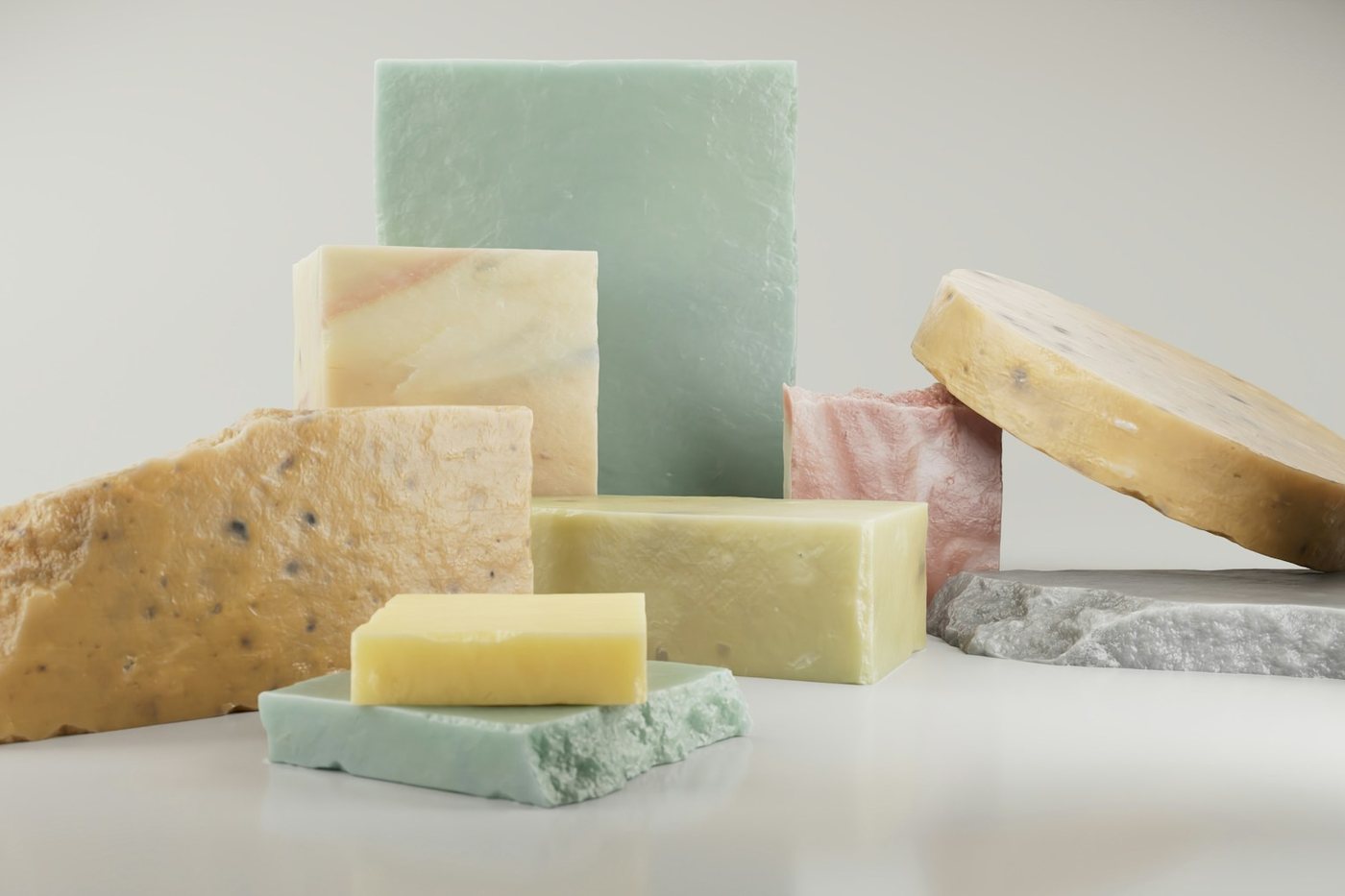
Explore cold process, melt and pour, embeds and sliced loaves, plus how lye and gel phase affect a tool over time.
For soap makers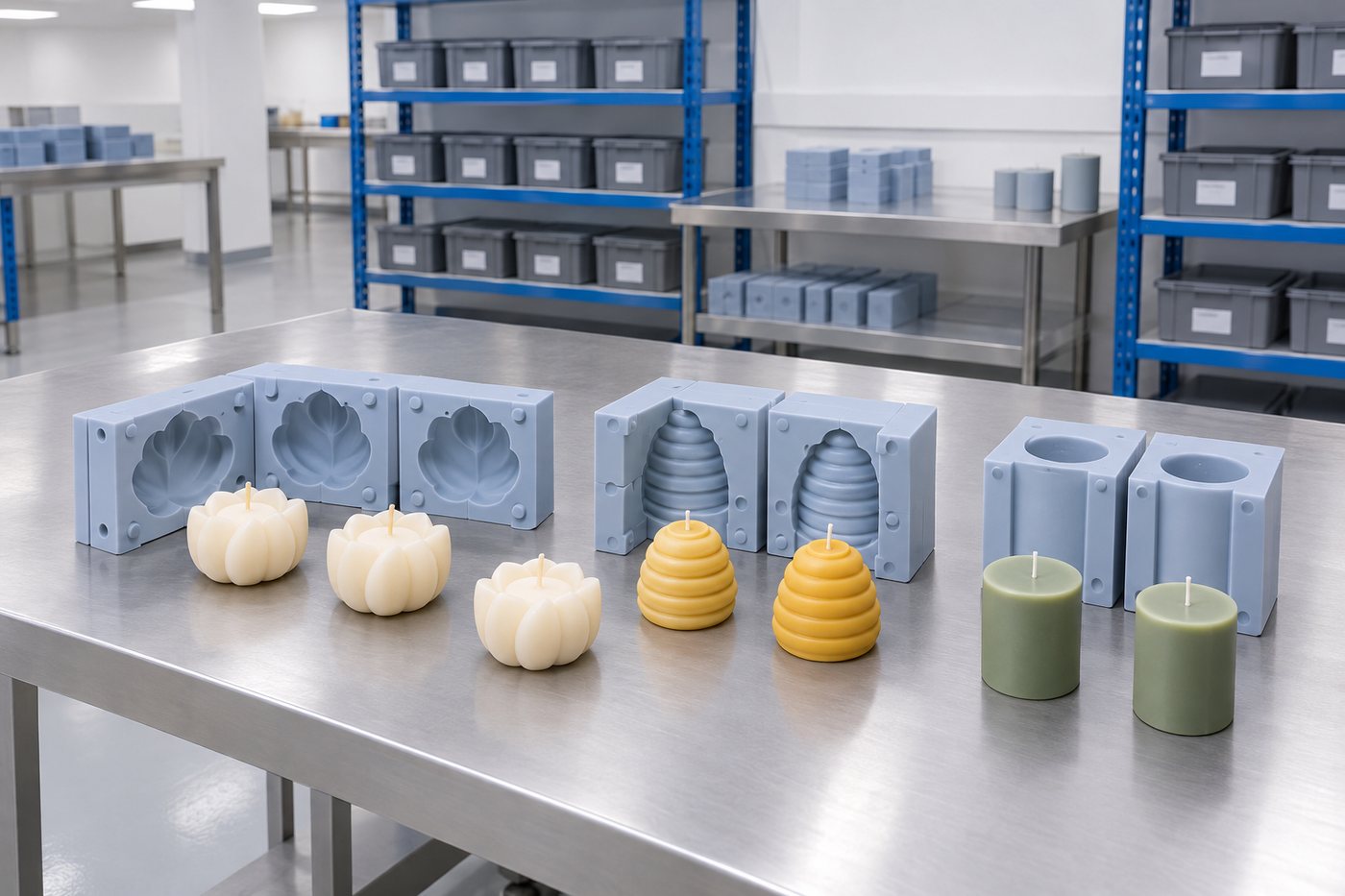
At the first five hundred units, consistency, traceability, unit cost and tooling ownership all become important.
For scaling brandsAt a glance
Which route suits your quantity
Swipe to see the whole diagram
Ready to start?
Send us a drawing, photograph or sample. We'll come back to you with a mould strategy, material recommendation and price.
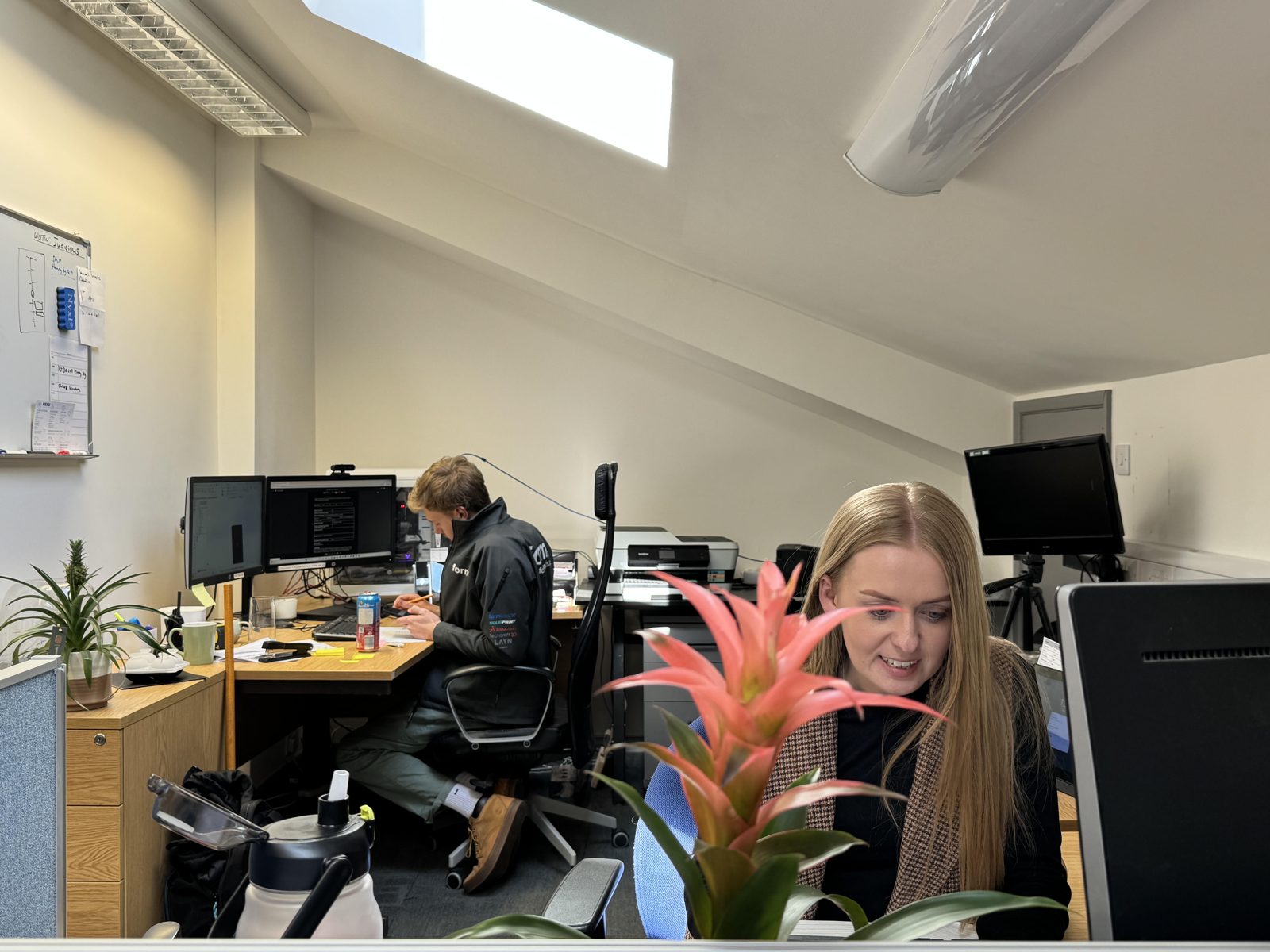
Real people, a real workshop
No call centre and no middlemen. When you contact TCI Mouldings, you speak to the team who design, build and check your mould.


 Thomas LaneManaging Director
 George PrestonDesign & Project Manager
 Kelly BallingerHead of Partnerships
 Jim AndertonProduction Manager
 TheodoreEmployee Welfare