For scaling brands · Candles, soap, resin and cosmetics packaging
Moving from Etsy to a proper production run.
Your first five hundred units can change the job. Consistency, traceability, unit cost, tooling ownership and warranty all matter. Here is what to fix first, and which of the five moulding routes fits your needs.
Your first proper production run changes the kind of work, not the volume.
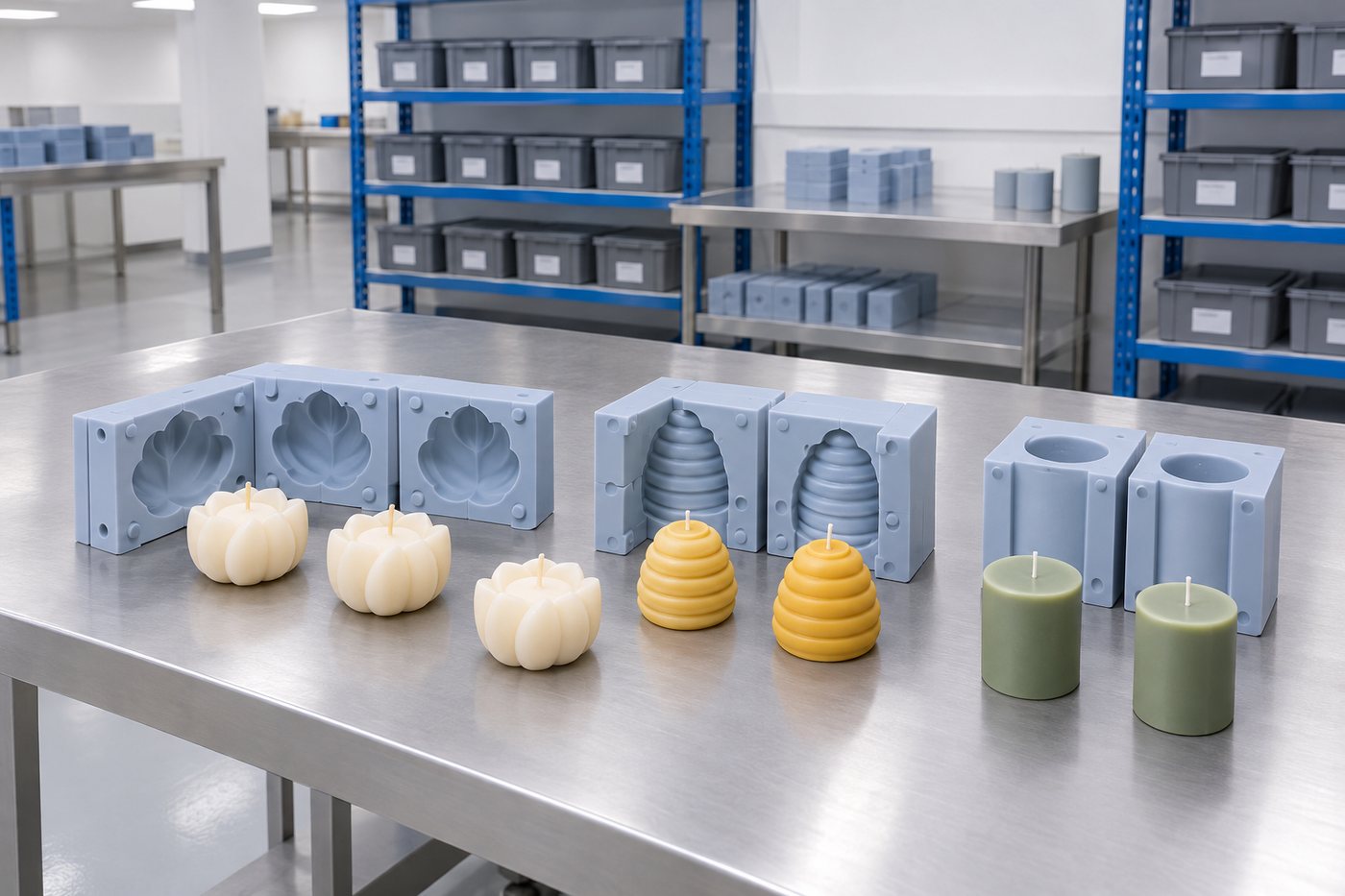
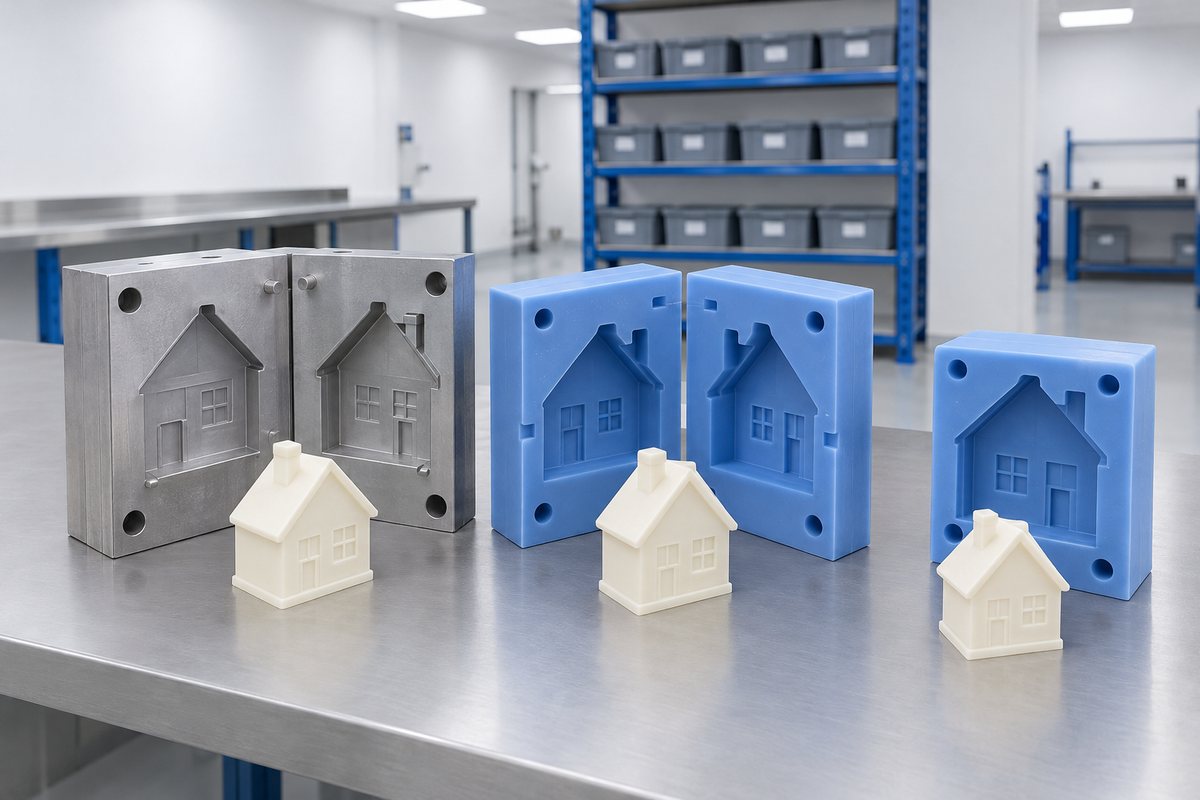
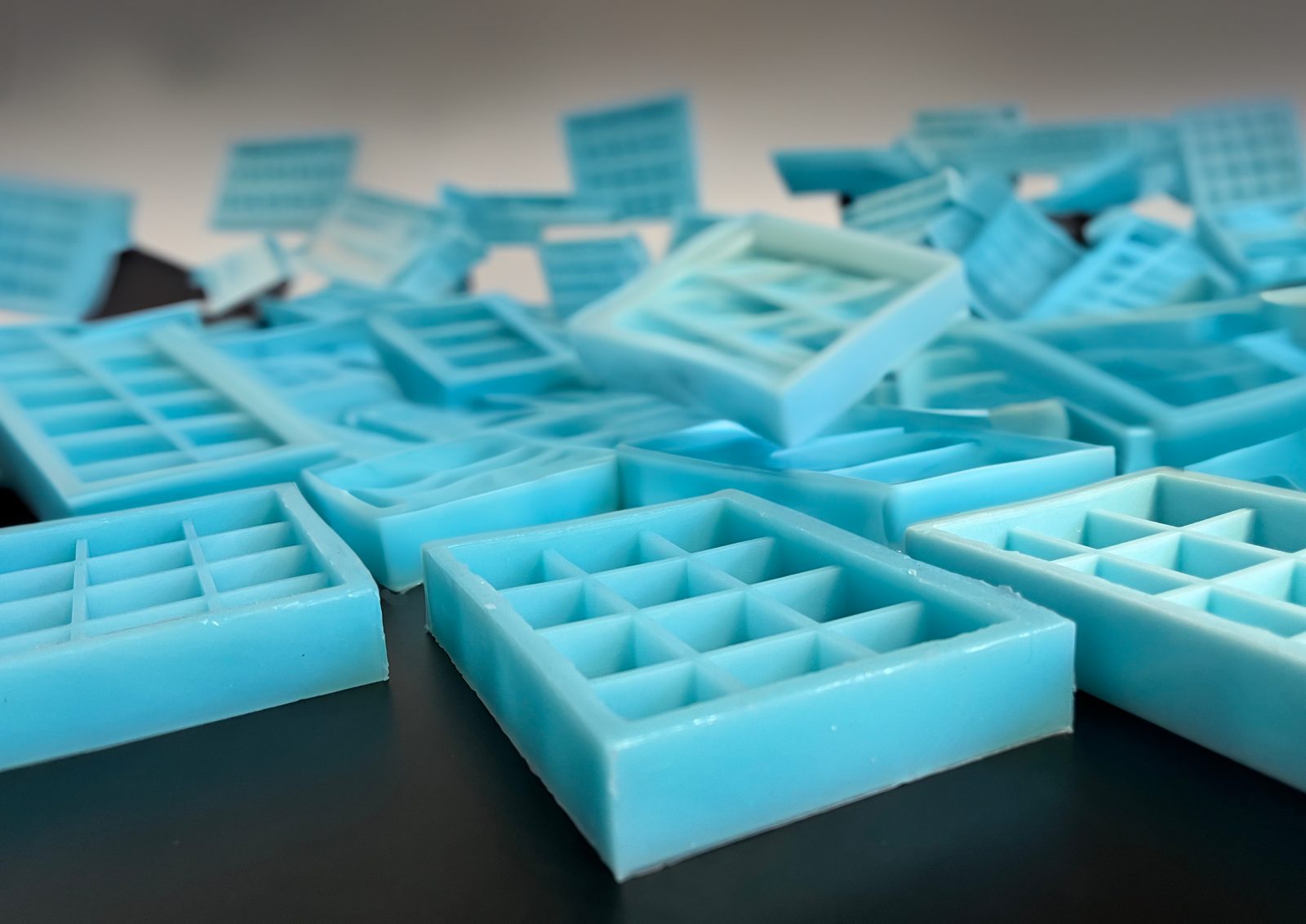
Illustrative exampleRepeatable tooling set up for consistent production
Five hundred units is not simply one hundred units made five times. The things that were invisible while you poured on a Sunday become the whole job: consistency, traceability, unit cost, who owns the tooling, and what happens when something fails.
Consistency comes first. Your buyer compares the fifth unit with the four hundredth. So you need a tool that holds its geometry across a run, rather than one that drifts. You need a fill that someone else can repeat reliably, and a demoulding routine that does not depend on knowing the mould's temperament.
Then comes traceability: batch numbers, a recorded specification, and a note of which tool made which units. That means a complaint can be answered rather than absorbed.
Unit cost is often the first genuine surprise for hobby brands, but it becomes easier to understand once you see how tooling works. Tooling is a fixed cost spread across your order, so the same mould that looks expensive at fifty units can look far more affordable at five thousand. Labour per pour usually matters more than either.
It is also important to clarify ownership and warranty. You should know who owns the master, where it is stored, what the tool is covered for and how quickly a spare can be made. If a supplier is vague about all four, that tells you what you need to know.
You are probably reading this for one of three reasons.
Each one takes you in a different direction, and only one is specifically about tooling.
Illustrative example
Signpost one
You are outgrowing your kitchen
Your orders are real, but your available space is not keeping up, and you are pouring in the evenings just to stand still. The first fix is rarely more moulds. It is usually fewer operations. Multi-cavity tooling sized to your oven, a cavity that needs no trimming, and a shape that releases without spray can take more out of your week than another pair of hands. Bring us a finished unit and tell us how long one currently takes you.
You may be offered a very low unit price against a large minimum order, with a tool you may not own and a fortnight of shipping between you and any problem. Sometimes, that is genuinely the right deal. Often, though, the minimum represents three years of your sales and the design conversation never happens.
We will quote the UK route honestly against it. That includes the cases where the overseas price is simply better and you should take it.
This is the most common situation, and one of the most satisfying to solve. You are not looking for a contract manufacturer. You want your own bench to produce three times as much without quality going sideways. That is a tooling and process job: a cavity layout that works around your equipment, sensible batch sizes, spares so one tear does not stop a week, and a written specification that a new starter can follow.
What you can expect with every order, whatever the volume.
Warranty-backed tooling
Your tooling is covered for two years or two thousand uses against a manufacturing defect, whichever comes first. We record the grade and specification against your order.
NDA as standard
Your design remains yours. We use the master only for your work, and we will never include it in a case study without your permission.
A named engineer
You'll have one technical contact throughout development, first article and repeat supply. They'll remember why your tool is laid out as it is.
Small orders welcome
We'll make one tool to prove your shape before you commit to a programme. It's usually the cheapest money you'll spend.
Cost per part, quoted properly
We amortise tooling across the run you actually expect. Cycle time and labour are included in the arithmetic, so they are not hidden behind the quote.
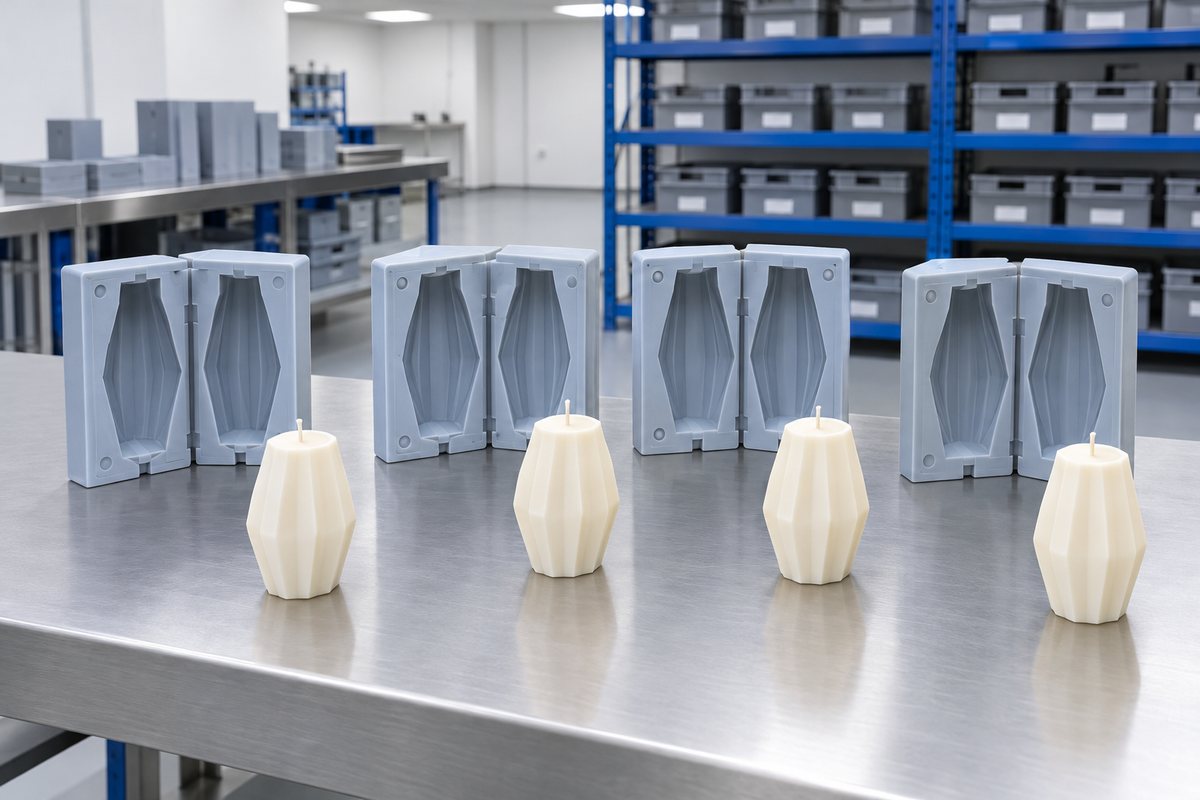
Illustrative exampleTooling and samples kept consistent across reorders
The five routes
Five ways to make it, and when each is the right choice.
We focus on these five and nothing else. Your volume, geometry and the amount of finishing you are willing to do will help you decide between them.
01
Hand-made
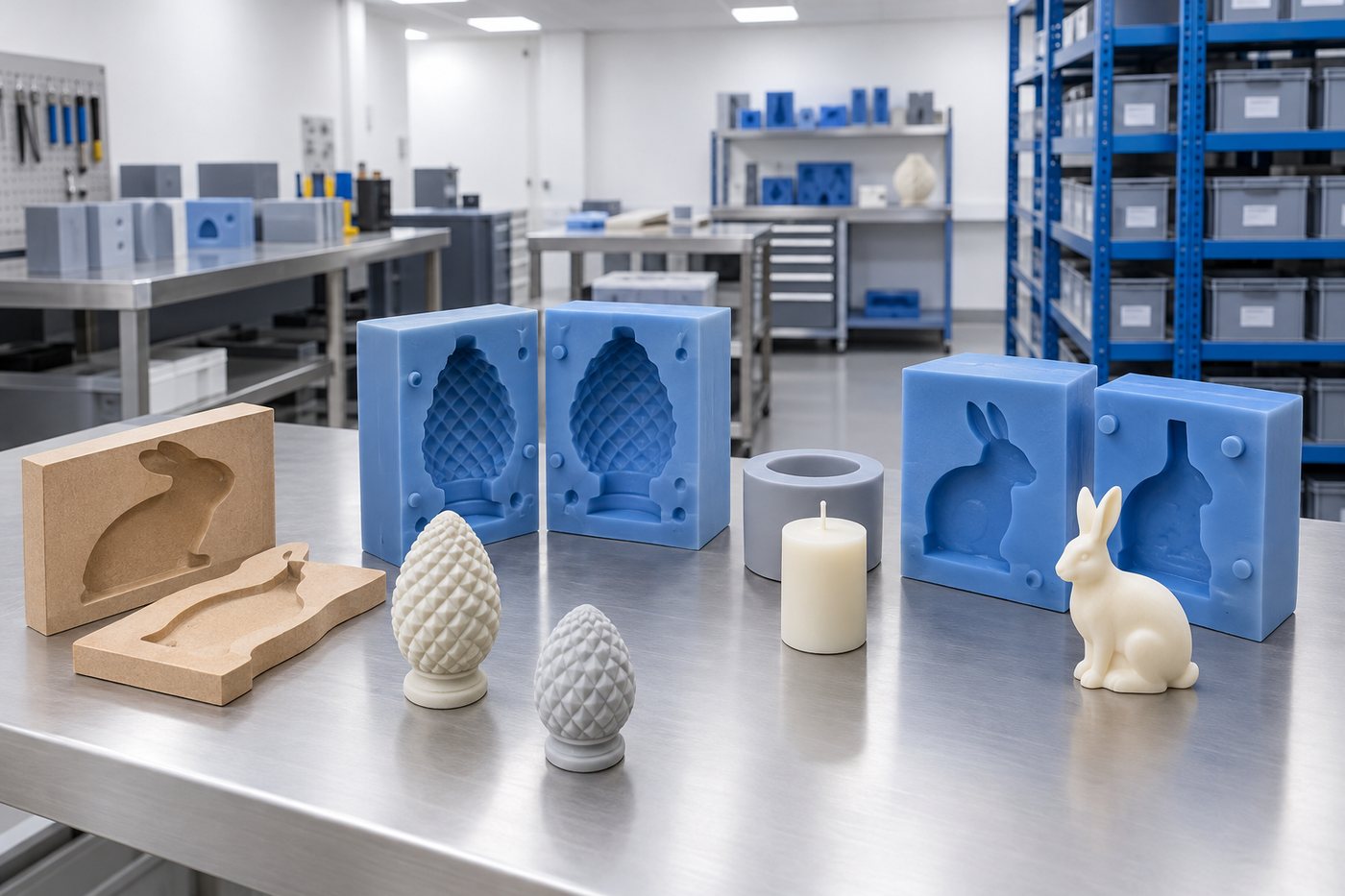
Silicone is laid or brushed straight onto a pattern or original piece, with a rigid mother mould added wherever support is needed. This approach suits large, awkward or one-off shapes, restoration work and anything you cannot put in a box and pour around.
For a scaling brand, it is the right answer when the object is big, the run is short or the shape is still moving. You get a working tool this month rather than a programme next quarter.
02
Cast
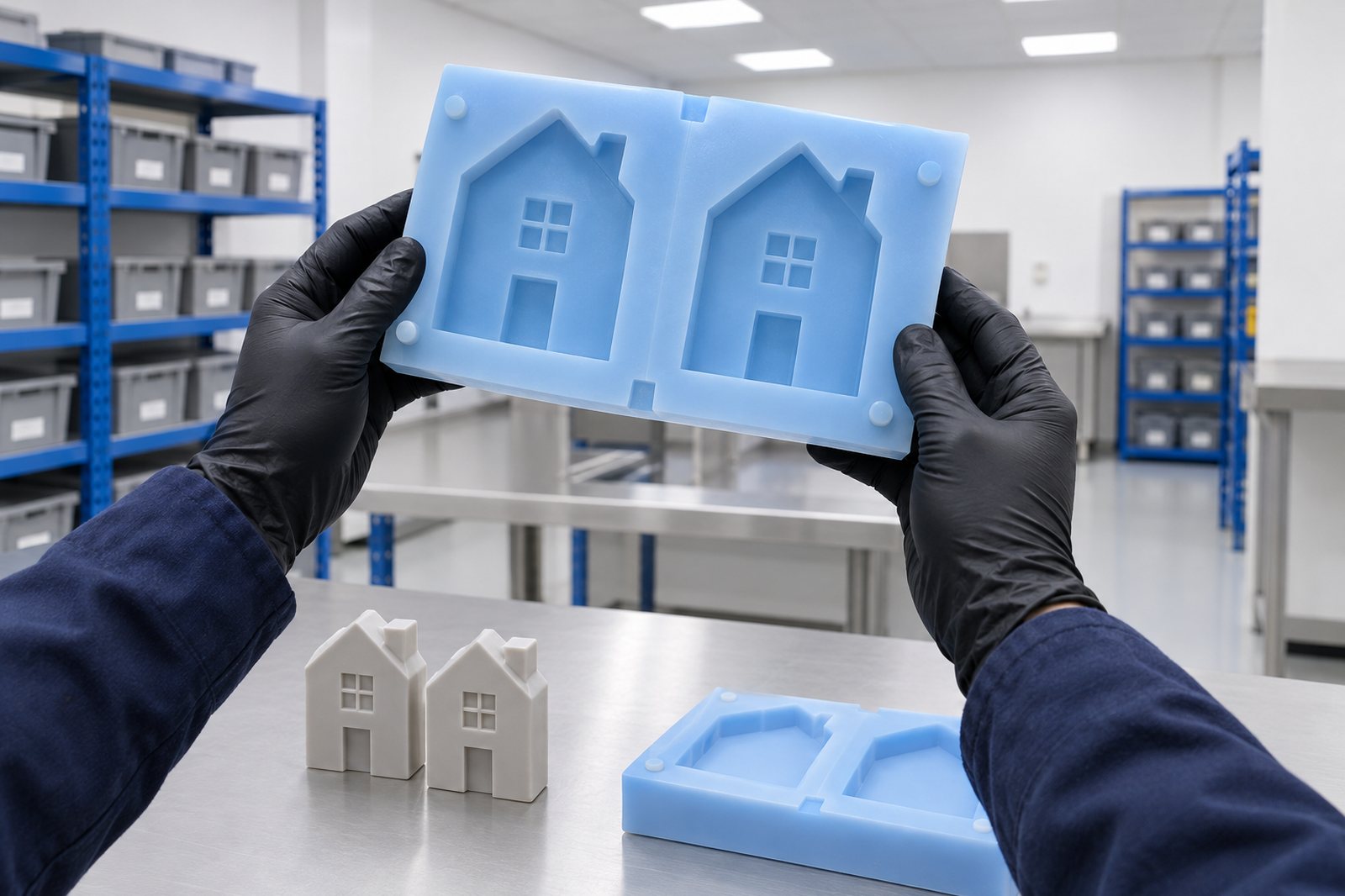
Open pouring into a designed mould box made from silicone or polyurethane is a dependable choice. The split line, registration and venting are worked out in advance, so your mould is ready for consistent results. This is the workhorse for candles, soap, resin homeware and decorative parts, and it is where most scaling brands should live.
You can create multi-cavity trays, repeatable weights and branding in the base. We hold the master, so the tool can be replaced like for like when needed, without the cost of steel.
03
Vacuum cast
The same casting logic is carried out under vacuum, so the material fills the tool before air can be trapped in it. It costs more per part, but gives you parts that cannot carry a single bubble: clear resin, thin sections, fine relief and anything where a void is a reject rather than a blemish.
For a scaling brand, it makes sense for a premium line, a display piece or a component with a cosmetic face that will be inspected closely.
04
Compression moulded
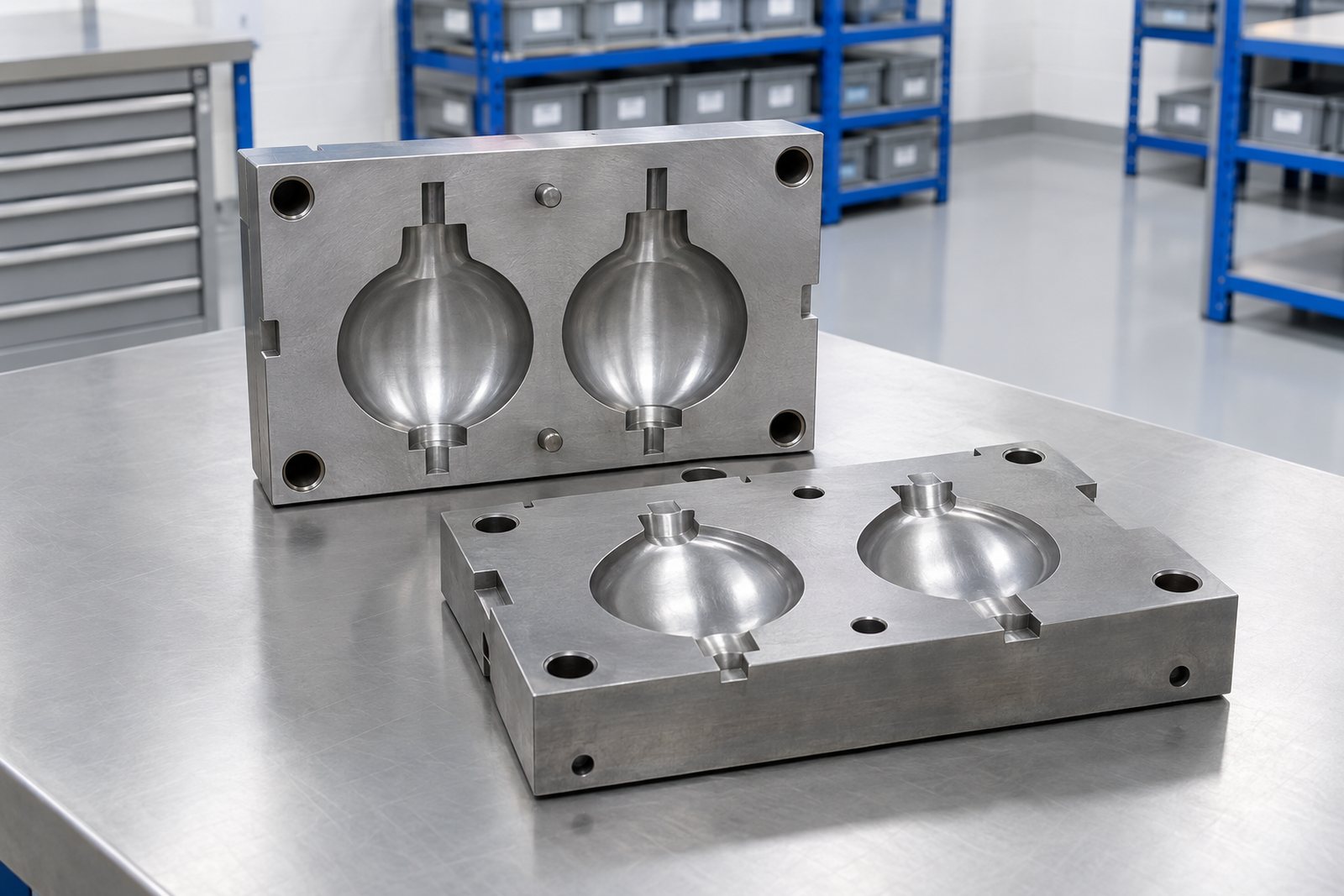
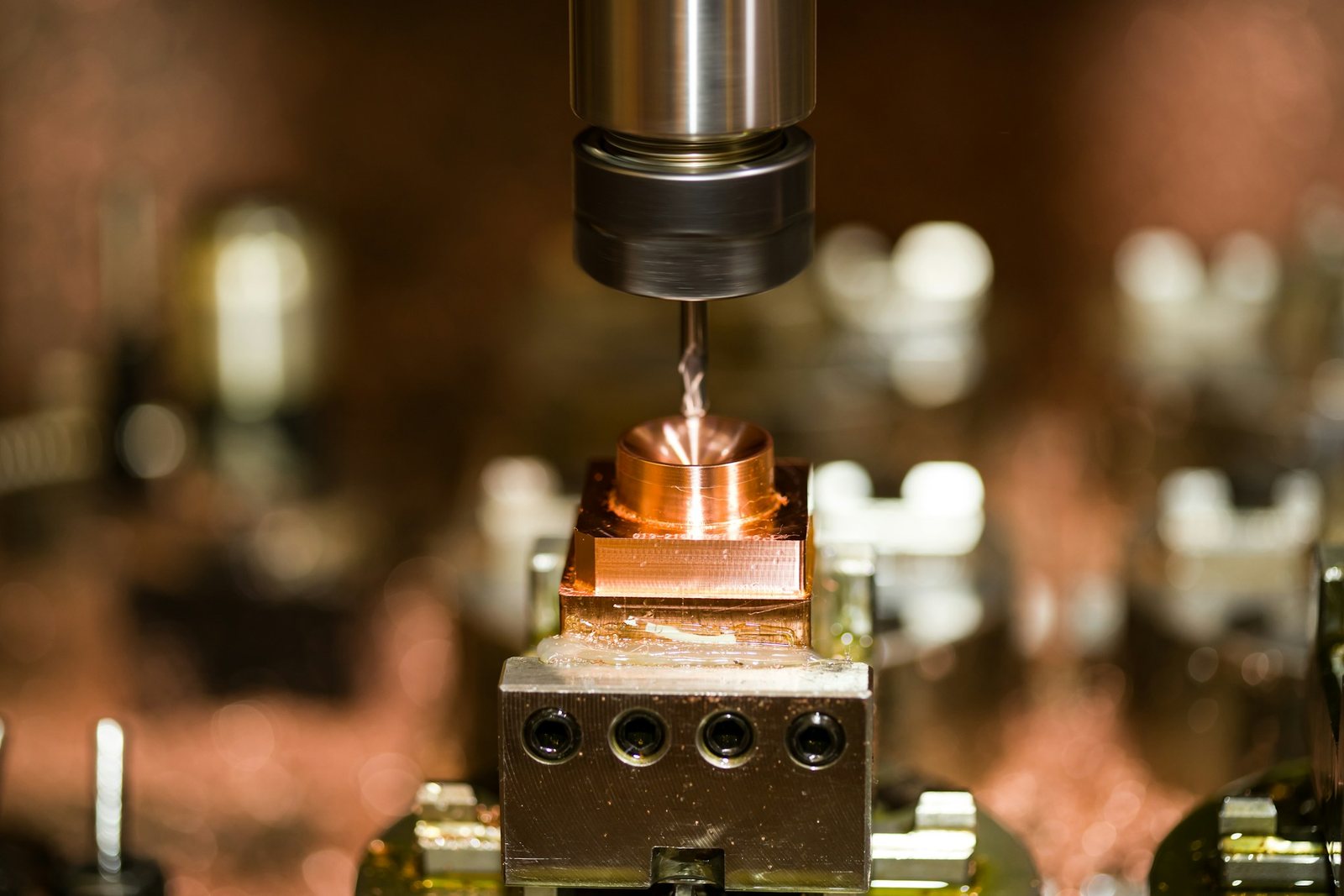
A weighed charge of solid silicone is placed into a heated tool and squeezed until it cures. The tooling is a genuine investment, machined to withstand heat and pressure. In return, you get consistent solid silicone parts with the right physical properties.
This is the route to choose when the product is the silicone item itself rather than a mould, and your volumes have become steady enough to justify a tool designed to outlast several years of trading.
05
Injection moulded
Material is injected into a closed tool, cycle after cycle. Of the five processes, this has the highest tooling cost but the lowest cost per part. It rewards volume and makes late decisions expensive, because changes after the tool is cut can cost more. For a brand scaling seriously, it is the endpoint for a proven, settled component: a lid, a seal, a packaging part or a moulded product line where demand is established and the design has stopped arguing with itself.
Most of these issues cost more to put right than the tooling decision that caused them.
01
Jumping straight to hard tooling
Steel is unforgiving when a design changes. Prove your shape in a cast silicone tool first, sell some units, then commit to a tool built on the assumption that the design is finished.
02
Don't buy a minimum order you cannot sell
A low unit price for ten thousand pieces can create a warehouse problem rather than a saving. First, work out how many months of actual sales that order would cover.
03
We are not asking who owns the tool.
If a supplier holds your tooling and master and will not release them, your product can be held hostage. Agree the release terms in writing first.
04
Scaling up before the process is written down
If your volume process has no documented method, every new pair of hands has to invent their own. Write the specification while the batch is still small.
05
Designing the product before the packaging
Unit shape, tray spacing and box size are all part of the same decision. Discovering after tooling that yours does not fit a standard mailer can be a costly lesson.
06
No spare tooling for a critical line
Moulds are consumable. A single tear in one tool can mean a week of stopped production, often at the worst point in the trading year.
Typical work
What we make for brands as they scale up
Four families of tooling cover most of the journey from hand-pouring to a production run.
Illustrative example
One
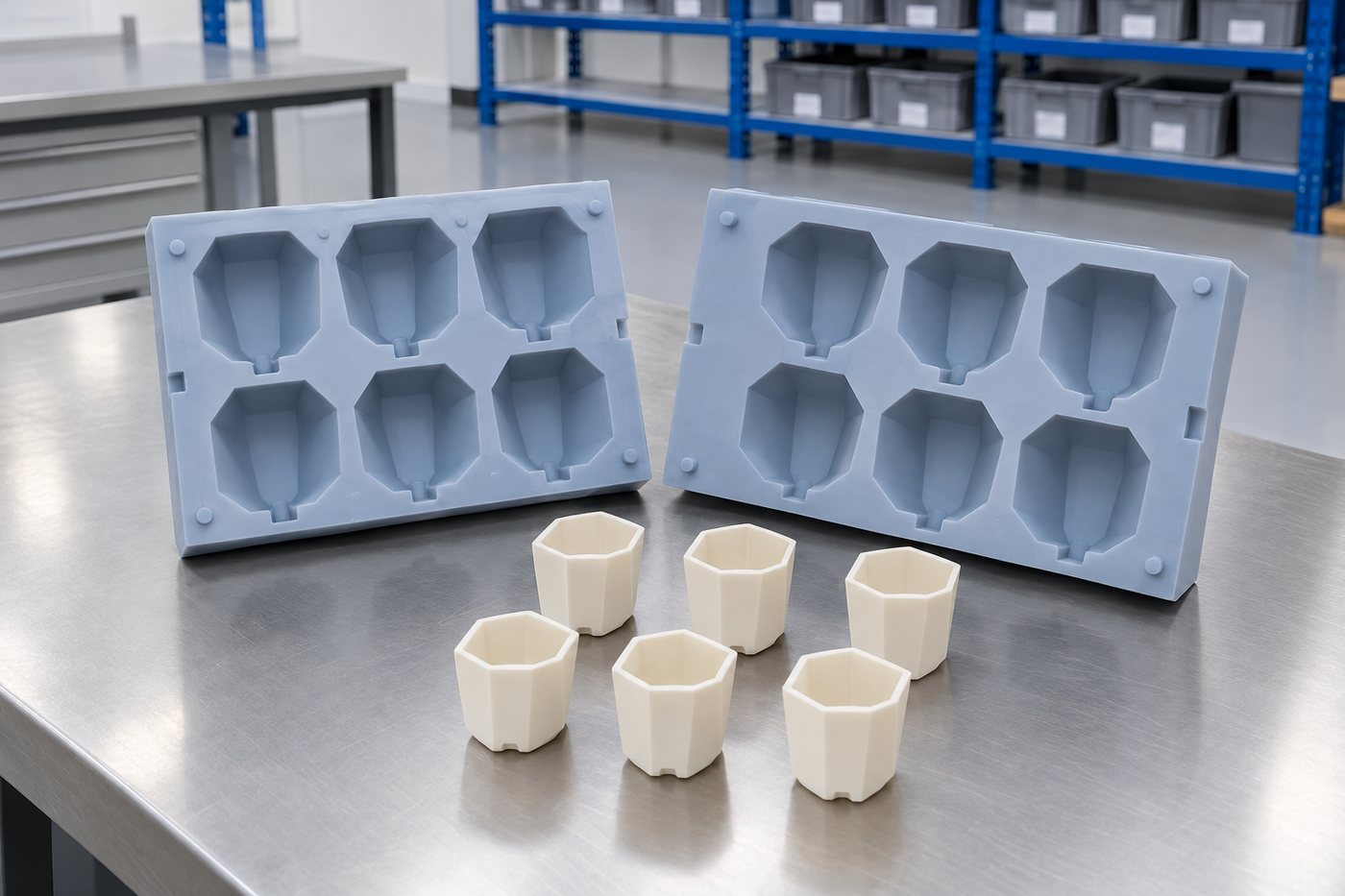
Multi-cavity trays
We set the cavity count and spacing around your oven, bench height and the weight one person should lift. This means a full tray is one fill, one cure and one demoulding, rather than three.
Two
Wax melt production tooling
Our clamshell and bar tooling is built for repeat filling. Cavity volumes are checked against your target weight, and the release is designed to last through a full production day without spray.
Illustrative example
Three
Resin homeware moulds
We produce tooling for trays, coasters, vessels and decorative homeware, specified to suit the exotherm of your resin. Where a bubble would be a reject, we vacuum cast the tooling.
Four
Packaging component tooling
For lids, seals, inserts and closures where fit matters, we measure the part carefully and take it through compression or injection once your design has settled.
When the shape is the product, or trimming and release are costing you labour on every unit, it may be time to look at tooling. The same applies when you can no longer buy the same stock mould twice.
Volume matters, but it is not the only trigger. We keep the calculation simple: tooling divided by the units you honestly expect to sell in a year, plus a comparison between the minutes each pour takes now and what it would take with the tool. If that arithmetic does not clear the price of the tool, we will tell you to wait and explain roughly what would need to change the answer.
Do you make the parts, or only the moulds?
Both can be the right choice, depending on what genuinely works best for you. Some brands want tooling to run on their own bench, so they can keep control of the process and hold their margin. Others prefer to buy finished parts and focus their time on selling. We quote for either option and will tell you which we think suits your situation best. If we produce the parts, low-volume runs and first articles can help prove your design before you commit to a larger programme.
Who owns the tooling and the drawings?
The tooling you have paid for is yours, as is the master pattern developed for your product. We use it only for your work and hold it under non-disclosure. We also keep the tool record on file, so any replacement is made from the original rather than a worn part.
If you would like the master shipped to you, we will send it. If you take your business elsewhere, you take the tooling and data with you. That is how it should be.
Is any of this made outside the UK?
Design, development and specification take place here in Bidford-on-Avon, and we have genuine manufacturing capability in the same building.
For some programmes, usually higher-volume work or jobs needing a particular press, we place part of the production with partners we have worked with for years. We inspect their output. Before you order, we will tell you which route your job will take, not afterwards. Either way, the warranty and responsibility remain with us.
Can you help with batch traceability and specification?
We can support you up to a clear point, and we will explain exactly where that point is. Against your order, we record the material grade, tool specification and revision. We can also supply first article records and a written specification you can hand to whoever runs the bench.
What we cannot do is write your quality system for you or make compliance claims on your behalf. If a retailer asks for something specific, send us the request and we will tell you plainly what can be evidenced.