Need silicone parts time and again?
Seals, pads, grommets, feet, sleeves and ear pads: when silicone is the product, casting will make you a few, while pressing will make them all the same.
Route four of five · moulded silicone parts
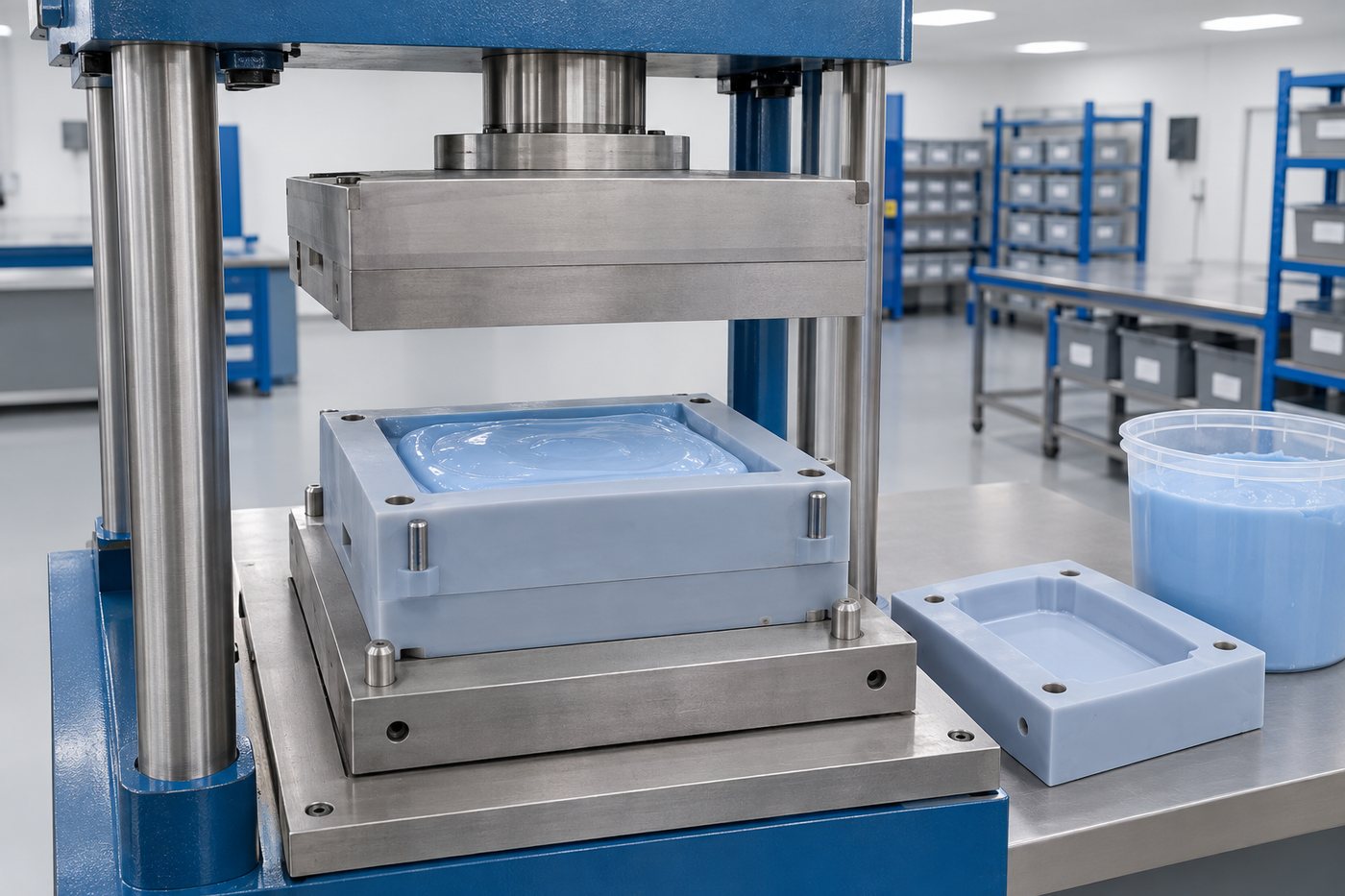
Steel tooling, a measured charge of silicone and a heated press are used to make moulded silicone components. You buy the components themselves, rather than moulds to cast into. Tooling costs more than casting, but the cost per part is much lower, with repeatability that the bench cannot match.
The tool
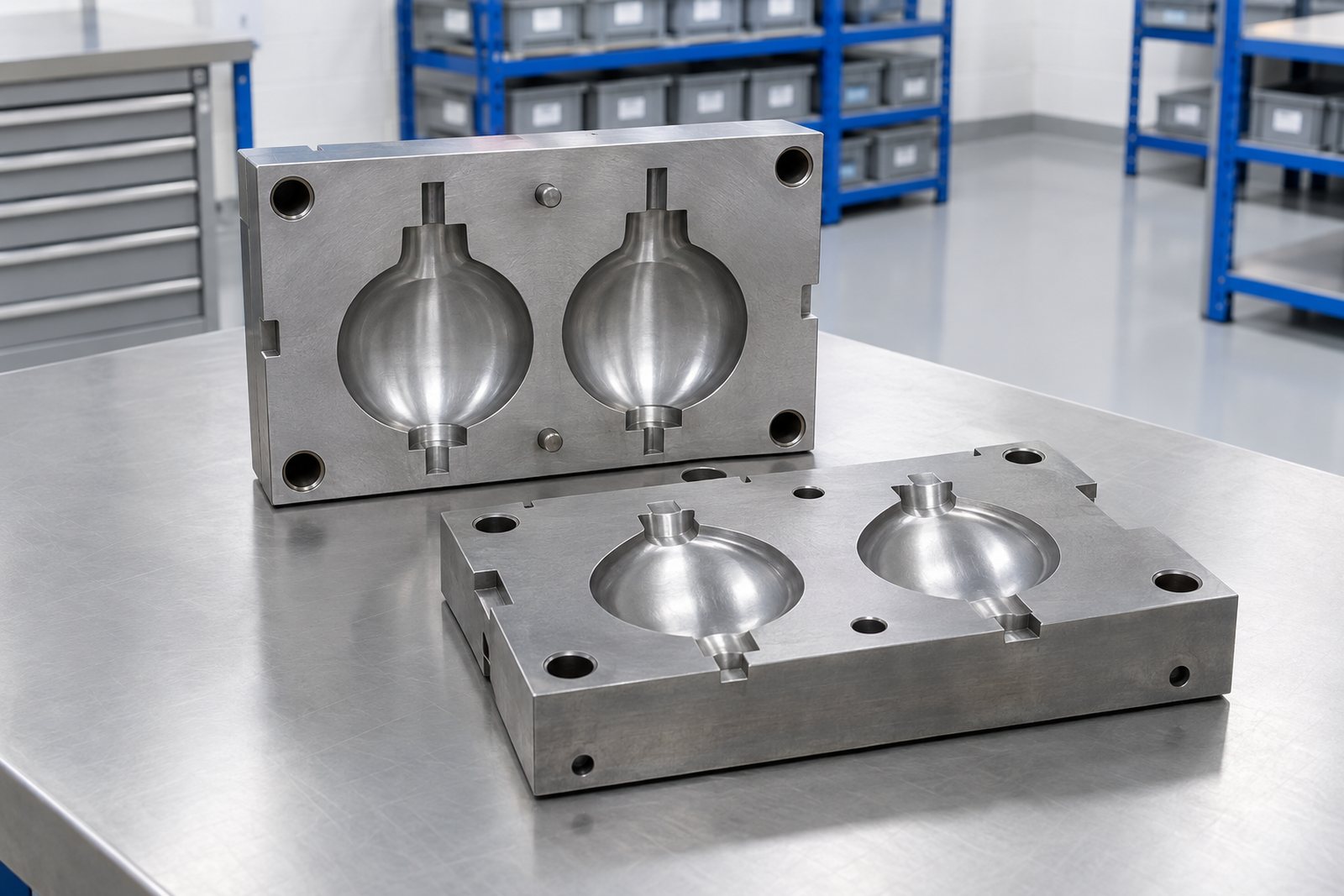
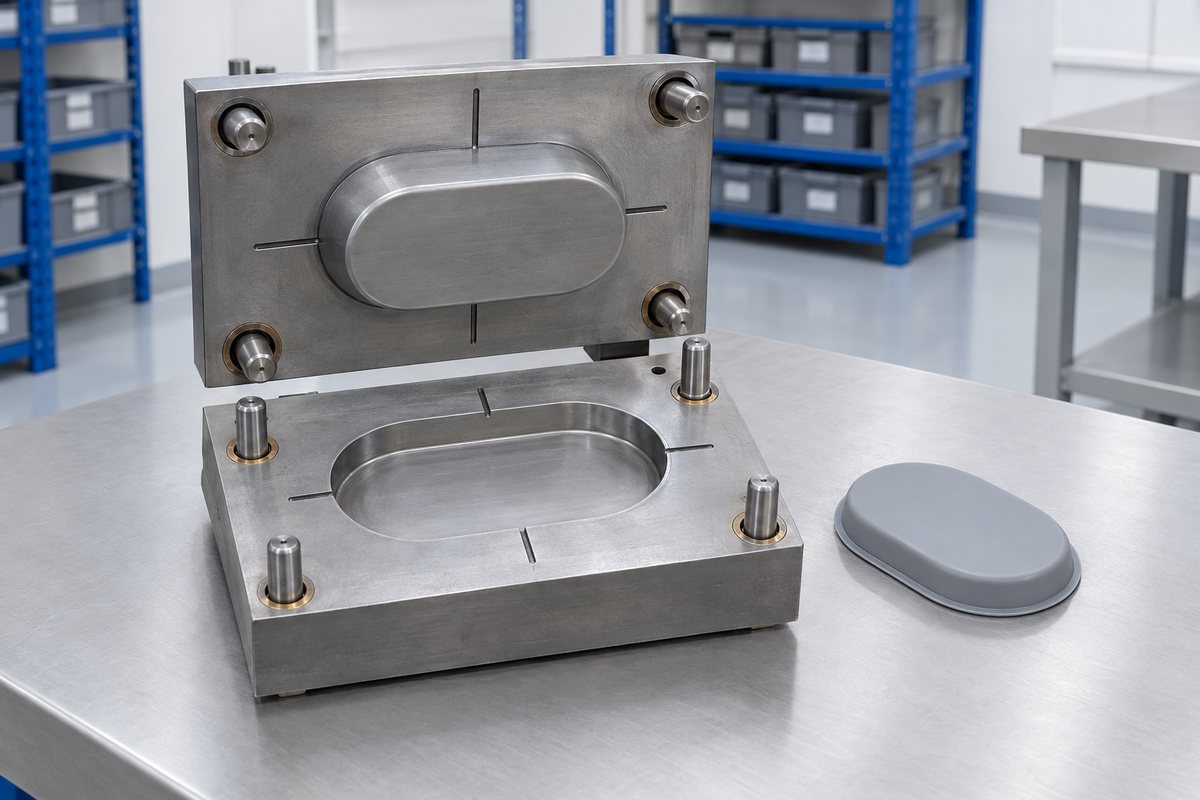
A compression tool is a machined metal block, or a set of blocks, with the cavity cut into the faces that meet. Uncured silicone is added as a weighed charge, then the press closes. Heat and pressure cure the silicone into the shape of the cavity. The finished part comes out with a flash line where the plates met.
That flash is real, and it needs to be dealt with. Trimming is part of the job, and how easy it is depends on where the parting line sits. That decision is made during tool design, not afterwards.
Because the tool is metal, it holds its shape. Part four hundred is the same as part four, which is the whole point of the route. It also means the tool will not flex to release an undercut, so any re-entrant feature must either be designed out or the tool must split around it. Splitting adds cost and creates another line on the part.
The tool is the expensive part, but it is yours in practical terms because it stays set up for your job. We record the geometry and material against it, so a repeat order behaves like a repeat rather than a new development.
Design
Silicone cures from the outside in. So, if a thick boss hangs off a thin web, the web will finish curing first. That difference can show up as a sink mark or a soft spot. For a more reliable result, even sections press better than clever ones.
A flash line will be present, so place it on a hidden edge or a face that will be trimmed anyway. Put it across a sealing face and you create a leak path and a trimming problem on every part.
A closing tool can trap air unless you vent it properly. Trapped air collects in deep pockets, blind ribs and sharp internal corners. It usually shows up as an unfilled corner, rather than as a visible bubble.
Compare
Both routes produce moulded silicone parts, but they are not interchangeable. The tooling is what sets them apart.
| Compression | Injection | |
|---|---|---|
| Tooling cost | Medium to high | Highest |
| Cost per part | Low | Lowest |
| Suits | Steady repeating quantities | Long-term component supply |
| Part complexity | Moderate. Simple partings work best | Higher. Fine and complex geometry |
| Material handling | Weighed charge, some waste | Metered and mixed, less waste |
| Change a detail later | Awkward but survivable | Expensive |
Part numbers are not the only factor. A modest annual quantity of an awkward part can still make injection worthwhile, while a large quantity of a simple gasket may remain in the press for years.
When it suits
Four situations where compression is the right answer, and we'll say so without being asked.
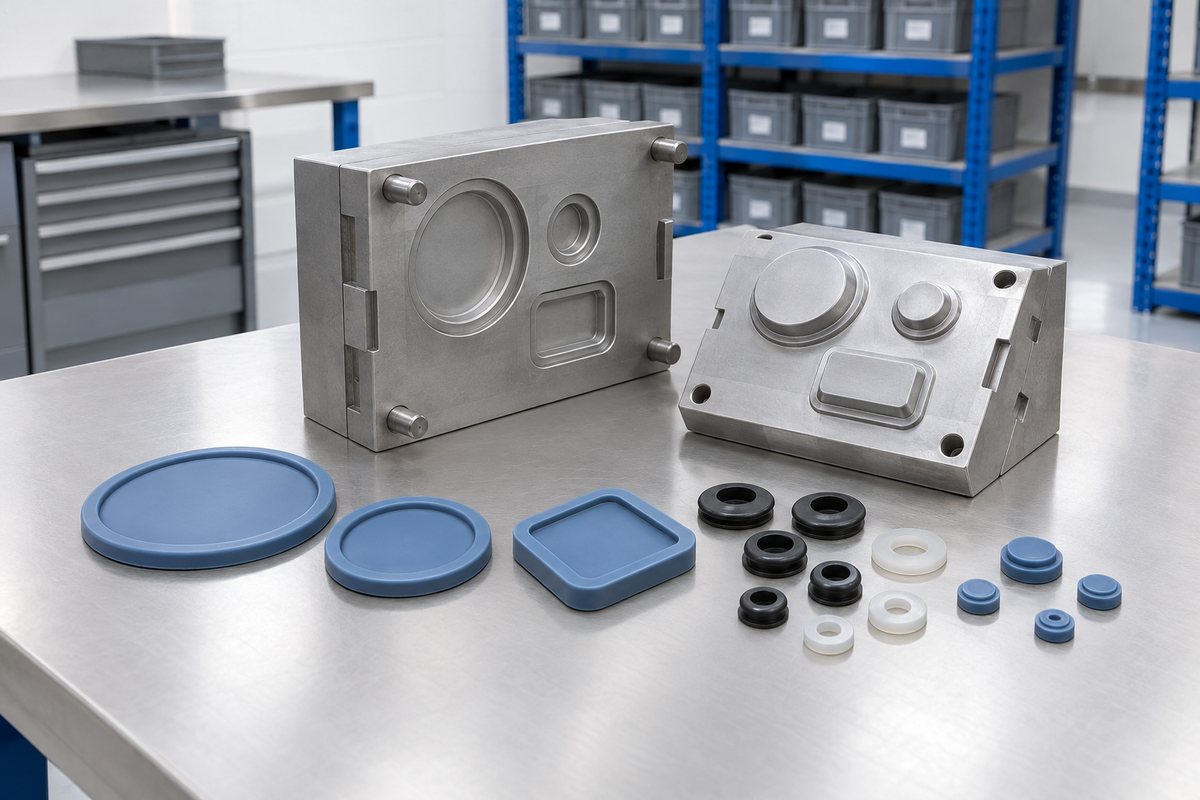
Seals, pads, grommets, feet, sleeves and ear pads: when silicone is the product, casting will make you a few, while pressing will make them all the same.
Simple geometry keeps compression costs down and makes tooling less likely to need reworking. Aim for even walls, a clean parting line and no deep blind features.
If you have steady repeat quantities - orders that come back rather than a one-off - tooling can pay for itself without the investment that injection requires.
Both high-temperature grades and food-contact grades press well, while the material remains recorded against the tool. Explore our high-temperature work and food-contact moulds.
At a glance
Which route suits your quantity
Swipe to see the whole diagram
From idea to finished mould
Swipe to see the whole diagram
Ready to start?
Send us a drawing, a photograph or a sample, and we'll come back to you with a mould strategy, a material recommendation and a price.
Real people, a real workshop
No call centre and no middlemen. When you contact TCI Mouldings, you speak to the team who design, build and check your mould.


 Thomas LaneManaging Director
 George PrestonDesign & Project Manager
 Kelly BallingerHead of Partnerships
 Jim AndertonProduction Manager
 TheodoreEmployee Welfare