Bidford-on-Avon, Warwickshire. Mon to Fri.01789 224228

Part of TCI Group · UK design, UK manufacturing capability, since 2019

Mould materials specified for the cast.

Platinum-cure silicone, tin-cure silicone, food-grade grades and polyurethane: what each one is genuinely good at, where each can fail, and why hardness is chosen around the cast rather than personal preference. Figures are indicative only and based on the supplier's data.

4 familiesSilicone and polyurethane
RecordedGrade and batch per order
In-houseSpecification and testing
2019Established

First principle

Hardness is a trade-off. It is not a quality rating.

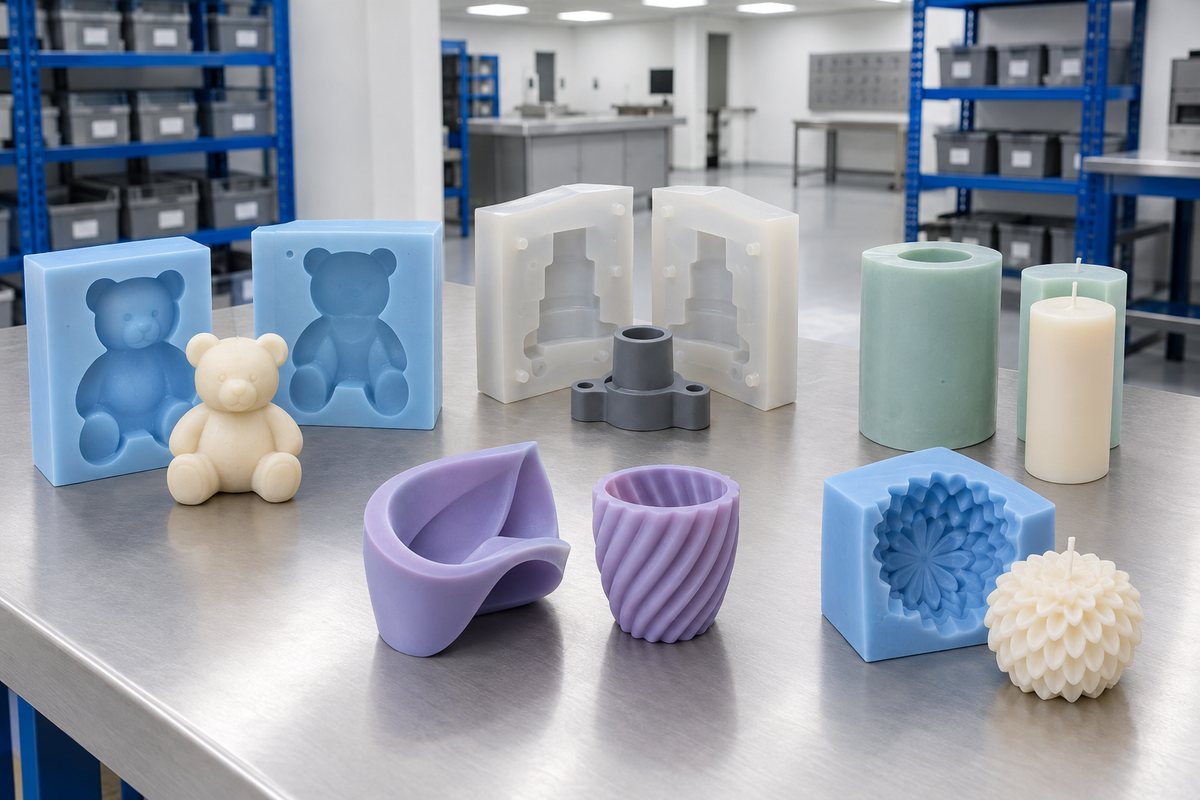
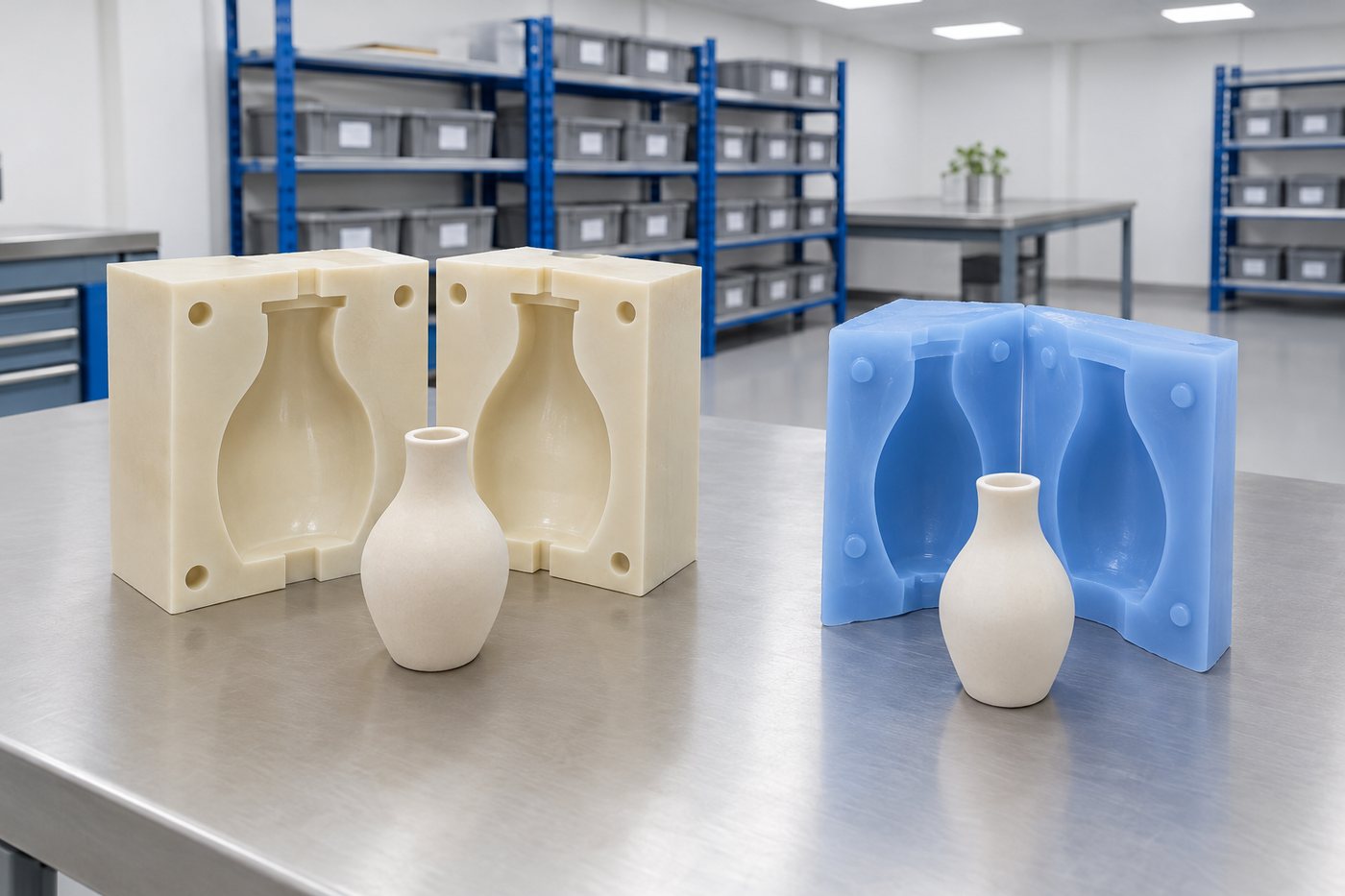
Illustrative example: Soft and firm silicone samples demonstrating different mould behaviours
Softer and firmer silicone behave differently in use

It is understandable that customers ask for the hardest mould available, assuming that harder means better made. It does not. A hard mould holds its shape, resists distortion under a heavy cast and lasts longer. However, it can refuse to release an undercut and make demoulding harder for anyone doing it all day.

A soft mould does the opposite. It peels off deep relief without tearing and is kinder to the operator. However, it sags under its own casting load, rounds off arrises over time and wears faster.

There is no single best grade. The right grade depends on your cast material, geometry, run length and the person on the bench, so finding it is a specification job. That is what this page is here to help with.

How hardness gets chosen

The families

What we work in and where it belongs

Four material families cover almost everything that comes through our door. Each has jobs it is best suited to, and others it should not be used for.

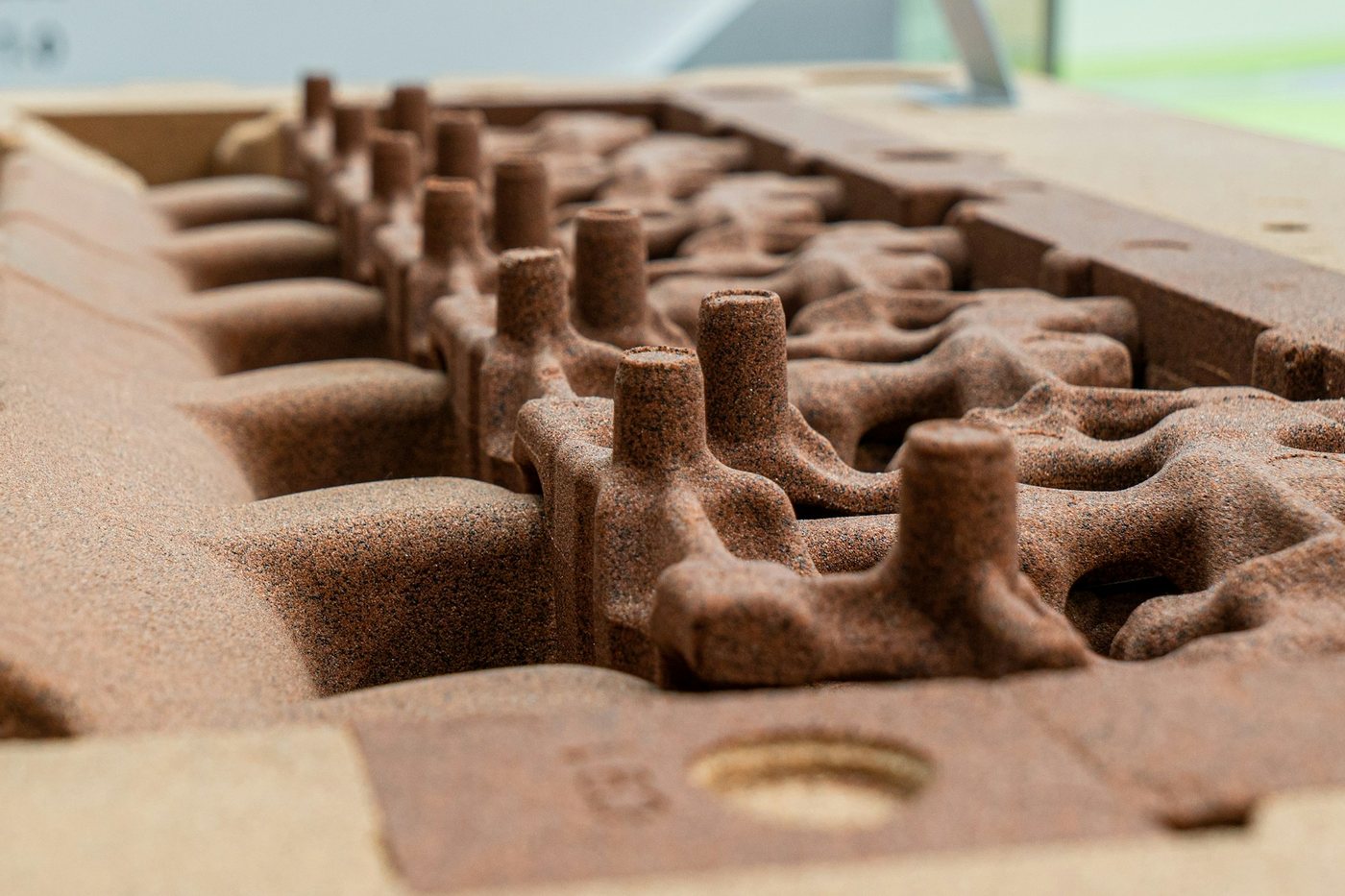
Close-up of a cast block showing crisp moulded detail
Platinum cure

Platinum-cure (addition-cure) silicone

This is the default choice for anything with detail, dimensional stability or a food declaration attached. It has very low shrinkage, a long working life as a tool, and can be post-cured. The trade-off is that it is fussy: sulphur clays, some resins, latex and certain tapes will inhibit the cure and leave a tacky face.

Cast moulds
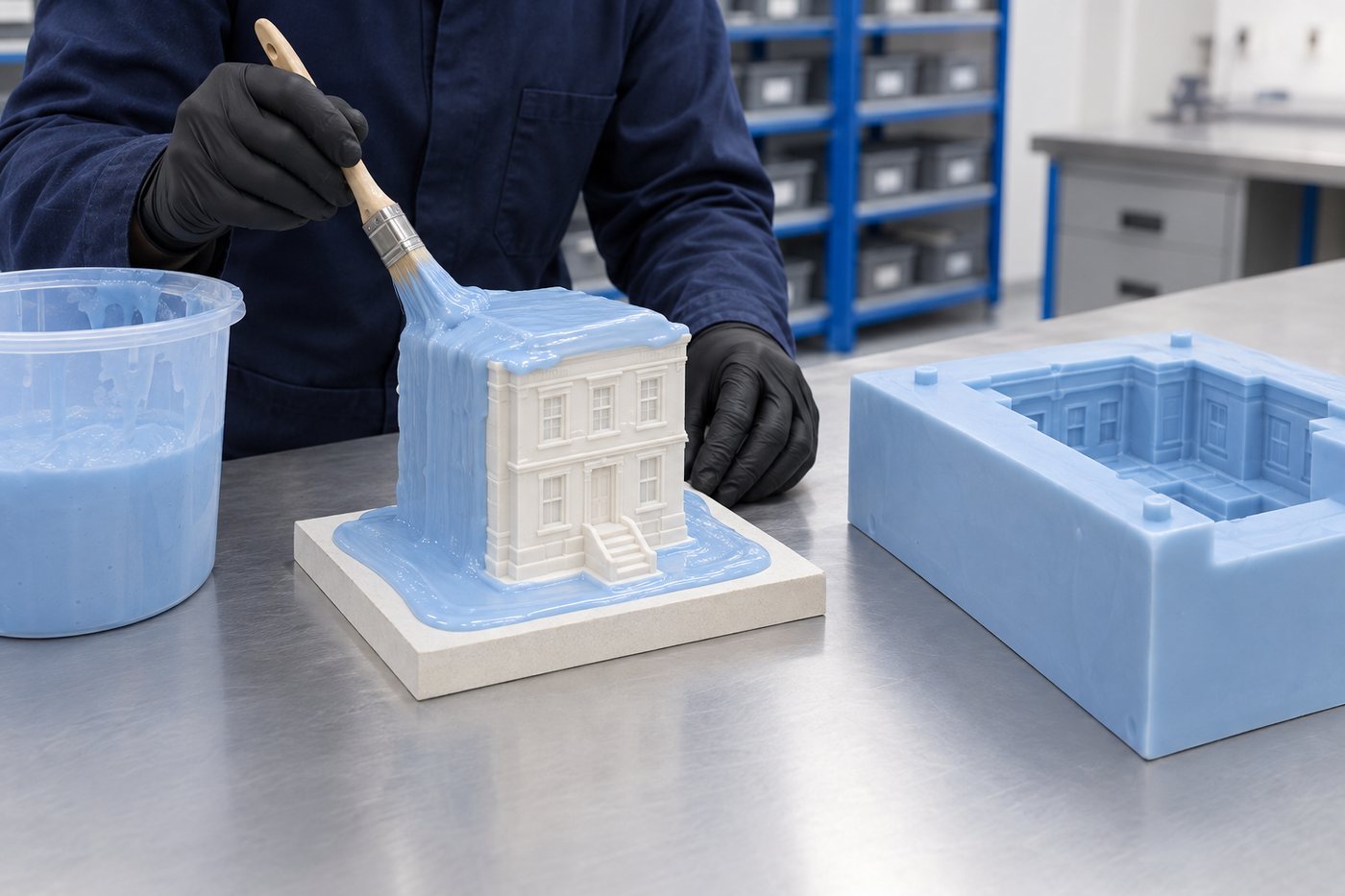
Illustrative example: Hand-brushed silicone building up around a master pattern
Tin cure

Tin-cure (condensation-cure) silicone

More tolerant, forgiving and cheaper, it is a sensible choice for one-off work from an unknown pattern. It will cure against masters that would poison a platinum system. However, it shrinks more and ages more, so it is not the right route for food or precision work.

Hand-made moulds
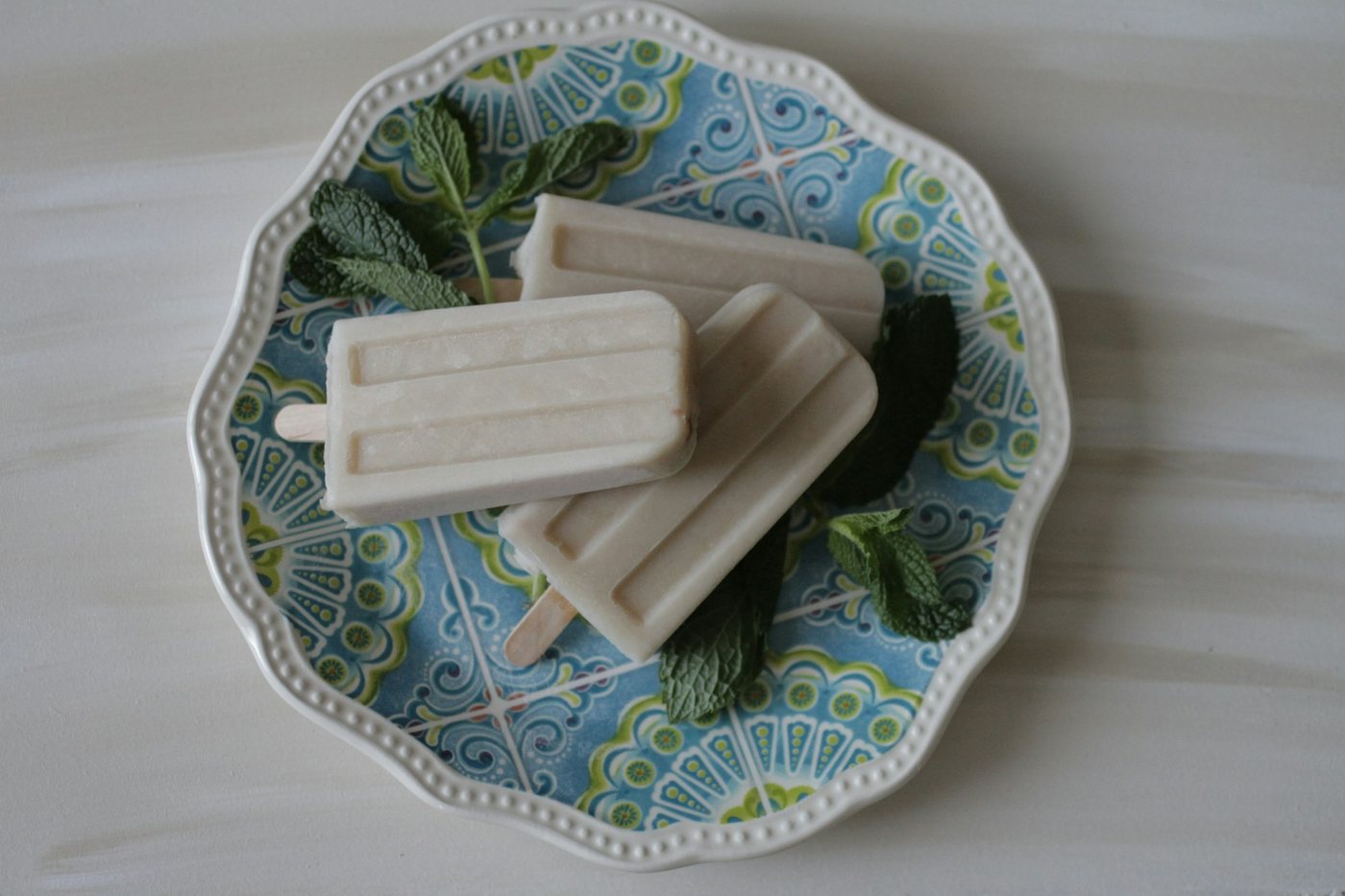
Ice lollies resting on a plate with fresh mint
Food grade

Food-grade platinum-cure silicone

You get a platinum system with the declarations that support its use against food, and PFAS-free where the grade allows. The paperwork is part of the specification, not an afterthought: we record the grade and batch against your order, so you can find the answer later.

Food-contact moulds
Illustrative example: Rigid polyurethane tooling compared with a flexible silicone mould
Polyurethane

Polyurethane tooling rubber

Compared with silicone, it is tougher, more abrasion-resistant and much stronger against tearing, which is why it is often used for concrete and cast stone work. It does not capture the finest relief as well, and you will need to take more care with release agents and moisture.

Polyurethane tooling
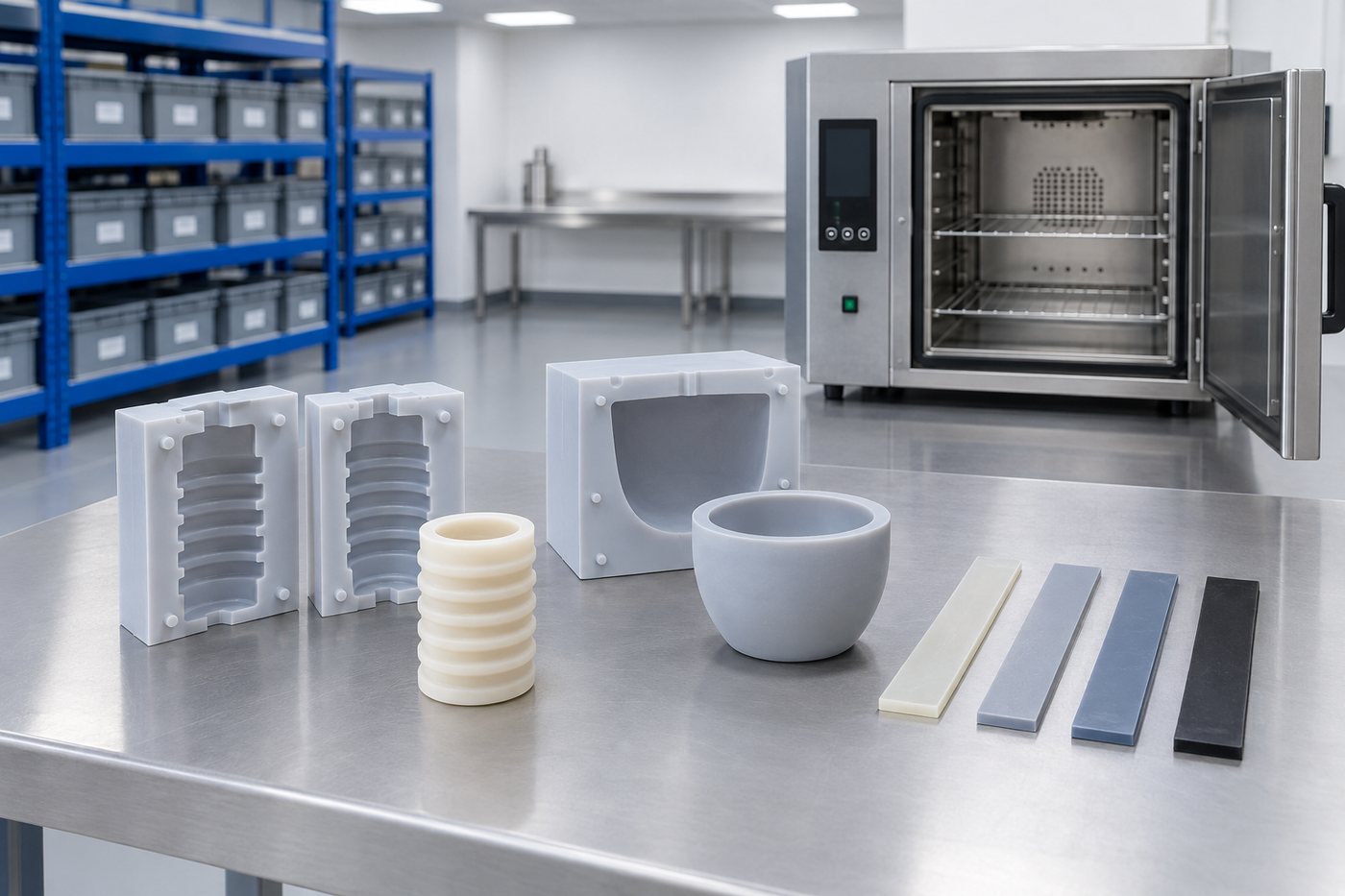
Illustrative example: Heat-tested silicone samples compared beside a small workshop oven
Heat rated

High-temperature silicone grades

We select platinum systems for heat and thermal cycling, then post-cure them where the process needs it. Any rated temperature range we give you is the material supplier's figure, provided in writing, not our own claim.

High-temperature moulds

Head to head

Platinum against tin, side by side.

The single most useful comparison in silicone mould making is also the one most often got wrong.

This covers the general behaviour of the two chemistries, rather than a quotation against a specific grade.

PropertyPlatinum cureTin cure
Shrinkage on cureVery lowHigher, and it continues slowly with age
Working life as a toolLong, ages wellShorter, stiffens and loses elasticity over time
Detail reproductionExcellentGood
Cure inhibition riskReal. Sulphur clay, latex, some resins and tapes will stop itLow. It cures against almost anything
Post-cure possibleYes, where the grade allowsNo
Food-contact grades availableYes, with declarationsNo
Cost of materialHigherLower
Best used forDetail, repeat use, food work, dimensional stabilityOne-offs, unknown masters, awkward patterns, budget work

If a master has been anywhere near sulphur-based modelling clay, please tell us before we cast. A test patch costs almost nothing, while a poisoned mould costs the whole tool.

More on cure inhibition

Shore A

The number shows how far the point sinks in.

Shore A gives you one specific measurement, taken in one particular way: a sprung, shaped point is pressed into a sample of a given thickness, and the reading is based on how far it goes in. That is all it tells you.

A Shore A number alone won't tell you about tear strength, elongation, how well the material recovers its shape, how it behaves when hot, or how long the mould face will last. Two grades with the same Shore A number can behave completely differently on the same job, and routinely do.

We use the number as a starting point for the conversation, not as a specification on its own. When hardness genuinely matters, we confirm it using real parts made from the actual material. That's one reason prototype tooling exists.

We won't publish a grade-against-application table. Although it may look helpful, it is often wrong enough to cost somebody a tool.

Prototype and bridge tooling

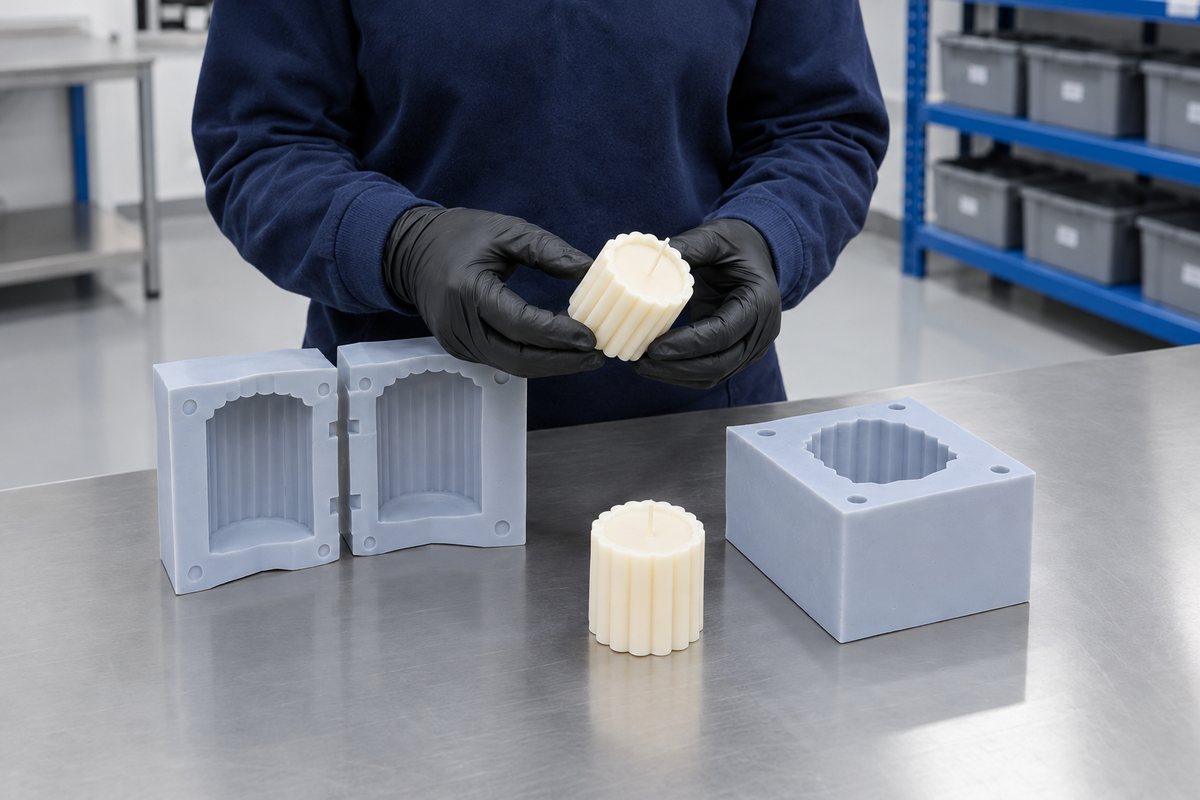
Illustrative example: Gloved hands compare silicone test pieces and a trial moulded part

Specifying

Four questions that decide the specification.

Answer these questions and the material choice is usually obvious. Leave them unanswered, and any grade is only a guess.

01

What is being cast into it?

The material you choose - wax, plaster, resin, concrete, chocolate or silicone - affects release behaviour, chemical attack on the mould face and whether food declarations are needed at all.

02

How hot does it get?

Whether it's exotherming resin, an oven cycle, a heated line or an autoclave, heat is the fastest way to age a mould. Repeated cycling is harder on a tool than a single high peak.

03

How securely is the part held?

Deep relief and undercuts mean lower hardness and greater wall thickness. A generous shape with proper draft can support a much harder, longer-lasting grade.

04

Who opens it, and how often?

A maker carefully working at a bench needs different tools from a production operator at the end of a shift. We specify the mould around the person who will actually be demoulding it.

Send us the answers

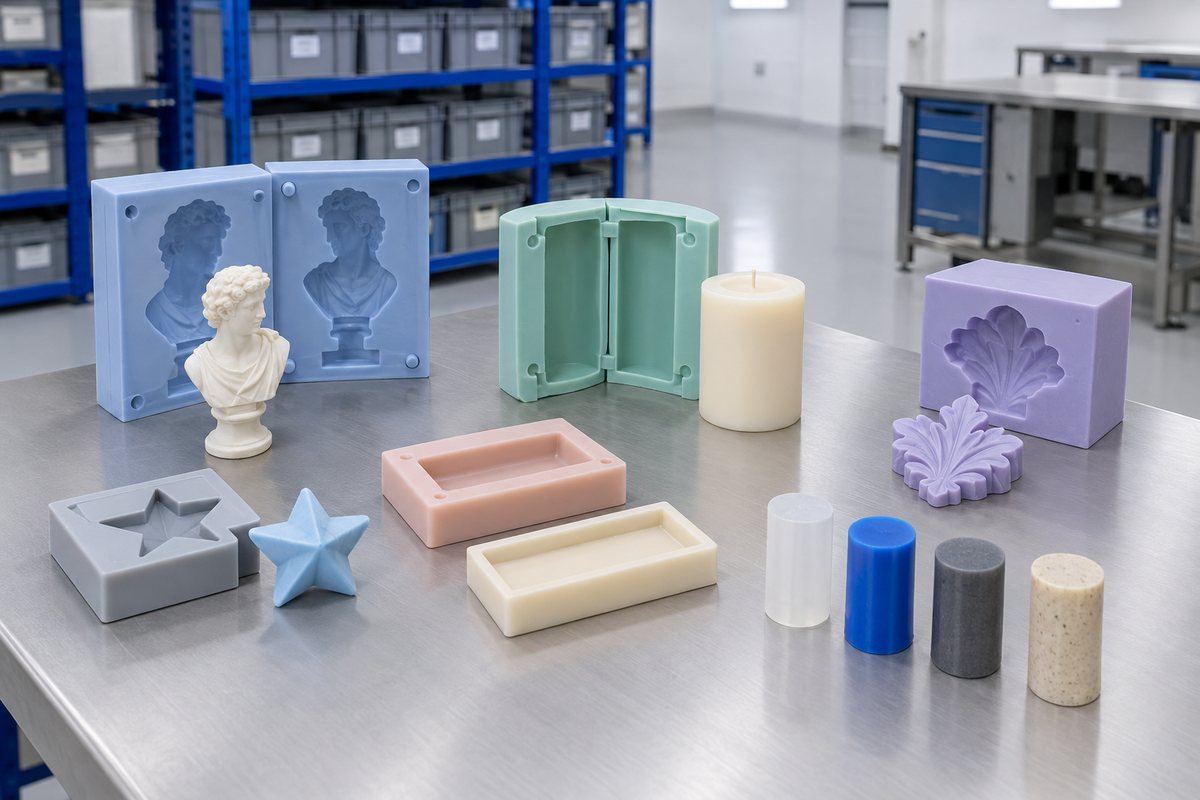
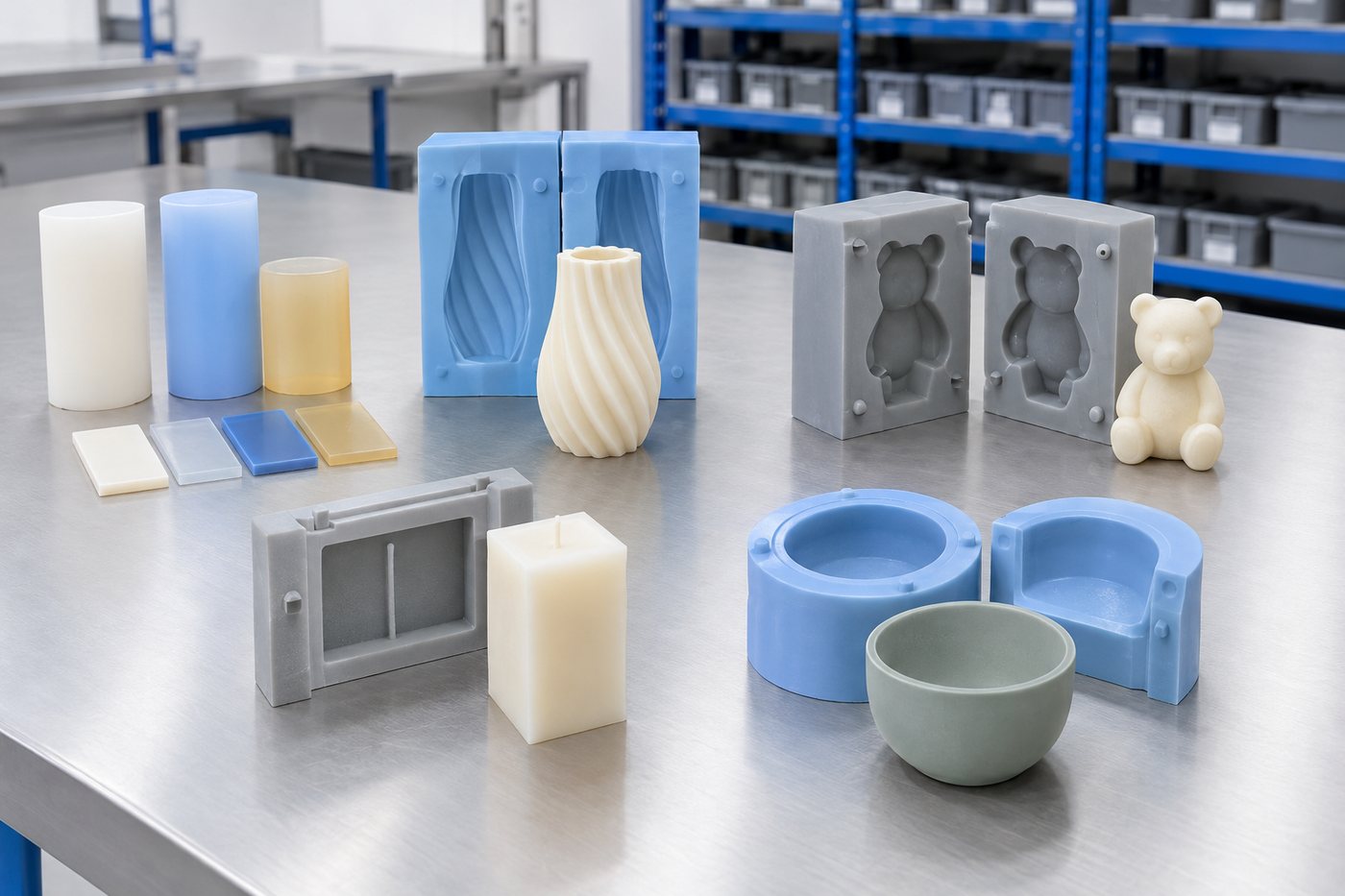
Illustrative example: Cast samples and mould test pieces arranged for material selection
Material choice depends on cast, heat and shape

Food work

Food-grade and PFAS-free, with the paperwork attached.

Food-contact work comes with a mould and a documentation job. The silicone grade must be declared food-contact silicone, and the declaration must be supplied against your order. We also record the batch used in your tool, so the information is still available if somebody audits you in three years.

PFAS-free grades are available, and where the material range allows it, these are the grades we specify for food work. If the grade you are asking about is not PFAS-free, we will tell you clearly rather than leave your question unanswered.

We are working towards BRCGS certification through the group's food division. The process is in progress and certification has not yet been awarded, so we will not describe it as anything else. For now, what exists is grade declarations, batch records and a specification against your order.

We handle food and confectionery moulding through the group's food division, so all the declarations for your job stay together in one place rather than being split across two companies.

Food-contact moulds

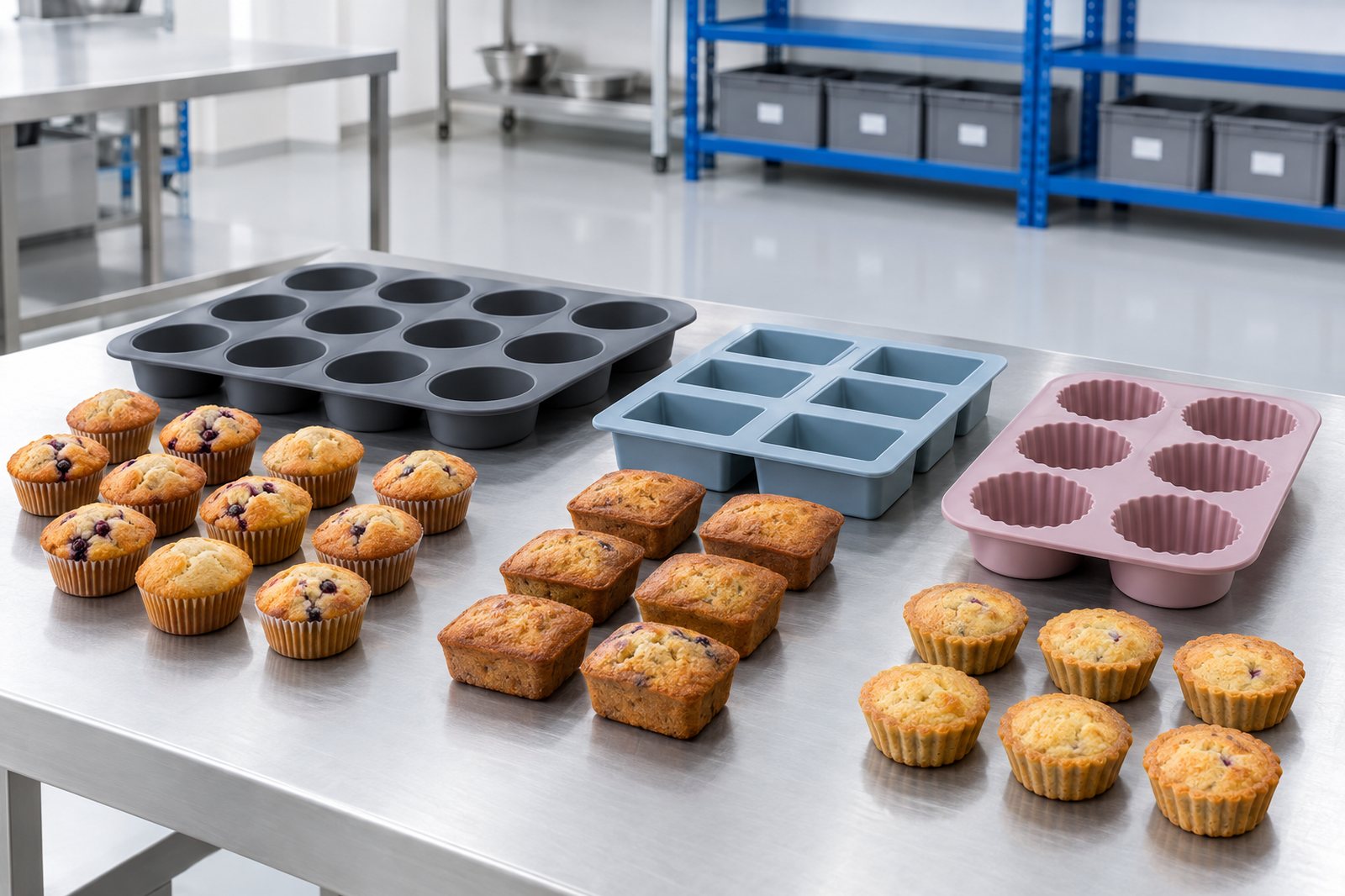
Illustrative example: Moulded and baked food items turned out of flexible silicone trays

Included

What comes as standard with every order

Grade and batch recorded

Your order records the material and specification. When you reorder, you receive the grade you approved, rather than whatever is nearest on the shelf.

Supplier data on request

Technical data sheets and declarations come directly from the material manufacturer. We pass on their figures as the manufacturer's own data, rather than presenting them as our own capability.

Master and record retained

We keep the master so any replacement matches the tool you already have. That makes a like-for-like spare possible, rather than a fresh interpretation.

Replacement and spares

Honesty

What we do not claim.

We do not publish tolerance figures as a general capability. The accuracy you can achieve depends on the route, the geometry, the cast material, and the shrinkage of both the mould and the thing cast in it. A figure on a web page would describe another part, not yours. Buyers have been sold tooling on that basis before, so we prefer to discuss the requirements of your specific part.

We do not present a material supplier's temperature or hardness data as our own performance claim. If you need a rated figure, we will provide it in writing with the source attached, so you can hold the right party to it.

We do not hold ISO registration, and we do not claim to. BRCGS certification is being pursued through the group's food division, but has not yet been awarded. If you see anything from us suggesting otherwise, please tell us, as it is a mistake.

We do not run a materials laboratory. Instead, we specify materials from supplier data, test them on real parts where the job justifies it, and record what went in. For most mould work, that is the honest and sufficient approach. If your job needs formal material certification beyond a supplier declaration, please say so at enquiry stage, as this changes what we should quote.

If any of that means we're not the right fit for your job, it's better to establish that now, before a tool exists.

About TCI Mouldings
Related

Where your material question becomes a practical service.

Most specification conversations end up on one of these pages, giving you a useful place to start.

Shore hardness selection

We explain how hardness is settled for the cast, the undercut and the operator, and why there is no published table.

Shore hardness

Food-contact moulds

We use declared food-grade platinum-cure grades that are PFAS-free where available, with declarations against the order.

Food-contact moulds

High-temperature moulds

We choose grades to suit your thermal cycle and post-cure them where the process needs it.

High-temperature moulds

Polyurethane tooling

Choose abrasive casts when tear strength and wear matter more to you than the finest detail.

Polyurethane tooling

Sorted by property

Material and property

The same four pages, plus the two places where you would usually make a material decision.

CAD and design for manufacture

This is where we work through wall thickness, draft and split line, as each one affects which grade will work for your part.

CAD and DFM

Prototype and bridge tooling

Hardness and release are settled on real parts in the real material before you commit to production tooling.

Prototype tooling

Vacuum cast moulds and parts

For surfaces where a single pinhole would mean rejection, we degas the material before it sets.

Vacuum casting

Master patterns

Every part inherits the master surface, so its material matters just as much as the mould's.

Master patterns

The full range

One group, four specialisms

TCI Mouldings is part of TCI Group.

One shared engineering team, one workshop and four specialisms bring the tooling knowledge behind a precast yard to a chandler through a single product.

Questions

Our most common technical questions

Why did my mould stay tacky in one patch?

This is almost always cure inhibition. Something the silicone touched has interfered with a platinum cure, such as sulphur-based modelling clay, latex, certain resins, some tapes or a few printed materials. The fix is to identify the culprit, then seal or replace the master. Test a patch before committing to the full pour. Tin cure will usually go off in areas where platinum will not.

Is a higher Shore A number a better mould?

No, it is a different mould. A harder mould holds its shape and lasts longer, but it will not release an undercut and is more difficult to demould. A softer mould releases deep relief more easily but wears faster. The right number is the one that suits your part, your cast and your operator.

Can I use the same mould for wax and for resin?

Sometimes, but do not assume it will. Resin usually exotherms and attacks the mould face more aggressively than wax, so a tool sized for a wax life will not last as long with resin. Tell us both cast materials at enquiry stage, and we will specify the tool for the harsher one.

Do you supply the material data sheets?

Yes, on request. We provide the manufacturer's documents, passing on their figures with the source attached rather than presenting them as our own performance claim.

Is your silicone food safe?

For food work, we use food-grade platinum-cure grades (the food-safe kind). They are supplied with declarations and are PFAS-free where the range allows. Food safety comes from the specific grade and its declaration, not from silicone in general, so it needs to be specified rather than assumed.

Which lasts longer, silicone or polyurethane?

It depends entirely on what you're casting. Against abrasive concrete and cast stone, polyurethane will usually outlast silicone comfortably. For fine detail work with a gentler cast, silicone will hold its surface for much longer. The cast material decides.

Can a mould be repaired instead of replaced?

A small tear or lifted edge can sometimes be repaired. A degraded mould face cannot, because the surface is the product itself. If your tool is on a repeat programme, we prefer to hold a spare against the retained master rather than patch a worn face.

Will you recommend a grade over the phone?

We will narrow it down together, then ask you to send us the part. Recommending a grade from a description alone can leave you with tooling that does not suit the cast, which is exactly what a material page like this is designed to help prevent.

Next step

Ask us before you commit material, rather than afterwards.

The most cost-effective time to discuss materials is before the master is made and the production method is fixed. Once a tool exists, changing the grade is the hardest thing to do.

Send us the part, the cast material, the rough quantity and a note about the process it lives in. Ask the partnership team and you will receive a grade, the reason for it and the supplier data behind it.

Technical guides and glossary

At a glance

The idea in a picture.

Silicone hardness in everyday terms

00-30Gel insoleA10Jelly sweetA20Elastic bandA30Pencil rubberA40Shoe heelA60Tyre treadSofter: peels from undercutsFirmer: holds its shape

Swipe to see the whole diagram

A rough guide. We choose the grade for your shape, material and number of pours.

Ready to start?

Tell us what you need to make, and we'll show you how to mould it.

Send us a drawing, photograph or sample. We'll come back with a mould strategy, material recommendation and price.

Real people, a real workshop

You deal with the people who make it.

No call centre and no middlemen. When you contact TCI Mouldings, you speak to the team who design, build and check your mould.

  • A real Warwickshire workshopUnit 15, Waterloo Park, Bidford-on-Avon, Alcester B50 4JG.
  • Real people on the phoneCall the team on 01789 224228, Monday to Friday.
  • The same team on every jobDesign, production and aftercare come from the people you see here.
  • Part of TCI GroupFive specialist brands, one engineering team. Visit TCI Group.
The TCI design and project office.
A stack of TCI silicone moulds.
The TCI workshop, with moulds on the bench mid-build.
  • Thomas LaneManaging Director
  • George PrestonDesign & Project Manager
  • Kelly BallingerHead of Partnerships
  • Jim AndertonProduction Manager
  • TheodoreEmployee Welfare
Meet the team