Bidford-on-Avon, Warwickshire. Mon to Fri.01789 224228

Route one of five · fastest to a working mould

Hand-made silicone moulds.

Silicone is poured or brushed by hand around a master, with no press or vacuum chamber involved. It is the cheapest way to make a mould that works, and the right answer far more often than people expect. It is also the least repeatable thing we do, and we will not pretend otherwise.

LowestTooling cost
HighestCost per part
By handPoured or brushed
2019Established

When it is right

Four situations where nothing else works.

Hand-made isn't simply the budget version of a cast mould. For some jobs, it's the only sensible route.

01

The part is too big to box

For architectural details, panels and large decorative pieces, boxing them in and pouring silicone over the top would use a fortune in material without adding any benefit. Brushed layers give you a skin where you need it, without using material where you don't.

02

The original cannot move

If you have a carving on a building, a fitted detail, or something too fragile or too valuable to take off site, a brushed mould can be built in place. Nothing else on our list can.

03

You need one to find out.

Development pieces, samples for a show, or a shape you're still discussing internally. Committing to a proper boxed mould before the design is settled means spending money twice.

04

The shape is generous

With rounded forms and soft relief, there is little detail for the eye to pick up. If the geometry is forgiving, the extra discipline of casting or vacuum casting may offer very little benefit.

Compare all five routes

Illustrative example: Large master with brushed silicone skin and mother mould support
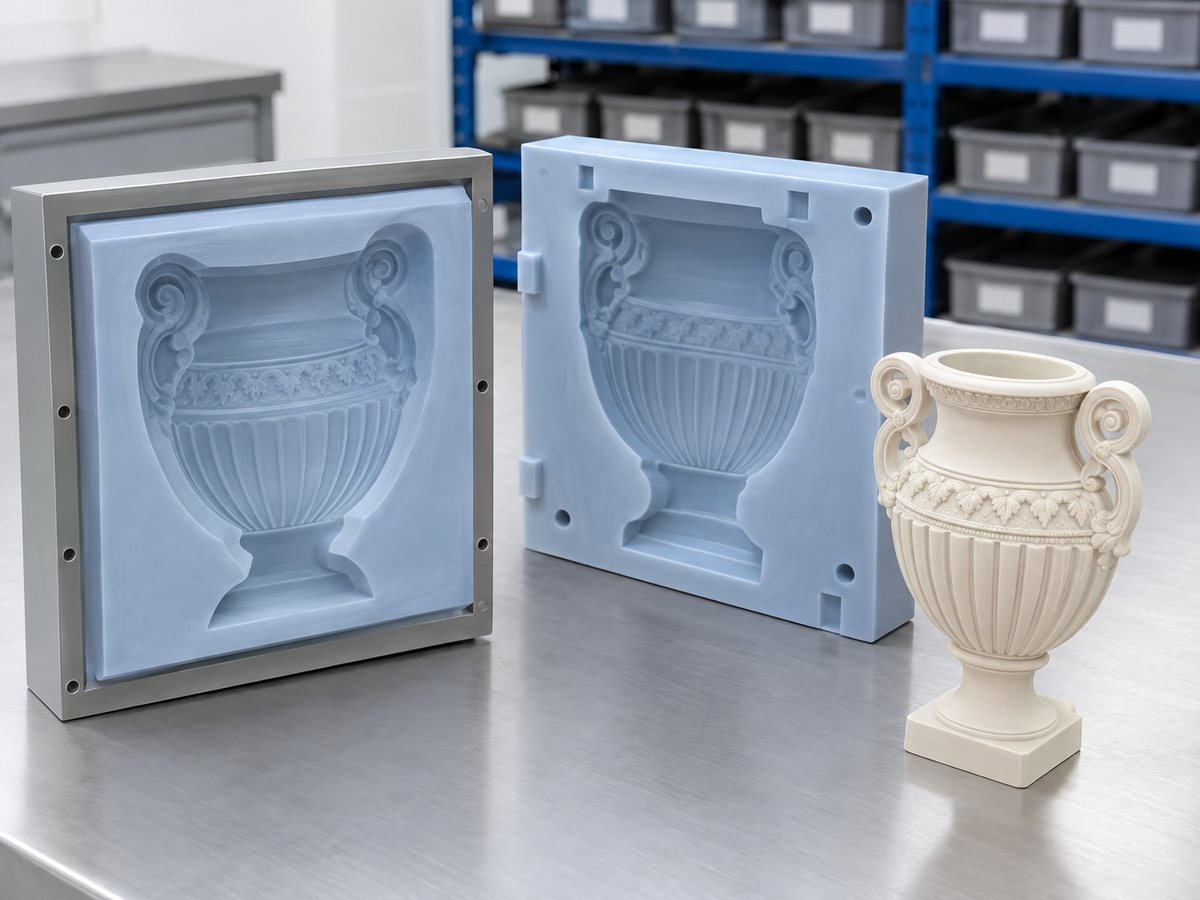
Brushed silicone used where boxing would waste material

The choice

If it fits in a box, pour it.

There are two hand-made methods, and choosing between them mainly depends on size. If your master fits in a box and the volume of silicone needed is reasonable, pouring is a good choice. It creates a solid mould with even walls and no brush marks, and it takes less skill to get right.

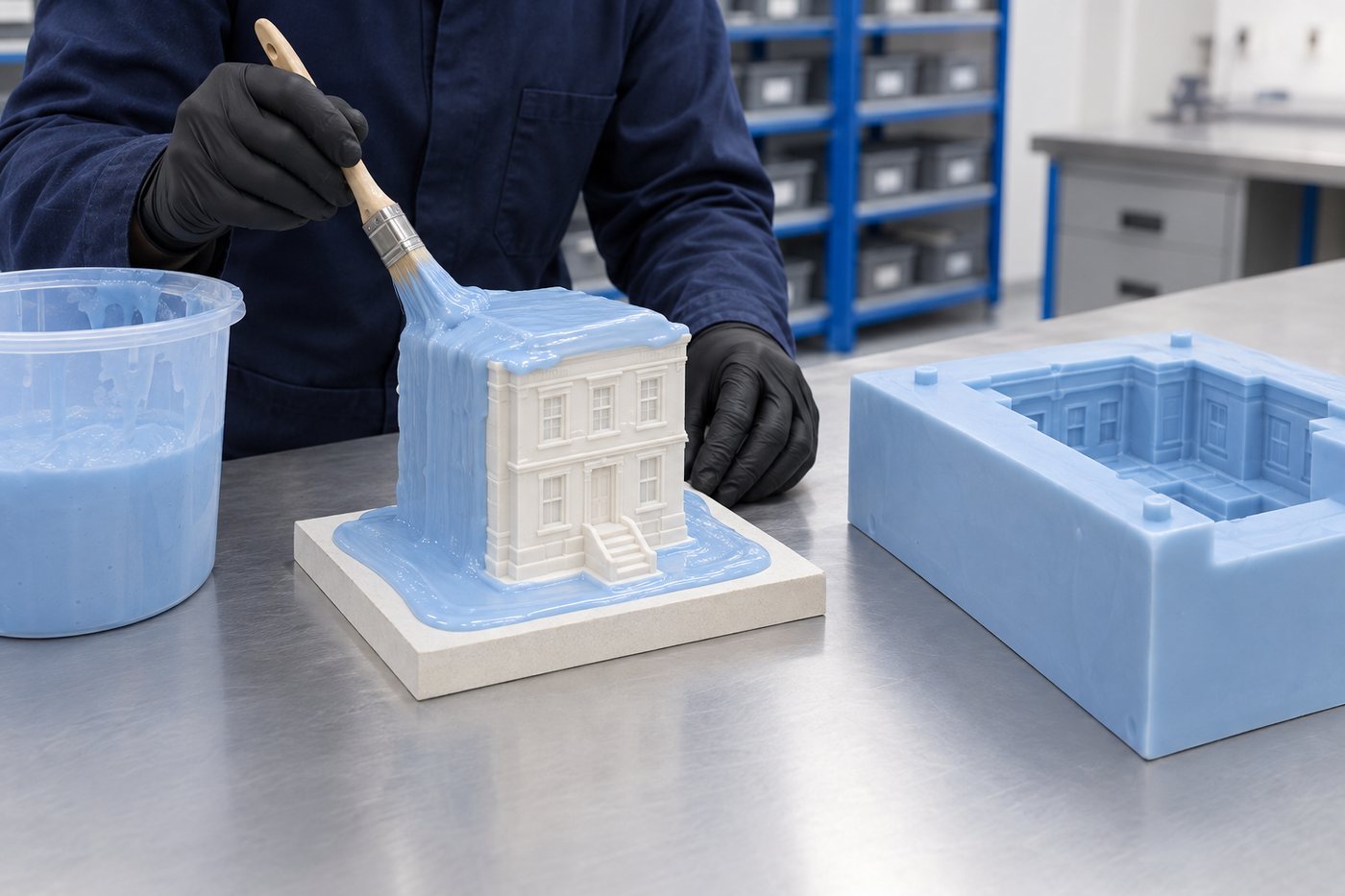
If boxing the part would be absurd, use a brush-on approach. Silicone is applied in layers and thickened so it stays where it is put. The mould is then supported with a rigid jacket, helping it hold its shape when the part is removed.

Brushed moulds can have some real drawbacks. Because they are applied by hand, wall thickness can vary. The layers may also pick up brush texture, which can transfer to your casting. The jacket adds extra handling steps for whoever uses the mould. Most importantly, the first layer must be worked properly into every detail. Any air left behind becomes a void in every part you pull from the mould.

When your part has fine relief or lettering, hand pouring can be challenging. That is where vacuum casting comes in: it is a short step up, not a different world.

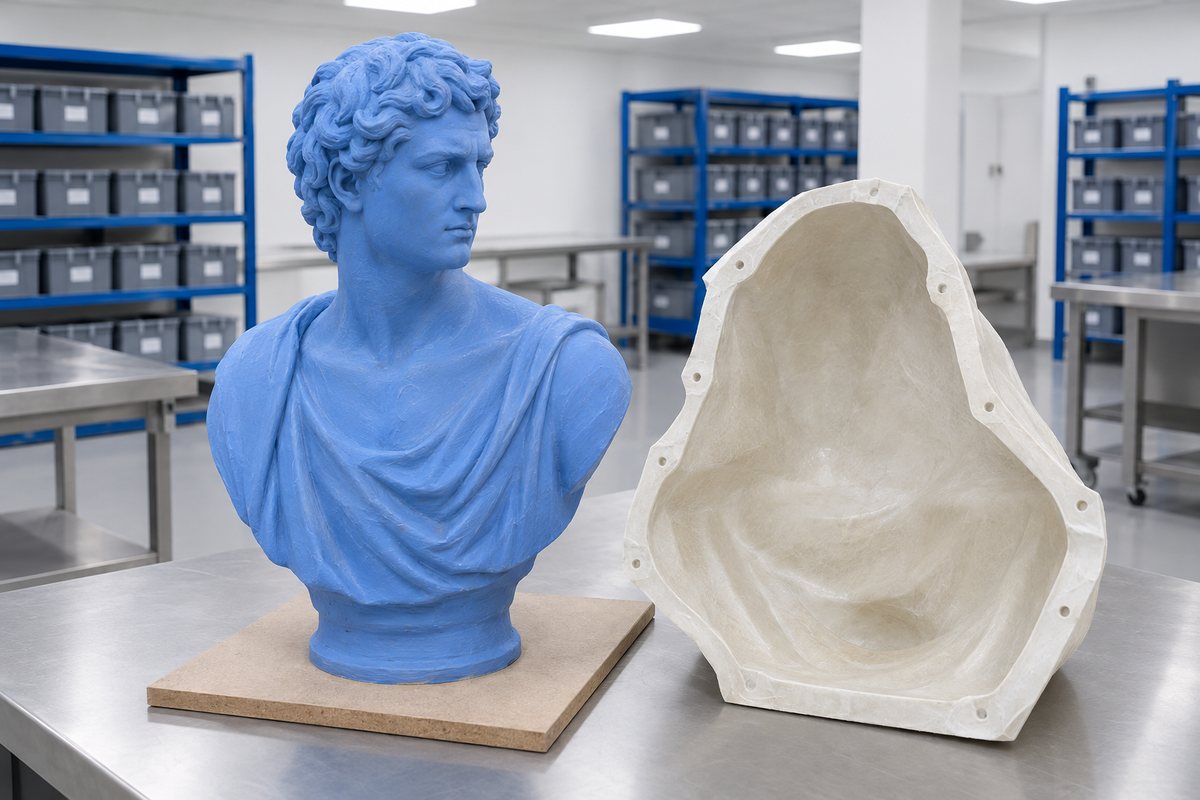
Illustrative example: Brushed silicone mould skin with rigid jacket beside a detailed master

What we need

To quote a hand-made mould.

A photograph with a rule in shot

You don't need anything more formal at this stage. We just need to see the shape and understand roughly how large it is, because the volume of silicone is the largest single cost on this route.

What are you casting into it?

Whether you're working with plaster, concrete, resin, wax or soap, tell us what you're making. Concrete is abrasive and shortens mould life, while resin runs hot. Each material affects the silicone grade we recommend.

How many pulls do you want from it?

As a rough guide, a hand-made mould has a shorter working life than a cast one. If you need a high number, we'll advise you to move up a route rather than sell you three of these.

Whether the master exists

If there's nothing available to mould from, a master pattern must be made first. This is a separate piece of work with its own cost.

The honest bit

Each layer cures in its own time.

Hand work is honest work, but it does not produce identical work. Two moulds made from the same master by the same person on different afternoons will differ slightly in wall thickness and surface. For a garden ornament, that difference may not matter. For a component that has to fit something, it matters a great deal.

Silicone cures in its own time, and it is sensitive to what it touches. Sulphur in some clays and modelling materials, certain adhesives, and residue from some release agents can inhibit the cure, leaving a tacky patch that never sets. This is not a defect in the mix. It is contamination on the master, so the solution is to prepare the master properly rather than add more catalyst.

This route has a clear limit. It will not hold a crisp arris for long, produce the same part five hundred times, or tolerate rushed demoulding. If any of those is essential, your project needs a cast mould or a hard tool. Moving up early is more cost-effective than discovering the limitation halfway through a season.

It will do one thing better than anything else we offer: get you a working mould from a shape you cannot easily draw, for the least money and with the fewest assumptions made on your behalf.
Next

Please send us photographs and a measurement.

That really is enough to get a sensible answer. Two or three photographs from different angles, one dimension so we know the scale, and a sentence about what you are casting into it.

If your job suits a different route, we'll explain which one and why. Many enquiries for a hand-made mould become cast moulds. A few become low-volume production, where we handle the casting and you buy the finished parts instead.

Send photographs

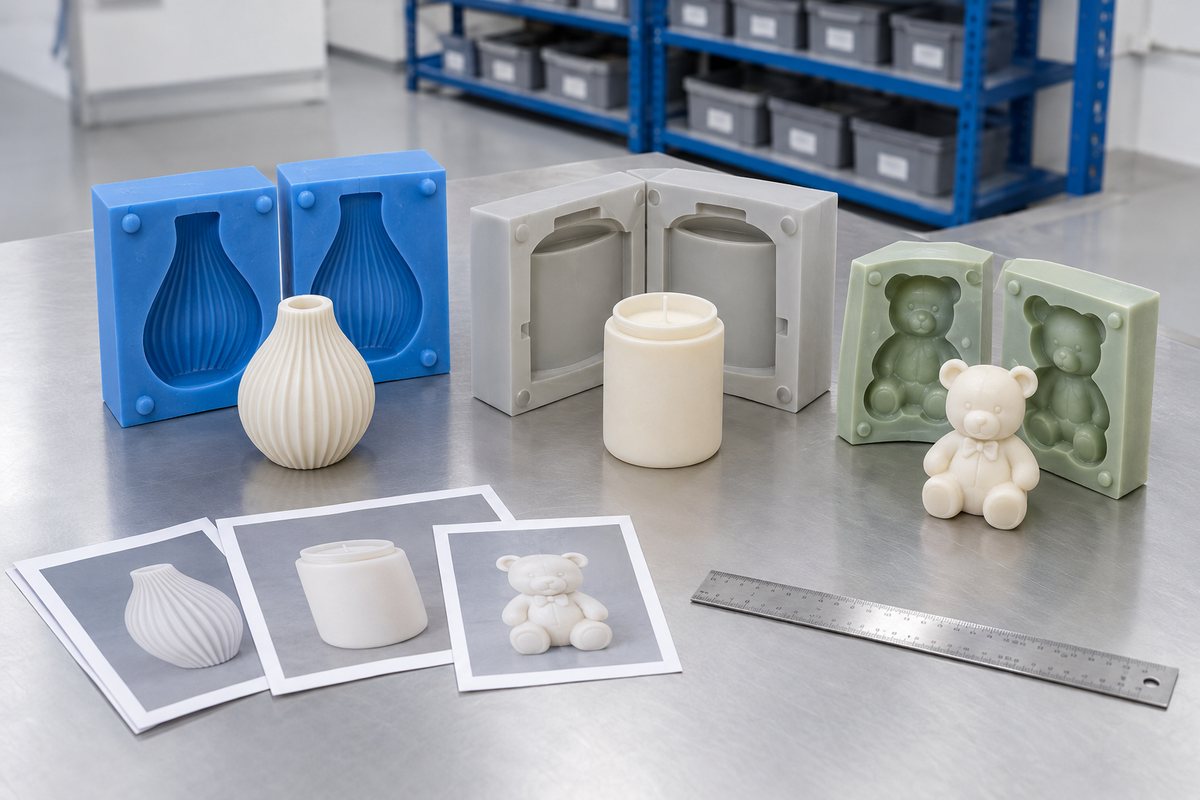
Illustrative example: Reference photos, ruler and sample mould options on a workshop bench
Photos and one measurement help choose the right route

At a glance

The idea in a picture.

From idea to finished mould

  1. 01Photo or sampleShow us what you want to cast
  2. 02Drawing agreedWe agree the shape and split
  3. 03Master madeMachined, printed or sculpted
  4. 04Proof pourA first mould to test
  5. 05Full mouldMade once you are happy
  6. 06Kept on fileFor easy reorders

Swipe to see the whole diagram

Every mould follows the same simple route, so you always know what happens next.

Ready to start?

Tell us what you need to make, and we'll show you how to mould it.

Send us a drawing, photograph or sample. We'll come back to you with a mould strategy, material recommendation and price.

Real people, a real workshop

You deal with the people who make it.

No call centre and no middlemen. When you contact TCI Mouldings, you speak to the team who design, build and check your mould.

  • A real Warwickshire workshopUnit 15, Waterloo Park, Bidford-on-Avon, Alcester B50 4JG.
  • Real people on the phoneCall the team on 01789 224228, Monday to Friday.
  • The same team on every jobDesign, production and aftercare come from the people you see here.
  • Part of TCI GroupFive specialist brands, one engineering team. Visit TCI Group.
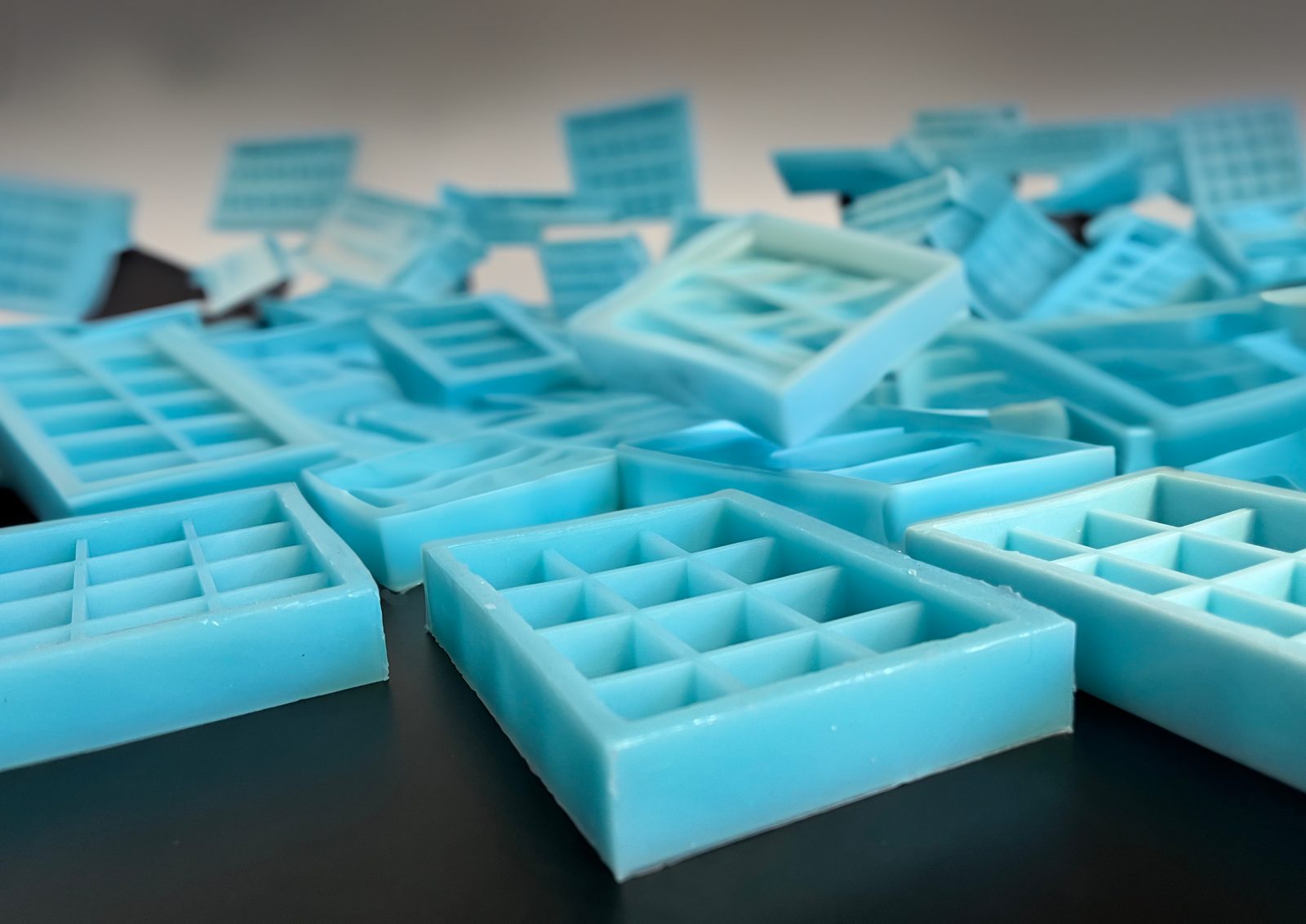
A stack of TCI silicone moulds.
The TCI workshop, with moulds on the bench mid-build.
Silicone wax melt moulds made by TCI Mouldings.
  • Thomas LaneManaging Director
  • George PrestonDesign & Project Manager
  • Kelly BallingerHead of Partnerships
  • Jim AndertonProduction Manager
  • TheodoreEmployee Welfare
Meet the team