
Infusion
Reusable silicone vacuum bags
Moulded bags for decks, hatches, consoles, hardtops and smaller hull mouldings, with feed and vacuum points built in.
Industries · Marine and boatbuilding
Reusable silicone vacuum bags for decks, hatches and consoles, non-slip deck texture tooling, moulds for fittings and covers, and moulded rubber seals. For yacht, motor yacht, RIB, workboat and marine component manufacturers.
What boatbuilders need

On a production line of decks, hatches and consoles, disposable bagging film, breather and sealant tape are thrown away after every part, and the finish depends on who bagged it.
A moulded silicone vacuum bag is made once to the shape of your tool and used again and again. It goes on in minutes, seals in the same place every time and takes much of the consumable cost and bagging labour out of each part. The same thinking applies to non-slip texture: one silicone texture tool puts the same pattern into every deck.
We design bags around your resin system, feed and vacuum points and part geometry, and tooling for fittings and seals around the materials that survive salt, sun and abrasion. Masters are archived, so a replacement bag fits the tool as well as the first.
Typical marine work
Six families of rubber tooling cover most marine enquiries.
Moulded bags for decks, hatches, consoles, hardtops and smaller hull mouldings, with feed and vacuum points built in.
Silicone intensifiers that consolidate tight corners, flanges and returns where bagging film bridges and leaves voids.
Silicone texture tools and mats that mould the same non-skid pattern into decks, steps, cockpit soles and panels.
Silicone and polyurethane tooling for small composite and cast parts: covers, vents, rubbing strake ends, trim and badges.
Compression-moulded and cast rubber seals, gaskets and bump stops in weather-resistant grades.
Material documentation, inspection requirements, manufacturing responsibilities and any necessary approvals should be specified and confirmed for your project before work is authorised.
Routes and quantities
A general guide. Part size, resin system and cycle life decide the final build.
Typical figures for planning. We confirm cycle life and lead times against your part and process.
| Tooling | Typical use | Typical cycle life | Typical lead time |
|---|---|---|---|
| Reusable silicone vacuum bag | Decks, hatches, consoles, hardtops | Many dozens of infusions and up | Lead time depends on the agreed scope, review stages, material availability and current workload. Request a schedule with your quotation. |
| Silicone intensifiers | Corners, flanges and returns | Programme dependent | Lead time depends on the agreed scope, review stages, material availability and current workload. Request a schedule with your quotation. |
| Silicone texture tooling | Non-slip decks, steps and soles | Programme dependent | Lead time depends on the agreed scope, review stages, material availability and current workload. Request a schedule with your quotation. |
| Silicone and polyurethane tooling | Fittings, covers and trim | Hundreds of parts | Lead time depends on the agreed scope, review stages, material availability and current workload. Request a schedule with your quotation. |
| Compression-moulded rubber | Seals, gaskets and bump stops | Thousands per tool | Lead time depends on the agreed scope, review stages, material availability and current workload. Request a schedule with your quotation. |
Tell us the resin system, part size and how many boats a year you build, so we can size the bag or tool and the spares plan.
Examples
Eight typical jobs for silicone, polyurethane and rubber tooling in this industry. Each one can be a single development tool or a full production set.
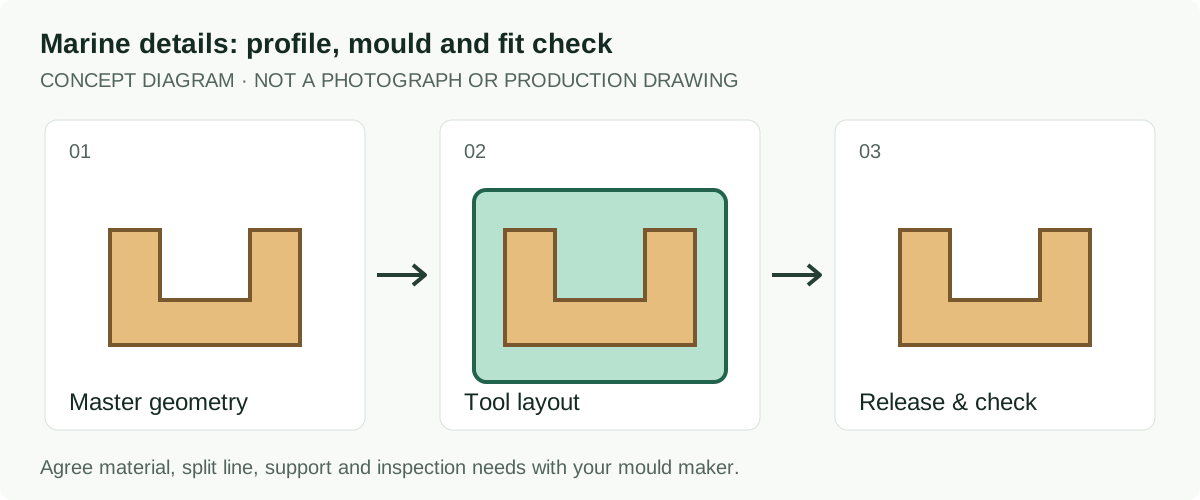
Large silicone bags for repeat infusion of deck sections, hatches and consoles.
SiliconeMoulds that put non-slip patterns and logos into GRP decks and pads.
SiliconeMoulded seals and gaskets for hatches, portlights and lockers.
EPDM, siliconeCustom rubber profiles and corner pieces for workboats and RIBs.
PU elastomer, rubberCast fittings, covers and trim pieces in tough resins for production boats.
Silicone tool, PUPlugs and tooling for hull and deck moulds, made with specialist partners.
Tooling board, GRPSoft-touch grips, switch covers and console details.
Silicone, PUMoulded mounts that isolate engines, pumps and electronics from vibration.
PU elastomer, rubberTooling ideas, clearly explained
Larger customers ask the same questions: how is it checked, what is it made from, and can you make another one exactly the same? This is how we answer them.


Photos: Brandable Box, Jessica Streser, Wilhelm Gunkel, laura adai on Unsplash.
How we work with boatbuilders
Please contact us before sending sensitive drawings or samples so that any confidentiality arrangements can be agreed.
You have a named contact for your programme, from feasibility to repeat supply, and is the person your engineering, quality and procurement teams speak to.
Material documentation, inspection requirements, manufacturing responsibilities and any necessary approvals should be specified and confirmed for your project before work is authorised.
Any tooling-specific terms, expected service conditions and remedies must be confirmed in your written quotation and order agreement.

Programme stages
We review the part, the tool, your resin system and infusion strategy, and propose the bag or tooling.
Please contact us before sending sensitive drawings or samples so that any confidentiality arrangements can be agreed.
Master taken from your tool or CAD, first bag or tool built and trialled on your line.
Fit, seals and feed points tuned from the trial before duplicates are made.
Bags and tools for each production line, planned replacements and archived masters.
Questions from boatbuilders
It depends on the resin, the part geometry, how the bag is handled and stored, and the release system. Well-designed bags commonly run for many dozens of cycles, and some far more. We quote an expected cycle life against your process and plan replacement bags into longer programmes.
Our focus is the rubber tooling: reusable vacuum bags, intensifiers, texture tooling and moulds for fittings and smaller mouldings, plus plugs for parts such as hatches, consoles and covers. For full hull and deck plugs, we work alongside your plug builder or through our vetted partner network, and we tell you which is which.
Usually, yes. We take a texture sample from an existing deck or panel, or build a master from your pattern, and produce silicone texture tooling so new mouldings match the rest of the range.
We choose the elastomer for the job: silicone and EPDM grades for UV and weather resistance, and other rubbers where oil or abrasion matter more. A material declaration is supplied with every order, and material data sheets are available on request.
Pricing depends on your design, materials, quantities and tooling scope. Ask us for a quotation against your project brief.
Related industries

Supported polyurethane and silicone moulds for precast, GRC, cast stone, formliners and heritage reproduction, with rigid jackets that hold shape.
Read more
High-end custom food-contact moulds for restaurant groups, luxury hotels and pastry kitchens, made through our sister division TCI Culinary: signature desserts, branded chocolate and banqueting tools.
Read more
Multi-cavity production tooling for candle, soap, wax melt and home fragrance manufacturers, sized to your line and supplied as matched sets with spares.
Read moreStart a programme
We will propose the bag or tooling, the expected cycle life and a fixed programme price.
Your project, our expertise
Contact TCI Mouldings with your drawings, samples and production requirements so the technical brief and next steps can be discussed.


 Thomas LaneManaging Director
 George PrestonDesign & Project Manager
 Kelly BallingerHead of Partnerships
 Jim AndertonProduction Manager
 TheodoreEmployee Welfare