
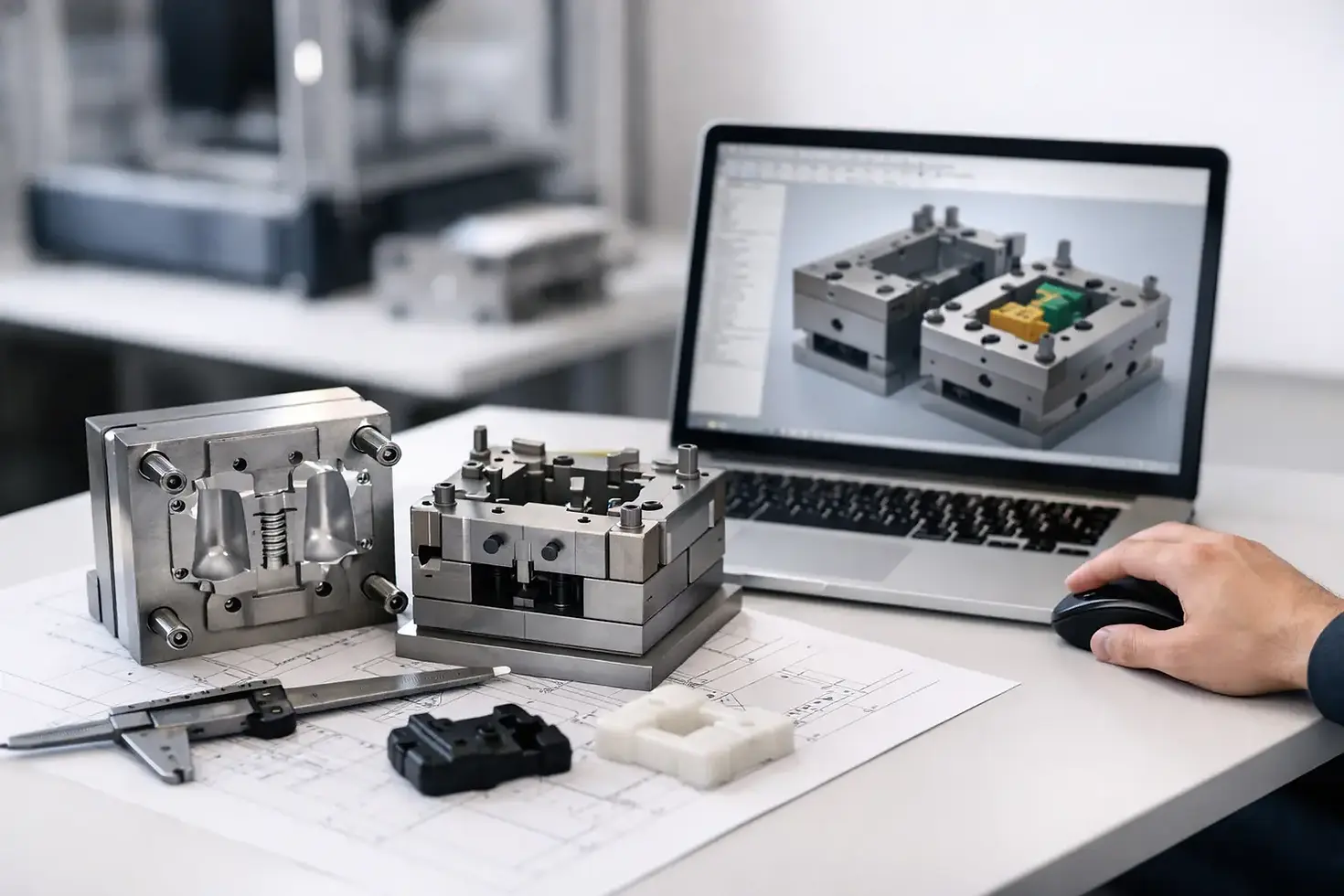
How to Order Custom Moulds Online
- thomas lane
- Jun 14
- 6 min read
A custom mould order usually starts long before anyone talks about tooling. It starts when a production line needs better repeatability, when a bakery wants cleaner release, or when a product developer has a shape that off-the-shelf moulds simply cannot deliver. If you are working out how to order custom moulds online, the fastest route is not just finding a supplier and sending a sketch. It is defining the job properly so the mould is engineered for the way you actually produce.
That matters whether you are making chocolates, soaps, wax melts, resin components or industrial parts. A good custom mould should do more than match a shape. It should support throughput, reduce waste, hold detail, release reliably and stand up to the temperatures, chemicals and handling conditions in your process.
How to order custom moulds online without costly delays
The online ordering process is usually straightforward, but the quality of the outcome depends on the quality of the information you provide. Most problems happen when a buyer knows the part they want, but has not yet translated that into manufacturing requirements.
Before requesting a quote, be clear on what the mould has to achieve in day-to-day use. Ask yourself whether the priority is surface finish, speed of demoulding, food safety compliance, long production runs, flexibility, or resistance to heat and aggressive materials. In many cases, it is a combination, and those priorities will influence material choice, wall thickness, cavity design and overall tooling approach.
If you are ordering online for the first time, it helps to think in terms of three layers. First is the product itself - its dimensions, shape, tolerances and finish. Second is the process - how the mould will be filled, handled, cured, heated, cooled and cleaned. Third is scale - whether you need a prototype, a short run, or a mould system that can support regular commercial output.
Start with the specification, not just the shape
A CAD drawing, product sample or even a well-dimensioned sketch can be enough to begin discussion, but geometry alone is rarely enough to finalise a bespoke mould. The supplier will usually need practical production information as well.
For example, a chocolatier may need precise cavity detail and easy release without damaging delicate finishes. A candle manufacturer may be more concerned with repeated pours, thermal stability and mould longevity. An industrial customer producing cast components may need tighter tolerances and material performance under more demanding conditions. The same basic shape could require very different mould engineering depending on use.
Useful information to prepare includes overall part dimensions, expected production volumes, operating temperatures, contact with food or chemicals, required number of cavities, and whether the mould must fit into an existing tray, frame or machine setup. If confidentiality matters, that should be addressed early as well, particularly for proprietary product designs.
Choosing the right material for the application
One of the biggest decisions when ordering custom moulds online is material selection. Silicone is a common choice because it offers flexibility, fine detail capture, temperature resistance and reliable release properties. For food production, bakery work, confectionery, soaps, candles and many specialist manufacturing applications, it is often the most practical solution.
Polyurethane and other mould materials may be more suitable in cases where different mechanical properties are needed. The right answer depends on how the mould will be used, how often it will be cycled, and what it will come into contact with.
This is where an engineering-led supplier adds value. Rather than simply asking what material you want, they should assess the application. A mould that is ideal for artisan batch production may not perform well in higher-volume manufacturing. Equally, specifying a more complex or heavier-duty solution than you need can add cost without improving output.
What to send when you order custom moulds online
If you want a quote that is accurate and useful, send the clearest technical brief you can. That does not mean it has to be complicated. It means it has to answer the questions that affect design and manufacture.
In most cases, the best starting point is a drawing or sample, the intended use, target quantities and any non-negotiable requirements such as food-safe compliance, dimensional limits or compatibility with existing equipment. If the mould is part of a wider production workflow, mention that too. Details such as manual versus automated handling, stacking, storage and cleaning routine can affect design choices.
Photos can help, especially when you are trying to explain an existing production issue. So can reference parts or previous moulds that did not perform as required. Online ordering works best when the conversation is specific. The more clearly the supplier understands the problem, the more effectively they can engineer the solution.
Prototype or production mould - know which stage you are in
Not every project should begin with a full production setup. If the product is still being refined, a prototype mould can be the sensible route. It allows shape, release, handling and finish to be tested before committing to larger-scale manufacture.
For established products, a production-ready mould may be the better investment from the outset, especially if repeatability and throughput are already defined. The key is being honest about where the project stands. If dimensions are likely to change, say so. If you are preparing for scale and need consistency across multiple moulds, that should shape the specification from the start.
An experienced manufacturer will usually guide this decision. TCI Mouldings, for example, works across prototype development and scalable in-house manufacture, which is particularly useful when customers need to move from concept to regular output without changing technical partner midway through the process.
Lead times, tooling decisions and commercial reality
When buyers order custom moulds online, they often focus first on unit cost. That is understandable, but it can be a false economy if the mould underperforms, wears too quickly or slows production. The better commercial question is what the mould will cost you over time in labour, rejects, downtime and replacement frequency.
Lead time also matters. A bespoke mould is a manufactured item, not a stock product pulled from a shelf. Design review, prototyping, approvals and production all take time, and that timeline will vary depending on complexity and quantity. If you have a launch date or production deadline, raise it early so feasibility can be assessed properly.
There are trade-offs here. Faster turnaround may be possible, but only within the limits of good manufacturing practice. More cavities may improve output, but can increase initial cost and require changes to handling. A softer material may improve release, but reduce lifespan in a high-cycle environment. Good advice should acknowledge those balances rather than oversimplify them.
What a strong online mould supplier should ask you
A capable supplier will not just take dimensions and send a price. They should ask how the mould will be used, what output you need, what tolerances matter, and what operating conditions the mould must withstand. That is usually a good sign, not an obstacle.
Look for evidence of in-house design and manufacturing control, especially if consistency and confidentiality are priorities. For many commercial buyers, UK manufacturing is valuable not only for communication and lead times, but also for quality oversight and practical collaboration during development.
It also helps to work with a supplier that understands sector-specific requirements. Food-safe silicone moulding is not the same as moulding for resin casting or industrial applications. The technical detail changes, and so should the recommendations.
Final checks before approval
Before approving a custom mould order, review the brief one more time. Confirm dimensions, cavity count, material, application, finish expectations and any integration requirements. If a drawing or approval stage is provided, take it seriously. A few minutes of checking at this point can prevent weeks of correction later.
It is also worth agreeing what success looks like. Is the priority faster release, better detail, fewer defects, easier handling or longer service life? When both sides are clear on the performance target, decisions become easier and results are usually better.
Ordering online does not have to mean ordering blindly. The best custom mould projects are still built on proper technical discussion, even when the first enquiry comes through a website form or email. If you approach the process with a clear specification and realistic production context, you are far more likely to receive a mould that works hard from the first run and keeps working when volumes grow.
The right mould should fit your product, but more importantly, it should fit the way your business makes it.


Comments